
Coil nails for roofing, pallets and fencing may look similar at first glance, but buyers should not treat them as one universal specification. The application affects shank choice, finish, nail length, diameter, nailer compatibility and packing. A quotation is more useful when the supplier knows where and how the nails will be used.
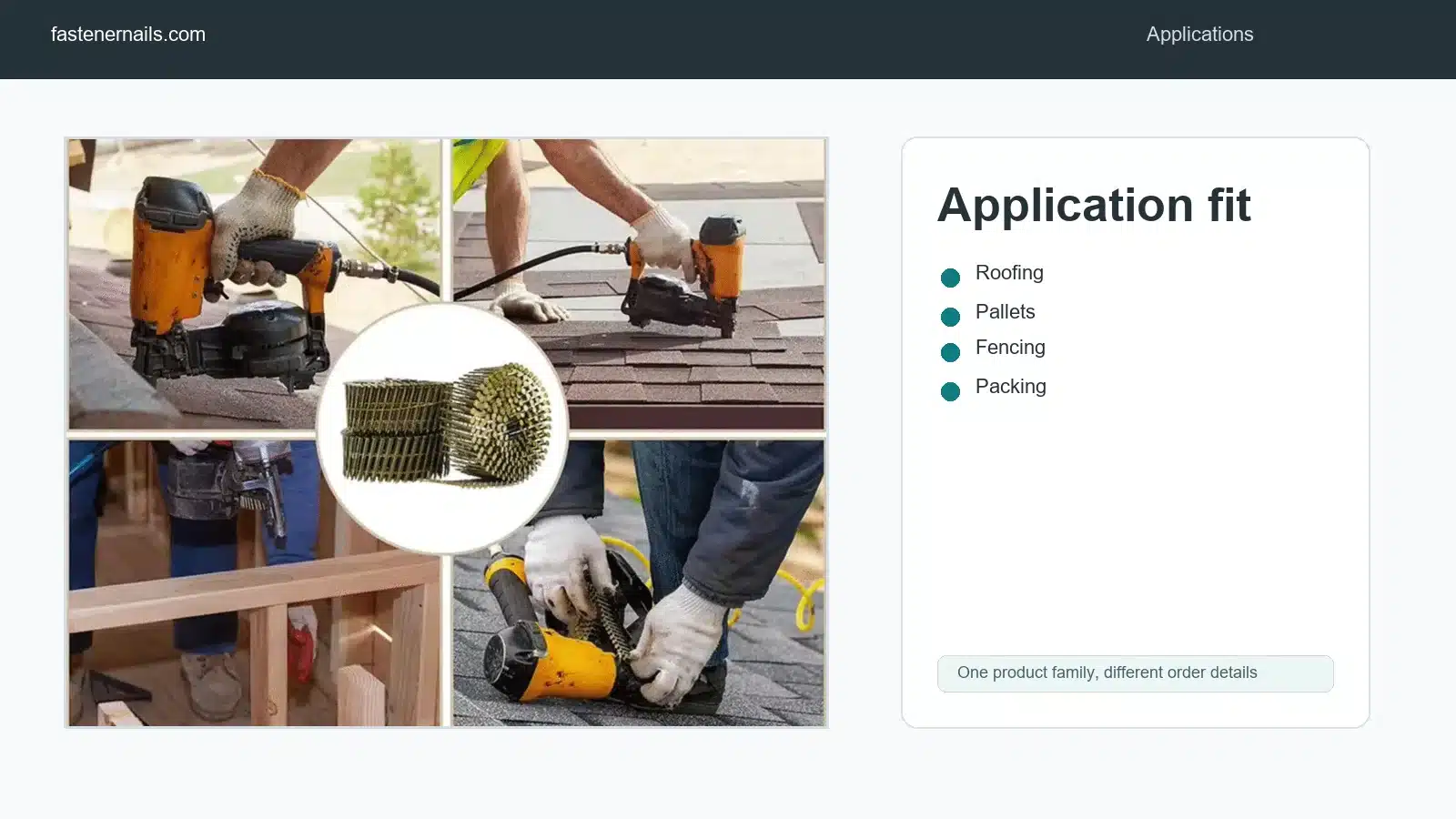
FastenerNails focuses on industrial nails and fasteners, including pregos em espiral, big head coil roofing nails and related pneumatic coil nailer options. This article compares application differences rather than ranking one coil nail type as best for every job.
Roofing Applications
Roofing work often requires smooth feeding, suitable head form and a finish that matches jobsite exposure. Buyers should confirm whether the nail is intended for roofing shingles, related construction fastening or another roof-area use. The nailer model and coil format should be checked before bulk orders.
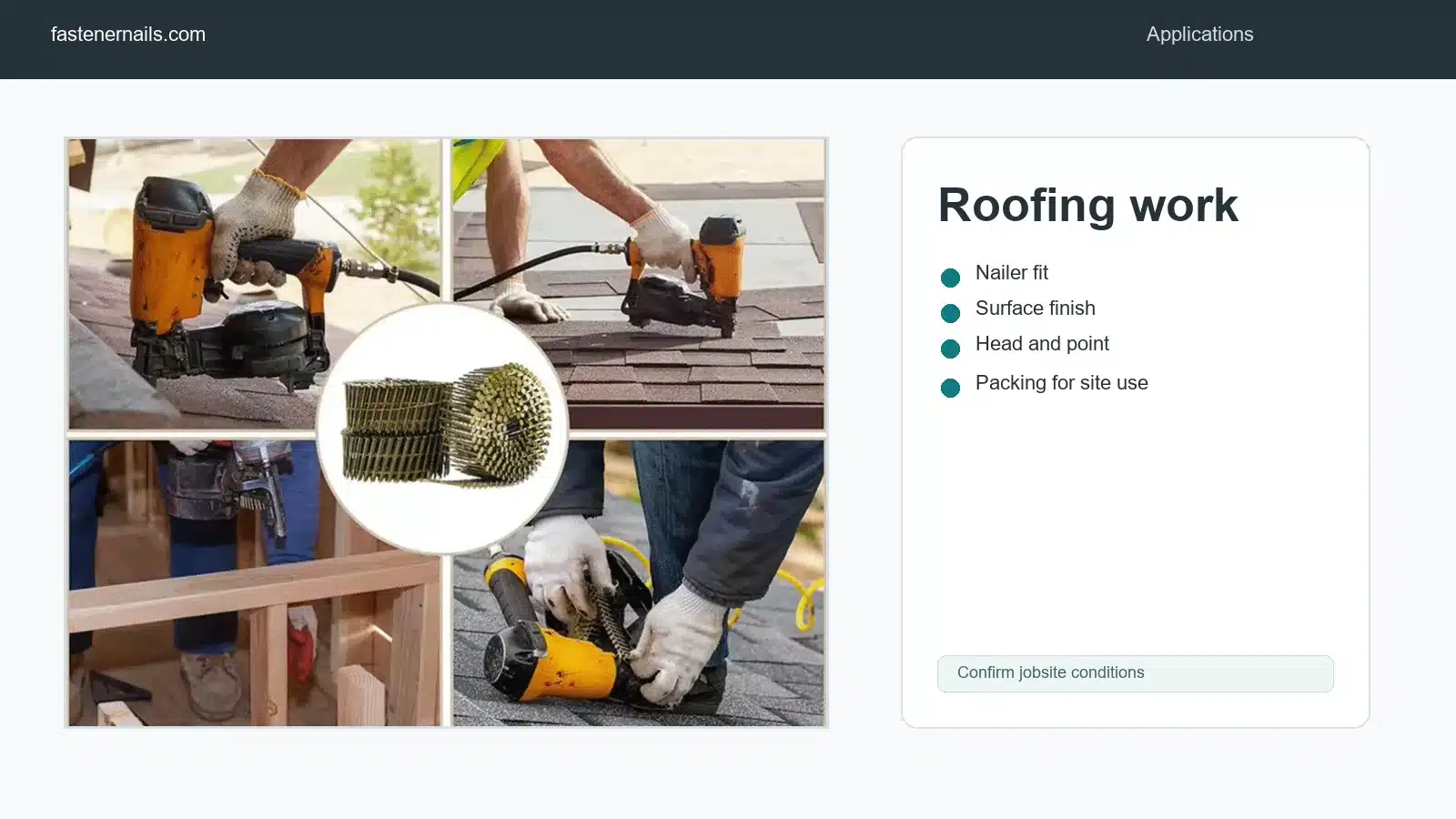
Roofing buyers may care about jobsite packing, easy handling and consistent driving. If the project specifically involves umbrella head roofing nails, review the product page for Pregos para telhado com cabeça de guarda-chuva rather than assuming standard coil nails are the same item.
Pallet and Crate Production
Pallet and crate production often values repeatable feeding, holding performance and carton packing that supports factory use. Shank selection is important because smooth, ring and screw shanks behave differently in wood. If withdrawal resistance matters, ring or screw shank may be discussed, but the final choice should be tested with the buyer's wood and nailer.
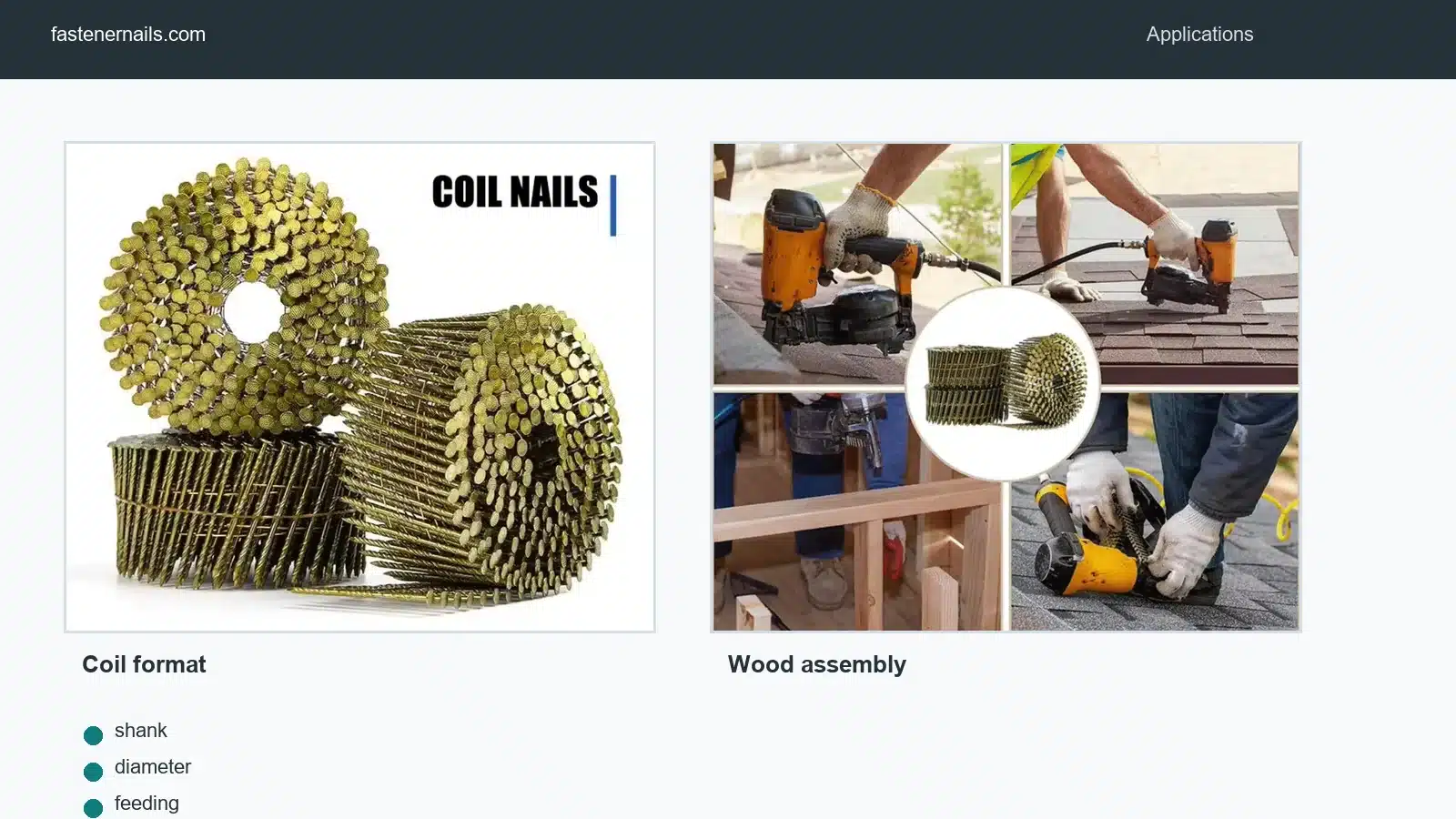
For pallet-specific decisions, review coil nails for pallets e coil nail shank types. The RFQ should include wood type if known, nailer information, nail size and packing method.
Fencing and General Wood Assembly
Fencing and general wood assembly can vary widely. Some jobs need corrosion consideration, while others are short-term or indoor applications. Buyers should describe whether the nails are used for boards, light framing, outdoor wood or another fastening task. This helps avoid under-specifying or over-specifying the finish and shank.
Finish and Exposure
Finish selection should match the real application. A bright nail, electro-galvanized nail, hot-dip galvanized nail or color-coated nail can all be suitable in the right context. Do not turn finish choice into a guess based only on appearance.
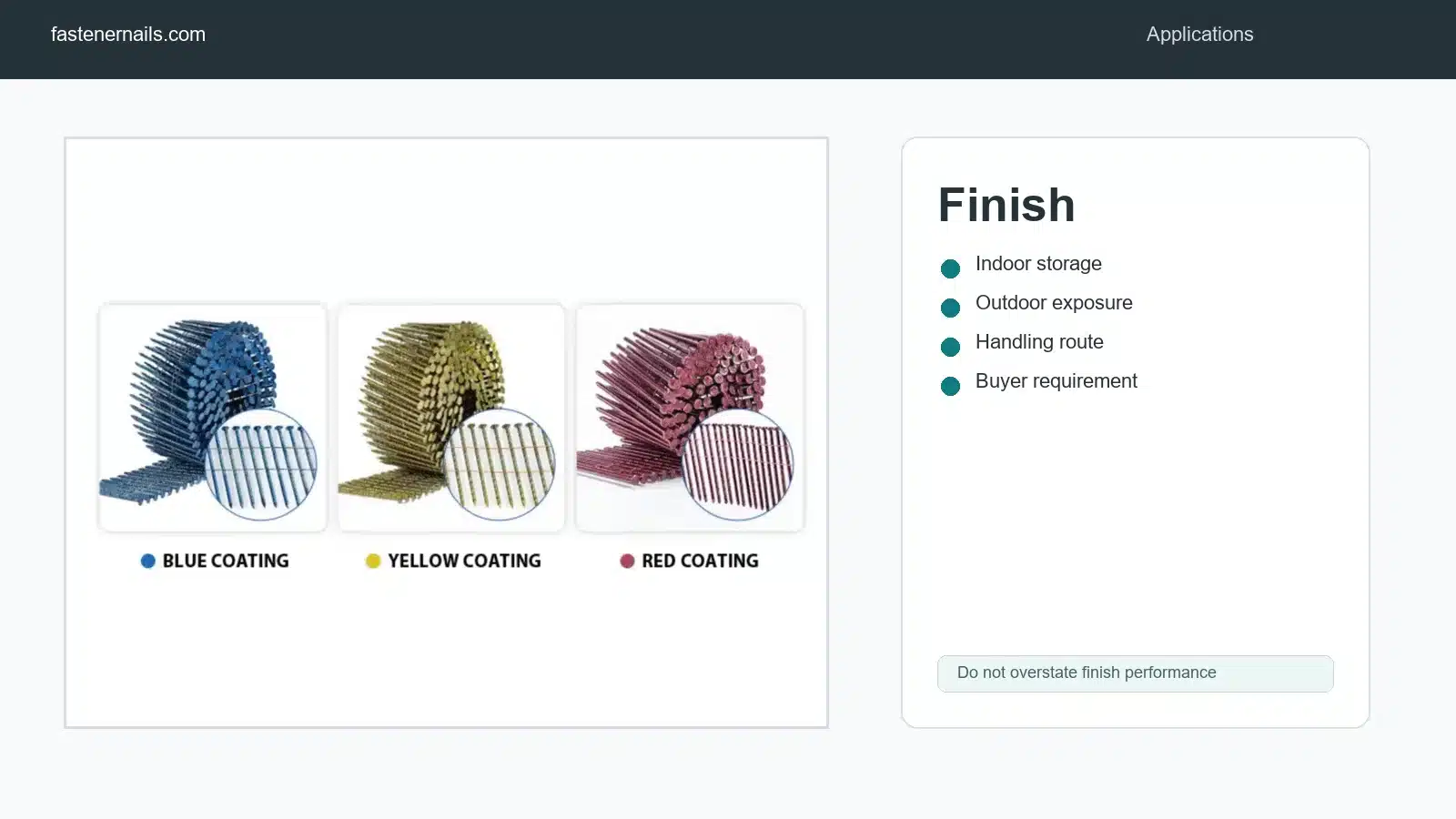
If the buyer is comparing finishes, use the article on electro-galvanized vs hot-dip galvanized coil nails. The important point is to describe actual exposure, storage and handling route without inventing service-life promises.
What Buyers Should Specify
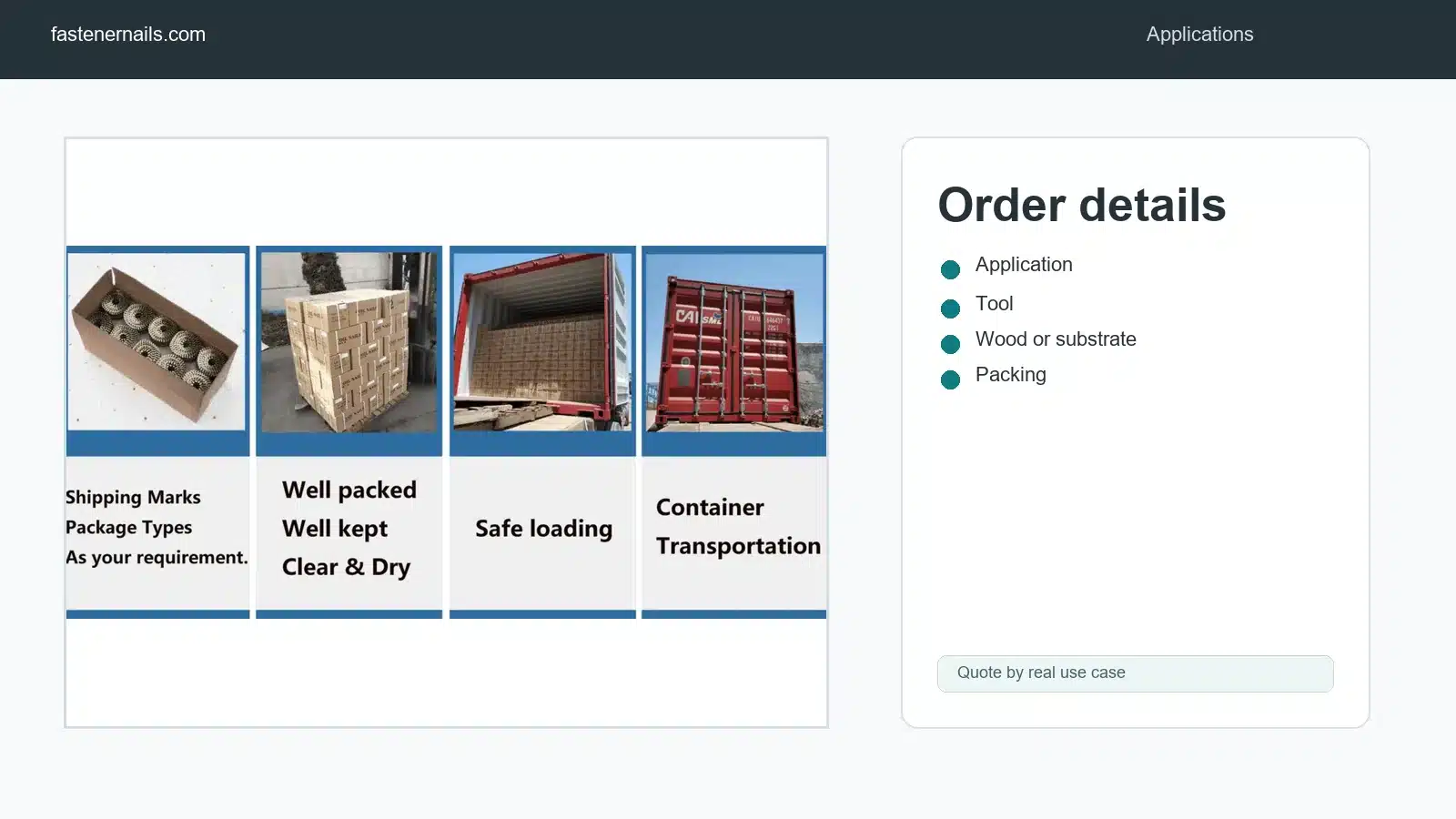
Before asking for price, provide the application, nail length, wire diameter, shank, finish, nailer model if available, coil quantity and packing requirement. This gives the supplier enough information to quote the correct product and prepare a meaningful sample.
Application Details That Change the Quote
The same coil nail factory may quote different products for roofing, pallet production and fencing because the buying priorities are different. A roofing buyer may focus on jobsite handling and head style. A pallet buyer may focus on feeding consistency and shank selection. A fencing buyer may care more about outdoor exposure and the wood or board thickness being fastened.
| Aplicativo | Details to Send With the RFQ |
|---|---|
| Roofing | Roof-area use, nailer model, head expectation, finish and packing for site handling |
| Pallets and crates | Wood type if known, shank preference, production speed concern and carton packing |
| Fencing | Board or rail material, exposure condition, preferred finish and required nail length |
This table is not a fixed specification. It is a communication tool. The buyer should still confirm the final nail through quotation and sample approval, especially when changing from one application to another.
Keep Similar Orders Separate
Buyers sometimes send one request that combines several applications because all of them use coil nails. That can create confusion. If the order includes roofing nails, pallet nails and fencing nails, give each line a separate size, finish, shank and packing note. This helps the supplier avoid treating the order as one shared item.
Separate order lines also make internal purchasing cleaner. The warehouse can receive the correct cartons for each use case, and the buyer can reorder by application instead of searching through old emails to identify which coil nail was used where.
When to Request Supplier Suggestions
If the buyer is not sure which shank or finish to choose, the RFQ should say so clearly. A supplier can suggest a starting point when the buyer provides the application, substrate, nailer model and expected packing. The suggestion should then be tested with the buyer's real material before a large order is confirmed.
The goal is not to force every buyer to become a fastener engineer. The goal is to provide enough application context so the supplier can narrow the choice responsibly.
PERGUNTAS FREQUENTES
Are pallet coil nails and roofing coil nails interchangeable?
Not automatically. They may differ by head, shank, finish, size and tool requirements. Buyers should specify the actual application.
Should outdoor applications always use hot-dip galvanized nails?
Not as a blanket rule. Finish choice depends on exposure, buyer requirement, cost target and verified product specification.
Why include the nailer model in the RFQ?
The nailer model helps confirm collation, coil size and feeding compatibility before the order is produced.
Match the Nail to the Job
Send your application, size, finish, shank, nailer and packing details through the FastenerNails contact page. A clear use case helps match the coil nail to roofing, pallet, fencing or other production needs.
 Portuguese
  English
  Arabic
  Spanish