
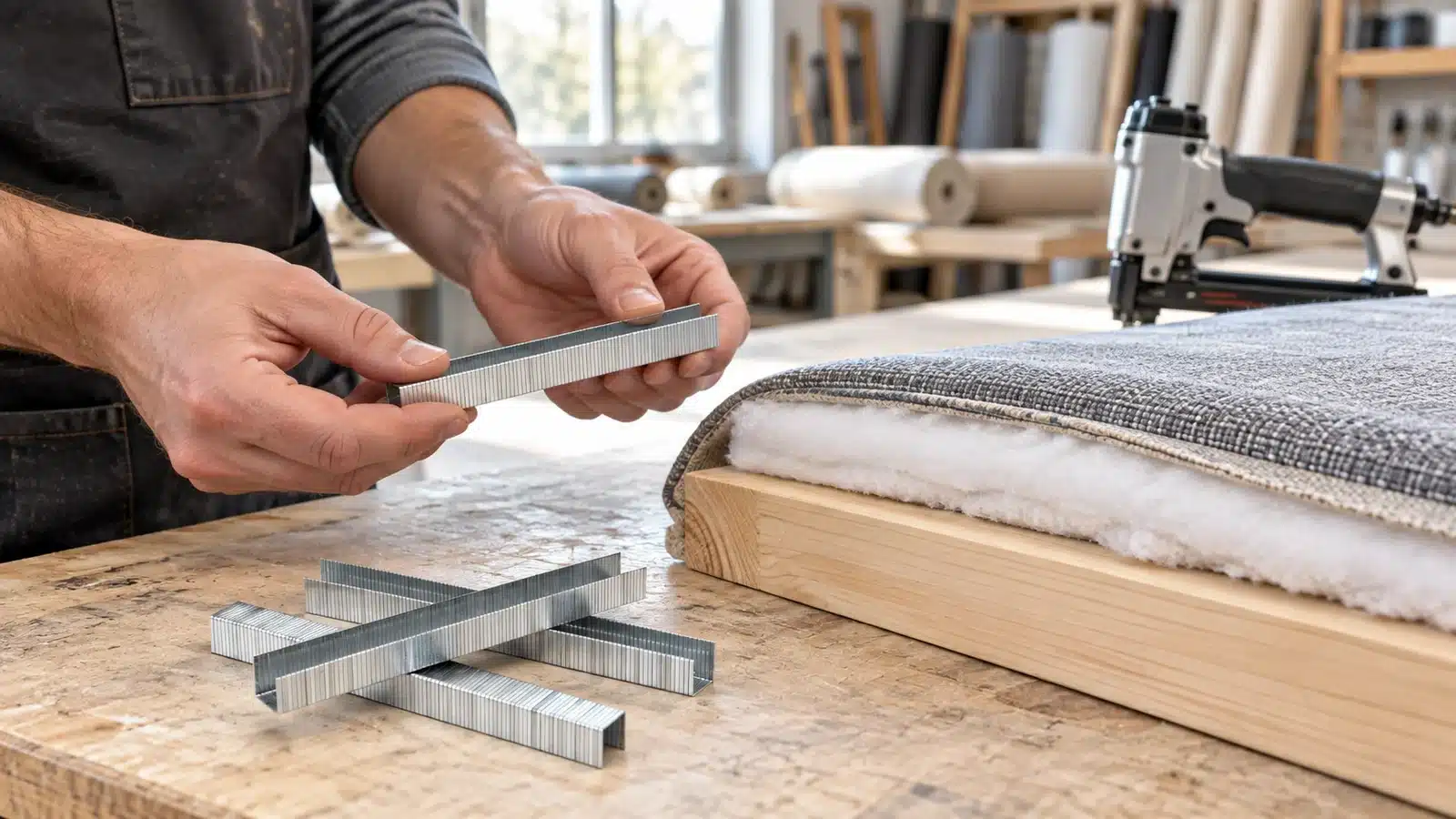
An upholstery staple should be approved against the real assembly, not against fabric alone. The same outer textile can cover different foam, batting, backing and timber, and each stack changes how the crown sits and how much leg reaches the frame. A useful request therefore begins with the stapler model, one named staple series and a labelled sample of the complete upholstery build.
O industrial staple product page lists 16 industrial families, including 80, 90, 92, 100, 32, 35, 84, 97, 50, 71, 4J, 10J, 10F, 12F, K and N. The published leg-length range is 4–25 mm, with galvanized, copper-coated and stainless-steel material options. Those facts define the catalogue boundary; the buyer still needs a series-matched tool trial on the intended fabric, padding and frame.
Build One Labelled Material Stack
Cut a representative sample that includes every layer captured by the staple: outer fabric, any backing, foam edge or batting, webbing where relevant, and the actual frame timber or board. Record the compressed thickness at the intended fastening point. A loose stack on a desk can be thicker than the same layers held in their production position, so photographs should show how the sample was assembled.
Mark straight runs, corners, folded seams and any area where several fabric layers overlap. The thickest fold may need a different trial result from a single-layer edge even when the same visible fabric is used. Keep the sample code beside the drawing or approved work record so purchasing and production refer to the same build.
Lock the Stapler Series Before Choosing Leg Length
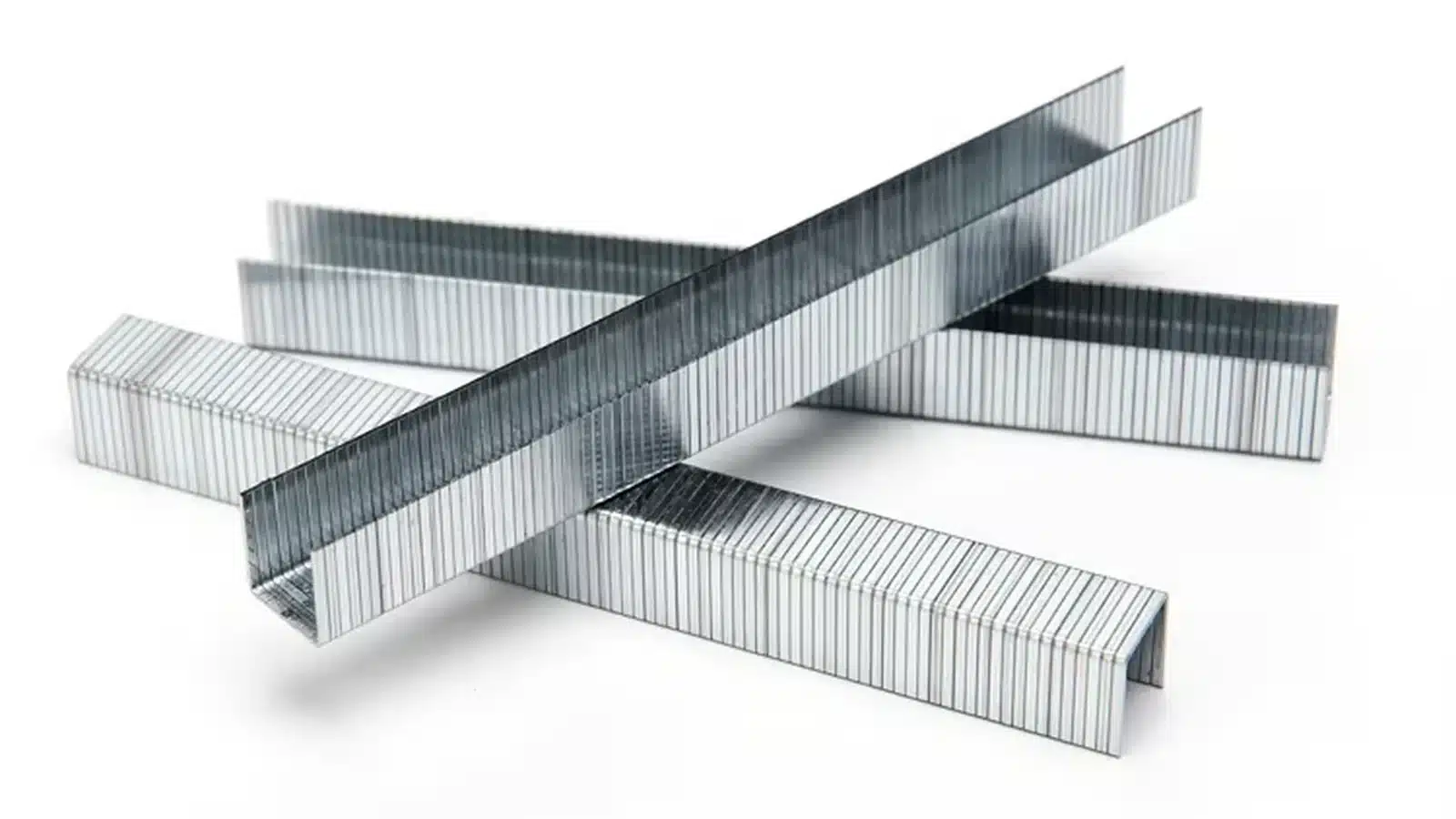
Series compatibility comes first because a visually similar strip can still be wrong for the magazine or driver. Record the tool maker, complete model, magazine label and current driver condition. Bind the proposed 80, 90, 71 or other series to that tool before comparing leg lengths.
The existing narrow-crown and wide-crown staple comparison explains why crown format, joint and tool series belong in one decision. In upholstery work, the trial must also show whether the crown lies acceptably on the fabric without cutting, puckering or leaving a raised edge. Appearance alone does not prove holding performance, and a hidden crown does not excuse an unverified tool match.
Run a Small Matrix Instead of Guessing One Length
Use the supplier's series-compatible sample options to create a controlled matrix around the proposed leg length. Keep crown, finish, tool, pressure procedure and material stack constant while one variable changes. The 4–25 mm catalogue range is not a recommendation to test every length; it is a boundary from which a short list can be confirmed for the actual assembly.
Drive samples on straight fabric, a seam fold and a corner or return that represents production. Record head seating, fabric marking, frame splitting, leg breakthrough, loose attachment and feed consistency. If the process includes a backing face that can be inspected safely, photograph it. Any destructive pull or strength assessment should use the buyer's approved method and acceptance owner rather than an invented universal value.
Keep Finish and Frame Condition in the Approval
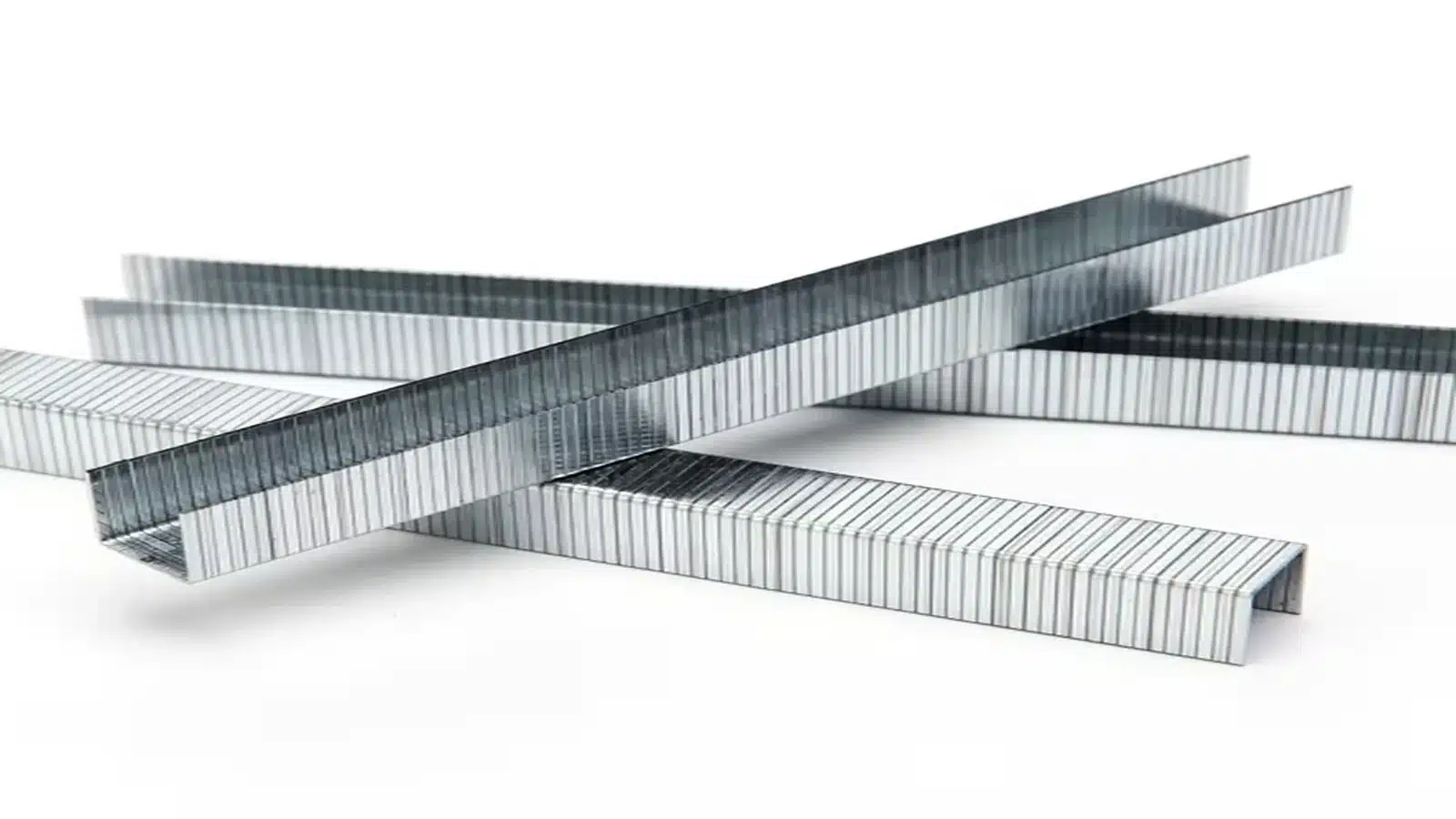
Galvanized, copper-coated and stainless-steel options should remain separate order lines. State the expected moisture, cleaning and appearance conditions, then confirm the chosen material with the supplier. Finish selection cannot be reduced to color because the service environment and customer specification may differ.
Use production-representative frame stock. Species, density, engineered-board construction, knots, edge distance and moisture condition can alter the trial. If the frame material changes, reopen the relevant approval rather than carrying the earlier result forward without evidence.
Freeze a Reorder Record That Production Can Recognize
The released record should name the staple series, crown and leg dimensions, material or finish, tool model, sample code, approved material stack, packing, label and drawing revision. Retain one accepted strip and one completed assembly sample where practical. Photograph the carton and strip label before the sample is consumed.
Receiving teams can then compare a repeat shipment with a controlled reference. Production teams can also distinguish a fastener issue from a changed fabric stack, worn driver or altered frame material. That separation makes a supplier review faster and protects the approved upholstery appearance.
Related Staple Approval Controls
- Compare galvanized, copper-coated and stainless industrial staples
- Inspect industrial staple leg alignment before a tool trial
- Verify a reorder against the retained crown, leg, strip and material sample
Request an Upholstery Staple Review
Send the stapler model, candidate series, crown and leg dimensions, finish, fabric-padding-frame stack, labelled sample photos and packing requirement through the fastener RFQ contact page. Ask for the exact series and sample scope to be confirmed before bulk release.
 Portuguese
  English
  Arabic
  Spanish