
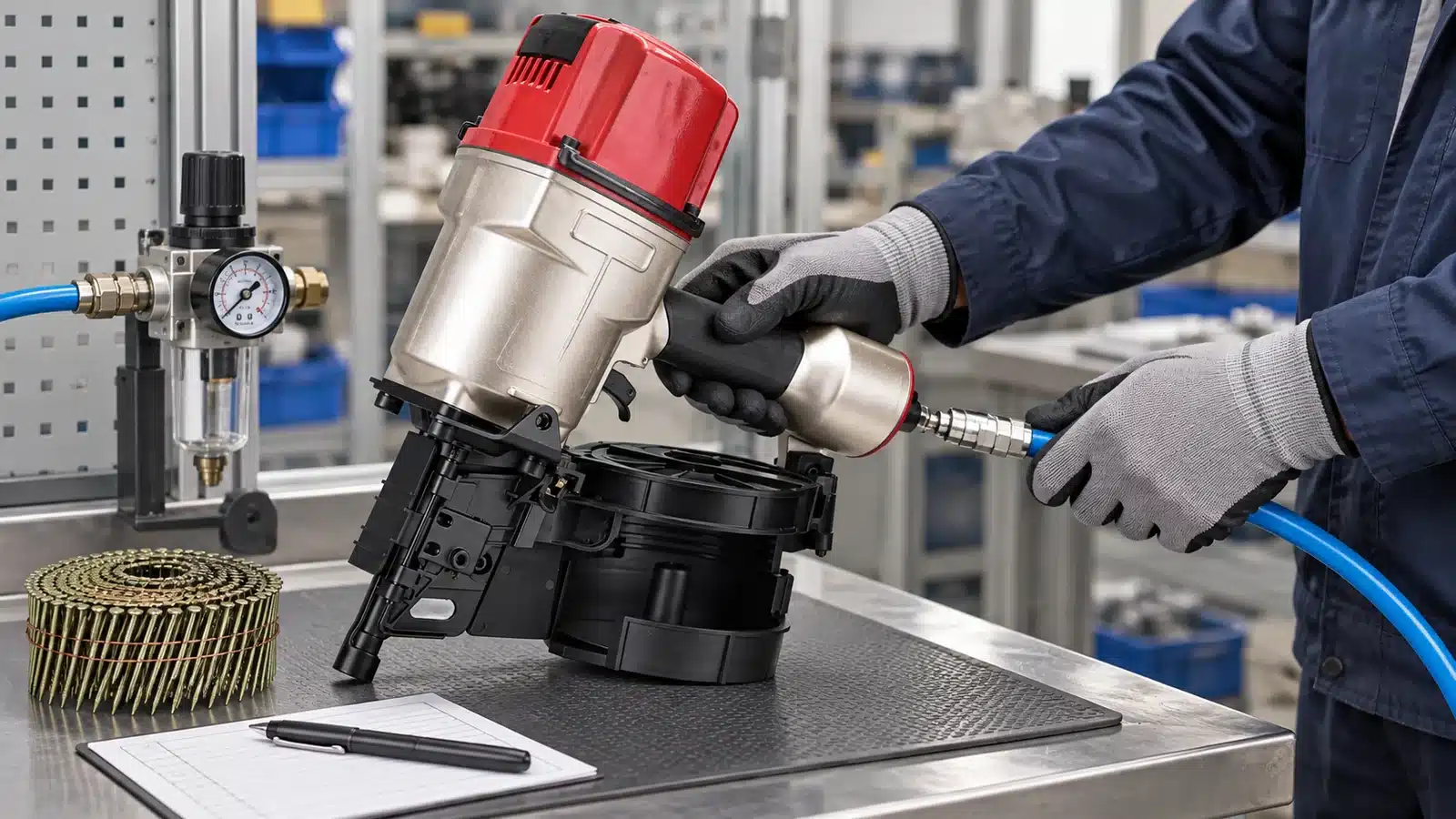
A CN100B trial should begin with the whole fastening system, not with the tool alone. The selected coil nail, hose, coupling, regulator, compressor capacity, substrate and work position all affect whether a sample run represents production. A short bench test can confirm that parts connect, while a structured shift simulation reveals pressure drop, feed interruptions and handling problems.
إن CN-series pneumatic coil nailer page lists CN100B for 65–100 mm nails with 6.5–7.5 mm heads and 2.5–3.3 mm wire. It also lists a 225–300 nail capacity, 115–145 PSI operating pressure, 3/8-inch NPT air inlet and 5.67 kg tool weight. These values define the model boundary for the trial; the exact nail and application still require approval together.
Freeze the Nail Sample Before Testing
Label every trial coil with nail length, head diameter, wire diameter, shank, point, collation and lot. Confirm that the proposed sample stays inside the published CN100B range. The listed capacity is a range, so the actual count loaded should be recorded rather than assumed from the tool name.
Use the intended production substrate and joint stack. Mark the seating target and acceptance limits before firing begins. A nail that feeds cleanly but is wrong for the joint is not an approved result, and a suitable nail cannot compensate for unstable air delivery.
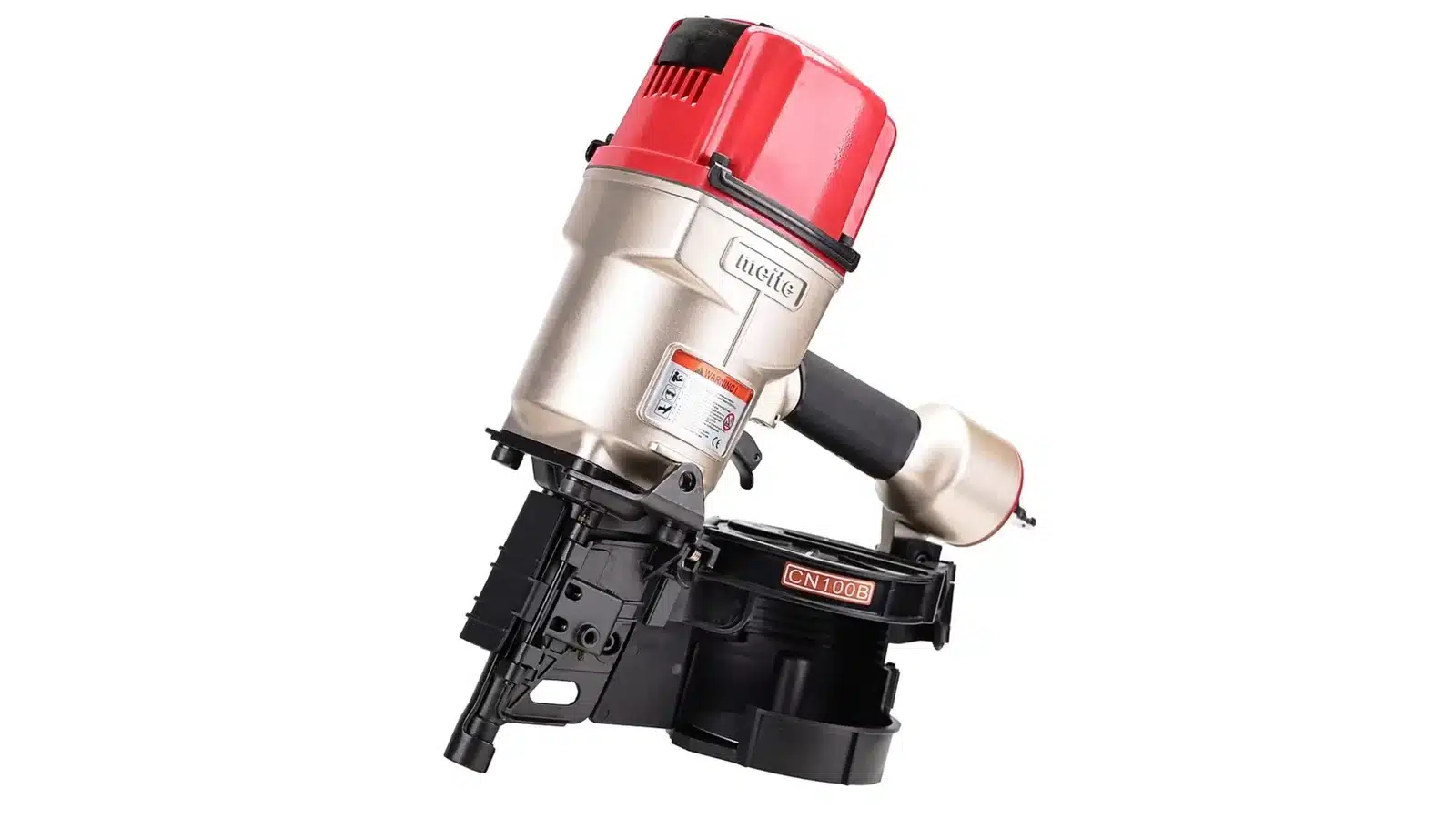
Measure Pressure at the Working Tool
Set up the production-length hose, couplings, filter and regulator proposed for the workstation. Record static pressure and pressure during a representative firing sequence. The published 115–145 PSI range belongs to the tool; the reading at a distant compressor does not show what reaches the inlet during demand.
The earlier coil-nailer working-pressure guide explains why the gauge location matters. For the CN100B trial, add the 3/8-inch NPT connection, hose length, inside diameter, fitting identity and simultaneous air users to the record. If pressure falls during the sequence, resolve the supply path before changing nail or substrate conclusions.
Plan Around a 5.67 kg Tool
The listed 5.67 kg weight makes workstation design part of approval. Reproduce the real firing direction, reach, joint height and cycle pattern. Observe wrist position, hose drag, two-hand transitions and where the tool rests between cycles. A balancer, support or revised table height may be worth evaluating, but the site owner should approve any handling arrangement.
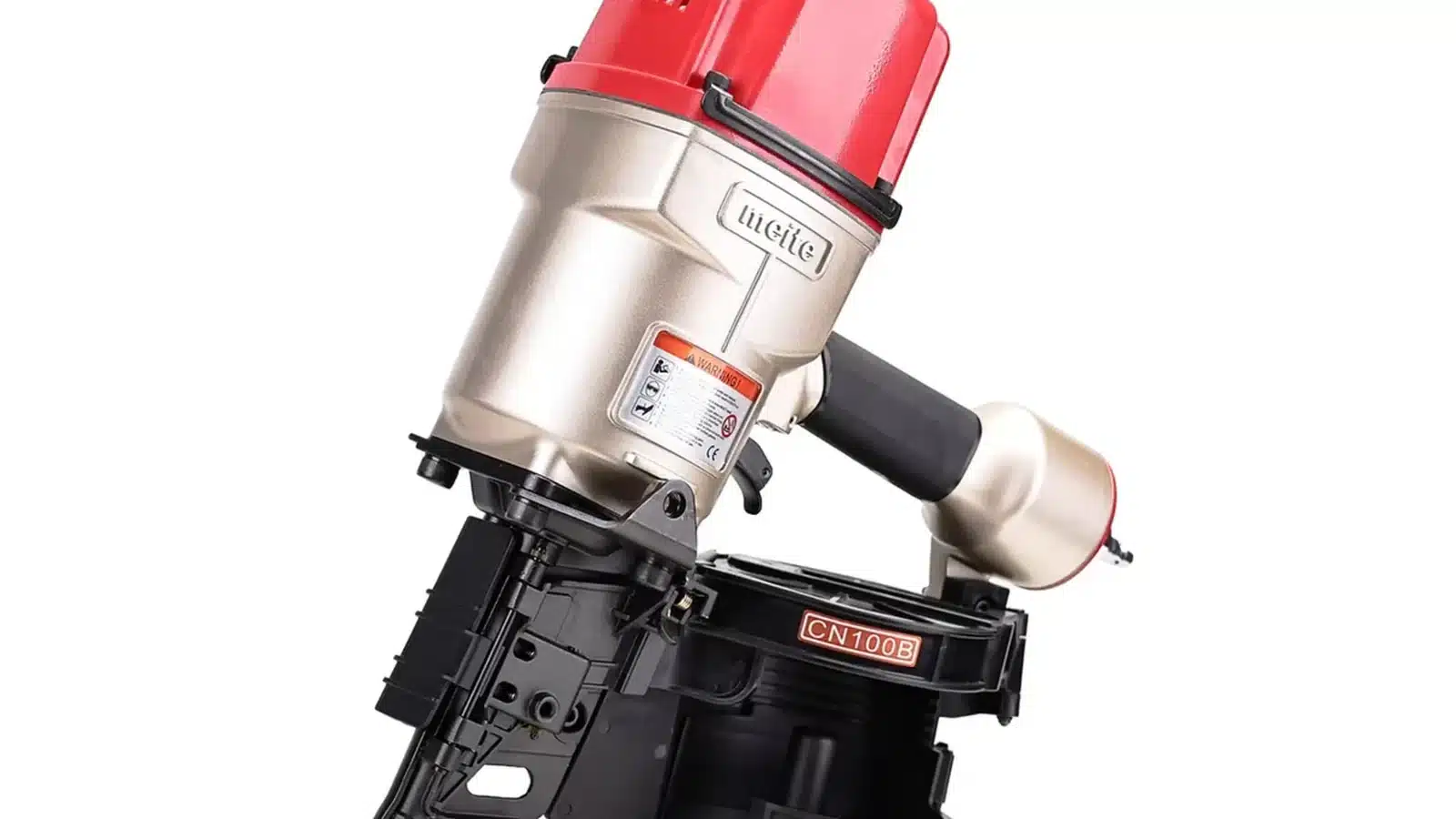
Separate fastener performance from operator handling notes. Record seating depth, feed consistency and stoppages in one section, then record reach, rest position and repeated-cycle observations in another. This prevents a workstation issue from being misreported as a nail defect.
Release One Repeatable Setup
Run the planned sequence with more than one coil and retain accepted and rejected samples. Note pressure at the tool, regulator setting, hose and fitting details, nail lot, substrate lot, operator and tool identity. Photograph the connection and the final seated samples.
The release sheet should state the exact CN100B model, approved nail description, air-system setup, workstation arrangement and change triggers. A different nail size, coupling, hose, substrate or cycle rate should reopen the affected check. This creates a setup that maintenance and production can reproduce rather than a one-time demonstration.
Related CN-Series Controls
- Compare quarter-inch and three-eighth-inch NPT air inlets
- Plan a CN-series tool-weight workstation trial
- Review the CN-series fastener-range model matrix
Request a CN100B Trial Review
Send the application, nail dimensions, substrate, cycle pattern, hose and regulator plan, fitting standard and trial acceptance criteria through the FastenerNails inquiry page. Ask for the nail sample and air-system record to be tied to the CN100B before production release.
 Arabic
  English
  Spanish
  Portuguese