
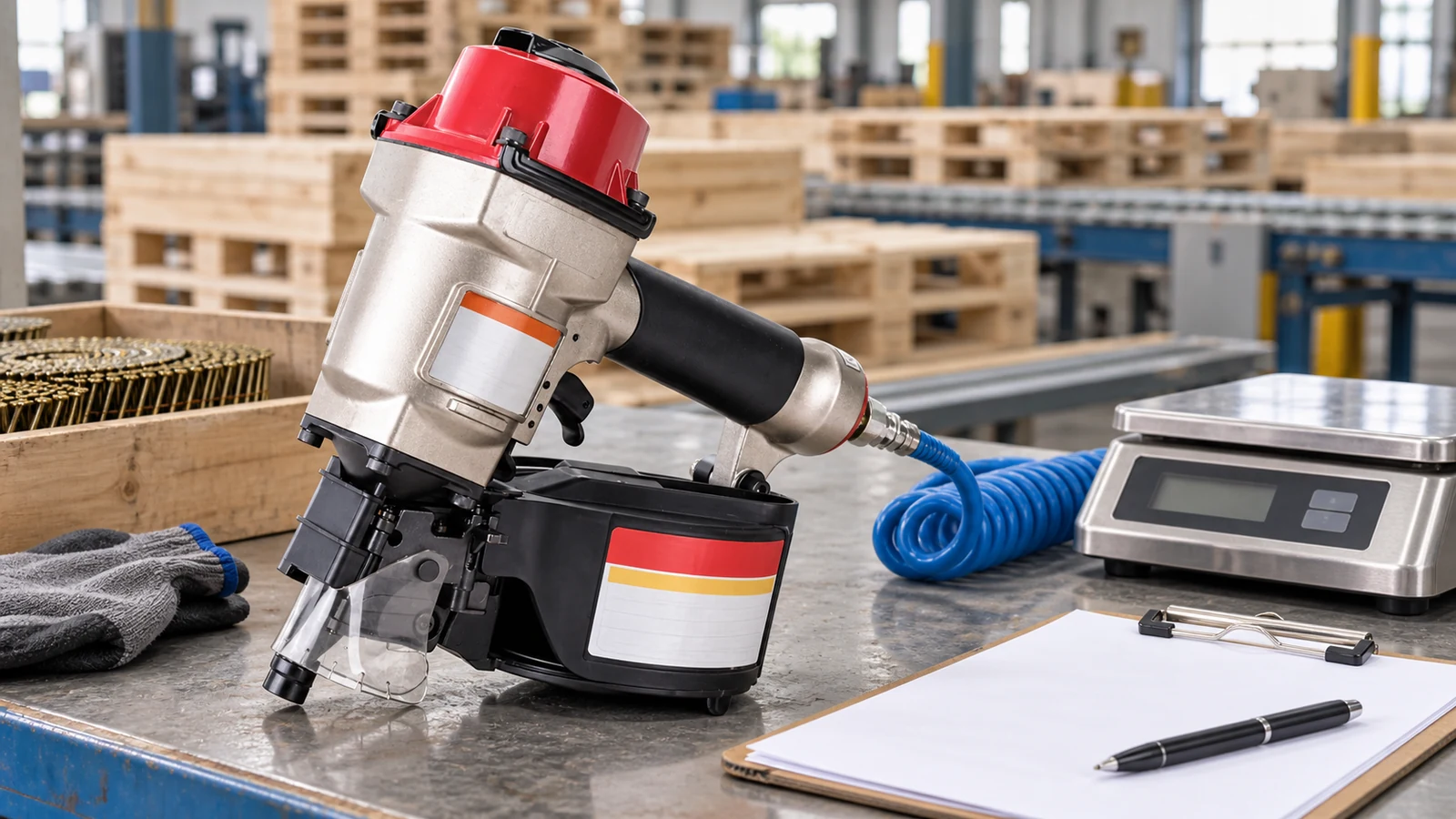
Tool weight matters at a pallet or crate station, but the lightest nailer is not automatically the right nailer. The tool first has to accept the required nail length, wire diameter, head diameter, magazine load, air connection and working pressure. Only then does a weight comparison become useful.
إن CN-series pneumatic coil nailer range lists six models from 2.75 kg to 5.67 kg. A buyer can use those figures to shortlist tools, then run each viable model at the real workstation with the intended nail and workpiece.
Read Weight Beside the Fastener Envelope
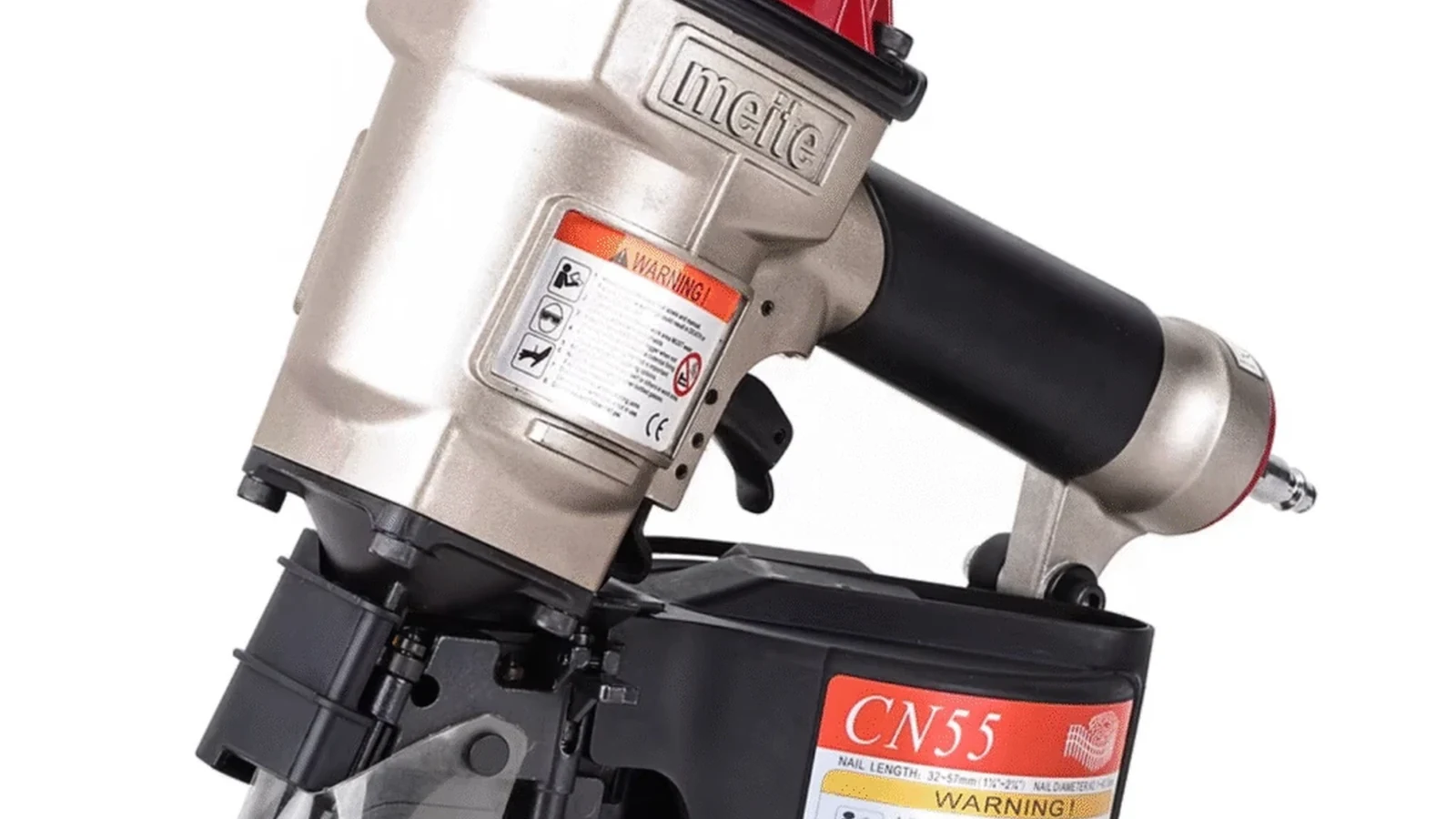
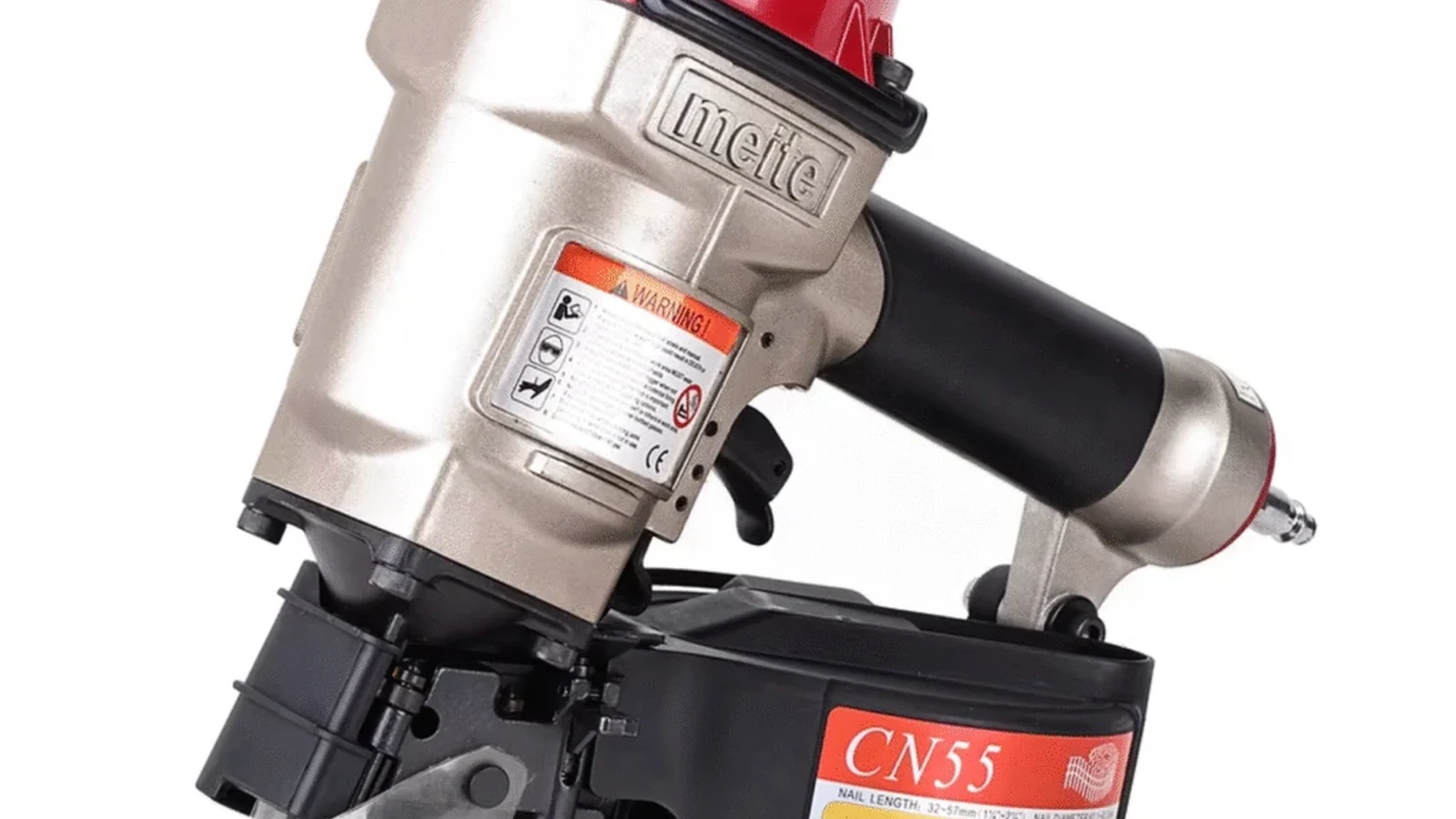
The listed model weights are 2.75 kg for CN55, 2.92 kg for CN65B, 3.84 kg for CN70B, 4.02 kg for CN80B, 4.13 kg for CN90 and 5.67 kg for CN100B. Those numbers describe the tools as listed; they exclude a buyer's loaded coil, air fitting, hose pull and any workstation support.
The choice also changes with the fastener range. CN55 accepts 25–57 mm nails, while CN100B covers 65–100 mm in the current model table. Intermediate models occupy different length, wire and head ranges. The CN55-to-CN100B fastener-range matrix should therefore be the first screen. A lighter model outside the required fastener envelope is not a valid trial candidate.
Compare the Same Working Condition
Prepare the same representative board stack, joint position, nail specification and acceptance standard for every candidate. Keep the air hose route, connector type, regulator arrangement and operator position consistent. Record whether the tool is evaluated empty, with a partial coil or with the normal production load.
The workstation matters. A bench-height fastening point, a low pallet corner and a vertical crate panel place the tool and hose differently. Instead of asking which model feels lightest in the hand, observe the exact production motion: pick up, place, drive, reposition and return. A short test can reveal whether hose drag, magazine clearance or the required fastener range is more important than the catalogue weight difference.
Keep Safety and Maintenance Variables Visible
Use trained personnel and the site's established pneumatic-tool controls. Check the candidate tool's condition before comparison. A worn contact element, damaged hose or incorrect air supply can distort the result and create a separate safety issue.
The listed CN55 through CN80B models use an 85–120 PSI range, while CN90 and CN100B are listed at 115–145 PSI. The larger two models also use 3/8-inch NPT air inlets rather than the 1/4-inch NPT listed for the smaller models. These details belong on the trial sheet so the evaluation does not accidentally compare two different air setups.
Record Findings Without Inventing an Ergonomic Rating
A useful record identifies the tool model, serial or sample ID, tool-only listed weight, test load, nail specification, workpiece, station height, hose arrangement, trial duration and operator feedback. Note observable events such as magazine interference, awkward access, misfeeds or unplanned pauses. Keep subjective comments attributed to the person and station that produced them.
This process supports a model choice for a defined job. It is not a medical or universal ergonomic certification. If the site requires a formal ergonomic assessment, that review should be performed under the buyer's own safety system.
Put the Selection on the Purchase Line
After the trial, carry the exact tool model, compatible nail range, required inlet, working-pressure range and approved connector arrangement into the quotation and purchase order. Attach the trial record and name the approved coil-nail sample. That prevents a later substitution based only on a similar-looking tool or a broad “coil nailer” description.
Related CN-Series Checks
- Compare 1/4-inch and 3/8-inch NPT air inlets before an RFQ
- Verify 85–120 and 115–145 PSI ranges at the tool
- Plan magazine capacity and reload timing for pallet production
Request a Model-Bound Tool Review
Send the nail length, wire diameter, head diameter, coil count, pallet or crate joint, air connection, working-pressure limit and workstation photos through the fastener RFQ contact page. Ask for the exact CN model and a sample-trial plan tied to that fastener and station.
 Arabic
  English
  Spanish
  Portuguese