
Coil nail packaging is not a minor detail at the end of an order. For importers, distributors and pallet manufacturers, packaging affects whether the coils arrive round, dry, easy to identify and ready for production. A nail specification can be correct, but weak cartons or poor moisture protection can still create complaints after shipment.
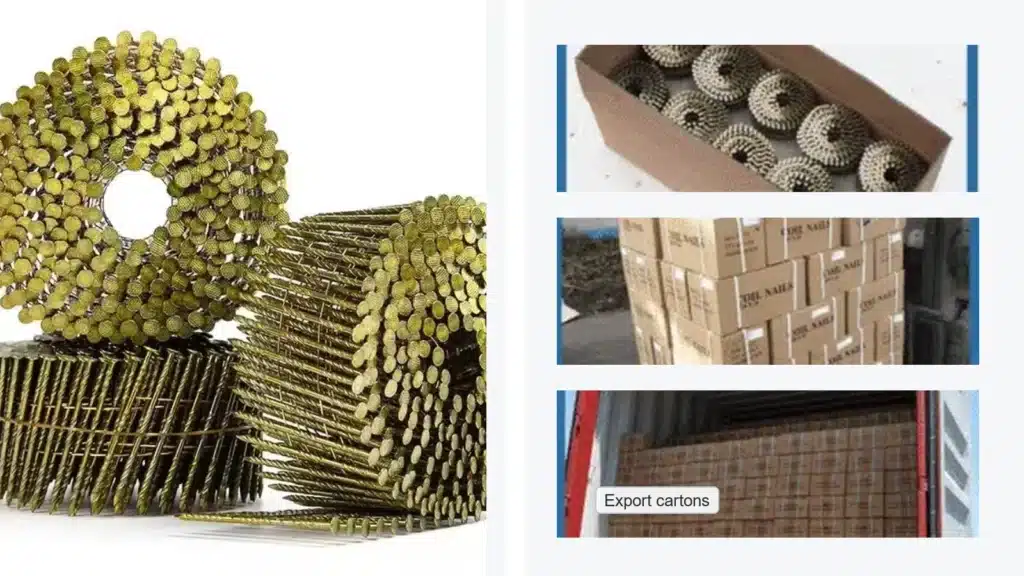
This article focuses on the packaging side of المسامير اللولبية for export orders. It does not replace nail specification work. Buyers still need to confirm nail length, diameter, shank type, finish, collation angle and nailer compatibility. The point is that packing should be specified with the same clarity as the product.
Why Coil Nail Packaging Deserves Separate Attention
Coil nails are heavy, dense and easy to damage if they are allowed to shift inside a carton. A coil that loses its round shape may still look acceptable at first glance, but it can create loading problems in the nailer magazine. Weld wire can also be stressed by rough handling, and cartons can split when gross weight is not controlled.
Good export packing should help with five practical goals:
- Keep coils stable during handling and transit
- Reduce direct moisture exposure
- Make item identification clear in the warehouse
- Support safe pallet handling
- Match the buyer’s resale or production workflow
For high-volume buyers, packaging is also part of repeatability. The receiving warehouse should not need to guess which carton contains which shank, length or finish.
Start With the Coil Format
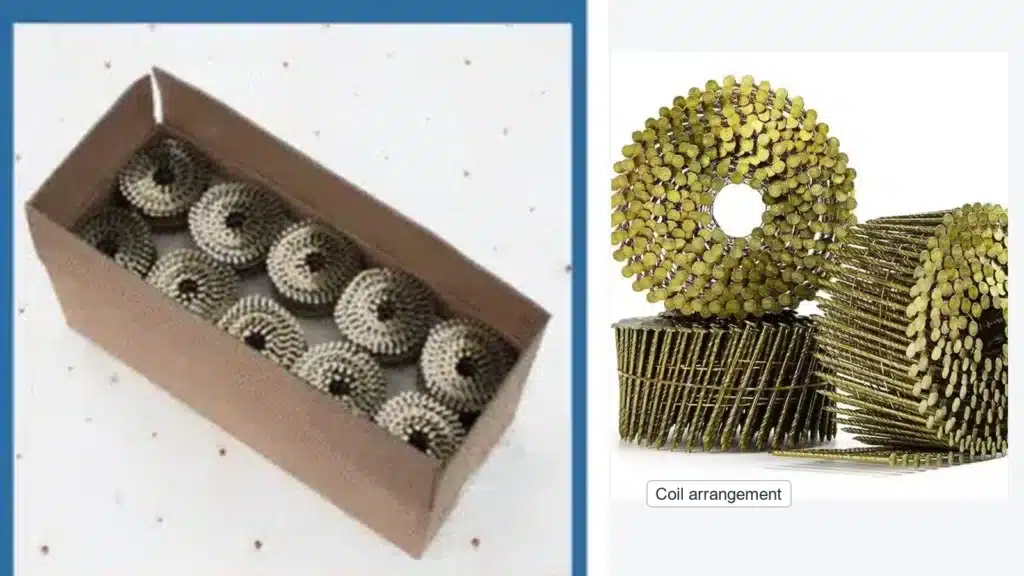
Before designing the carton, confirm the coil format. The same outer carton may not suit every nail count, coil diameter or nail length. Longer nails and heavier shanks change the carton weight quickly.
Useful details include:
| Packing Detail | Why It Matters |
|---|---|
| Nails per coil | Affects coil size, weight and carton quantity |
| Coils per carton | Controls gross weight and warehouse handling |
| Coil outside diameter | Determines carton fit and inner support |
| Nail length and shank | Longer or ring shank nails need stable spacing |
| Finish | Bright, EG and HDG products may need different moisture expectations |
| Buyer item code | Helps warehouse receiving and resale |
If the buyer already sells coil nails locally, send a photo of the current carton and inner arrangement. If the current packing caused problems, describe the problem clearly instead of only asking for “stronger packing.”
Carton Strength and Weight Control
Carton failure is one of the most common packing issues for heavy fasteners. A carton can look neat before loading, then fail after stacking, vibration or humid storage. Buyers should confirm carton quantity and gross weight rather than accepting a vague “standard export carton” description.
For distributors, there is a tradeoff. More coils per carton may reduce packing cost, but it can make warehouse handling harder. Fewer coils per carton may be easier to lift and resell, but may increase packaging material and shipping volume. The best choice depends on the sales channel, warehouse equipment and customer expectation.
For production users, cartons should be easy to open and move near the nailer area. If operators need to refill tools frequently, carton design should not slow down the production line.
Moisture Protection Without False Claims
Coil nails are steel products. Finish choice and storage conditions both affect corrosion risk. Packaging can help reduce moisture exposure during normal shipping and warehousing, but it should not be described as a guarantee against corrosion in all conditions.
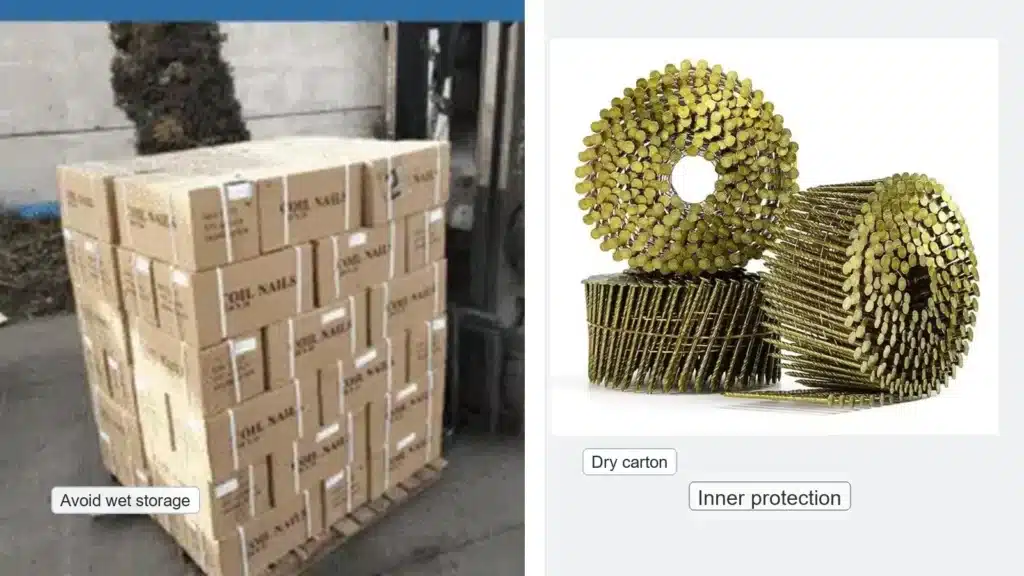
Practical moisture protection may include inner plastic bags, dry cartons, pallet wrapping and avoiding direct contact with wet floors or damaged containers. For galvanized products, packaging should support the chosen finish, not replace it. For finish selection, see the existing guide on electro-galvanized vs hot-dip galvanized coil nails.
Avoid unsupported statements such as “waterproof,” “rust-free for years” or “guaranteed for coastal shipment.” A responsible packing note should describe actual materials and handling requirements, not promise a service life.
Palletizing and Container Loading
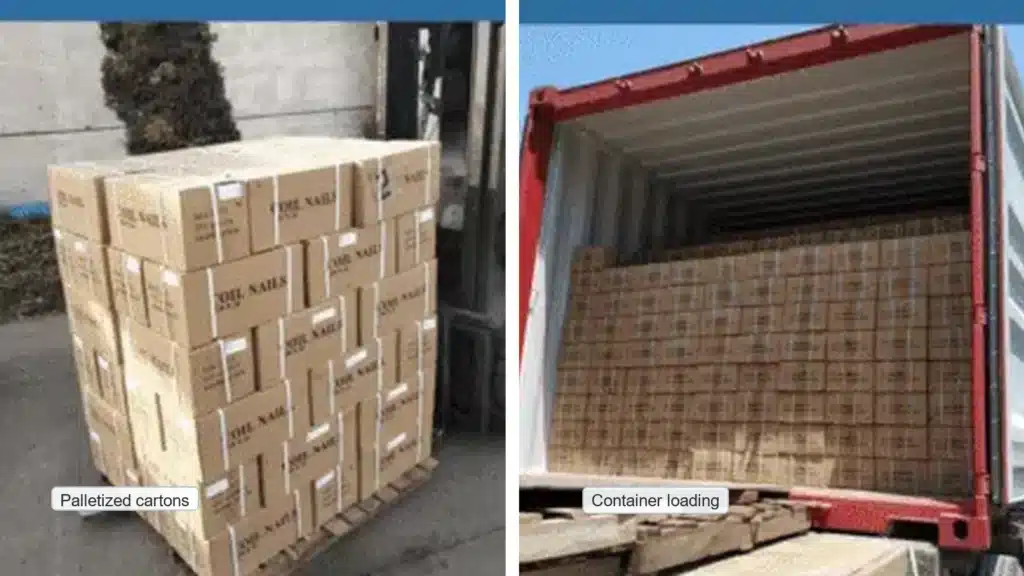
Pallet packing should protect the cartons and make handling predictable. Cartons need to be stacked evenly, wrapped securely and arranged so the pallet remains stable. If wooden pallets or wood dunnage are used in international trade, buyers should check the destination country’s requirements. The IPPC’s ISPM 15 standard covers phytosanitary measures for wood packaging material in international trade.
This does not mean every coil nail order requires the same pallet type. Some buyers prefer pallets for warehouse efficiency; others request non-palletized cartons to fit a loading plan. The key is to decide before production and write it into the order.
Palletizing details to confirm:
- Cartons per pallet
- Pallet size and material
- Maximum pallet height
- Stretch wrap or strap requirement
- Corner protection if needed
- Shipping mark placement
- Container loading constraints
Labels and Shipping Marks
Labels should help people identify the product quickly. They should not create unsupported claims. A practical coil nail carton label may include item code, nail size, shank type, finish, quantity, gross weight, net weight and carton number. If the buyer sells under a private label, artwork should be confirmed before carton printing.
Do not print standards, certifications or treatment marks unless they are actually required and documented. This is especially important for wooden pallets, treatment marks, coating claims and customer-specific quality labels.
For mixed-container orders, label clarity becomes more important. Different nail lengths, finishes or shank styles should not rely only on carton position inside the container.
Receiving Inspection at the Destination Warehouse
Packaging quality should be checked again when the goods arrive. This does not need to be complicated, but it should be consistent. A receiving team can record carton condition, pallet condition, label accuracy and whether the coils remain stable inside the cartons. Photos of any damage should be taken before cartons are moved through the warehouse, because later handling can make the original cause harder to identify.
For repeat orders, receiving notes are useful feedback for the next shipment. If cartons are difficult to lift, the coils shift, labels are placed on the wrong face, or pallet wrap is torn too easily, the buyer can adjust the next purchase order with concrete requirements. This is more effective than a general complaint after several shipments.
Receiving inspection should include:
- Outer carton damage or moisture marks
- Pallet stability after unloading
- Correct item code and label position
- Coil roundness and inner arrangement
- Carton weight compared with the agreed packing plan
- Photos of any crushed cartons before repacking
This feedback loop is especially useful for distributors who resell cartons without opening every box. The carton is part of the product experience for the next customer.
Sample Packing Should Be Approved Before Bulk Production
A sample nail can pass performance testing while the packing still needs adjustment. For a first order, ask for packing photos or a sample carton before bulk shipment. Check whether coils move inside the carton, whether labels are readable, whether cartons are too heavy, and whether the pallet arrangement matches warehouse expectations.
For buyers also reviewing tool performance, the previous guide on wire-collated coil nail compatibility explains why the coil format and nailer model should be confirmed before bulk order.
RFQ Checklist for Coil Nail Packaging
Include these details in the RFQ:
- Nail size, shank style, finish and collation type
- Nails per coil and coils per carton
- Target gross weight per carton
- Inner packing and moisture protection request
- Carton strength or buyer carton sample
- Neutral or branded carton requirement
- Palletizing method and pallet size
- Shipping mark and item code details
- Destination market and any wood packaging requirement
- Photos of current packing problems, if any
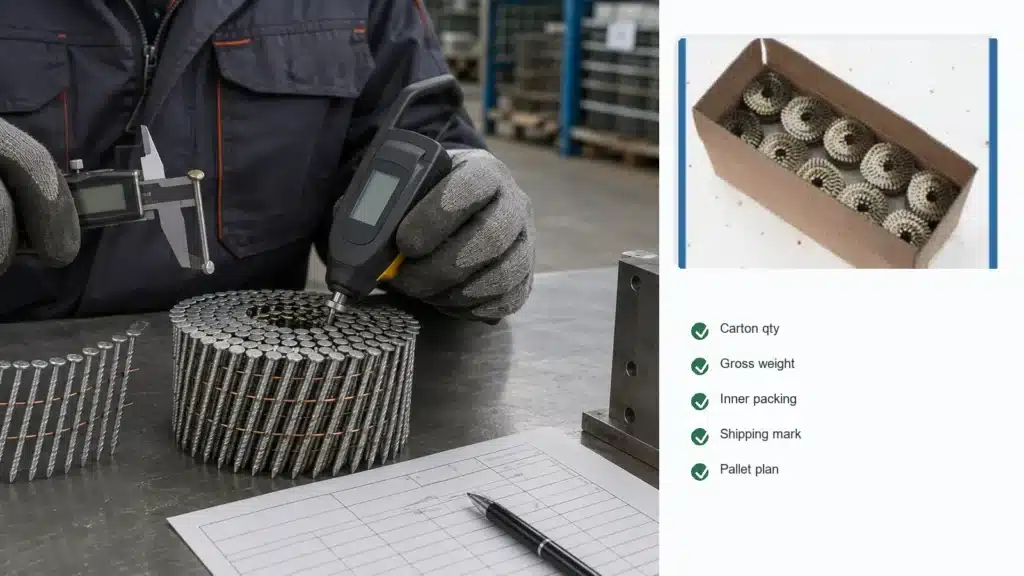
الخاتمة
Coil nail packaging should be specified before bulk production, not negotiated after the goods are packed. Confirm the coil format, carton quantity, gross weight, inner protection, palletizing and label details. This reduces avoidable damage, warehouse confusion and customer complaints.
If you are preparing a coil nail export order, Fastener Nails can review your nail specification, current carton sample and packing request. Send your order details through the contact page so the quote can include both product and packing requirements.
الأسئلة الشائعة
Why is coil nail packaging important?
Coil nails are heavy and can deform if they move inside weak cartons. Good packing helps protect coil shape, labels, warehouse handling and customer acceptance.
Should coil nails always be palletized?
Not always. Palletizing depends on the buyer’s warehouse, loading plan and destination requirements. The choice should be confirmed before production.
Can packaging prevent all corrosion?
No. Packaging can reduce moisture exposure during normal shipping and storage, but corrosion risk also depends on finish, environment, handling and storage conditions.
What should be printed on a coil nail carton?
Common label details include item code, size, shank style, finish, quantity, gross weight, net weight and carton number. Do not print unsupported certifications or claims.
Should I approve packing before bulk shipment?
Yes. For first orders, review packing photos or a sample carton before shipment so carton strength, coil arrangement and labels can be corrected early.
 Arabic
  English
  Spanish
  Portuguese