
When you look at a box of coil nails, it might seem like just another set of fasteners. But behind every coil lies a precise combination of material, structure, and engineering designed to meet very specific industrial needs. Whether you are manufacturing pallets, assembling wooden crates, or running a packaging workshop, understanding coil nails is essential to avoid costly mistakes.
This article will help you understand what coil nails are, how they’re classified, and why choosing the right type matters so much in global wood packaging and construction industries.
What Exactly Are Coil Nails?
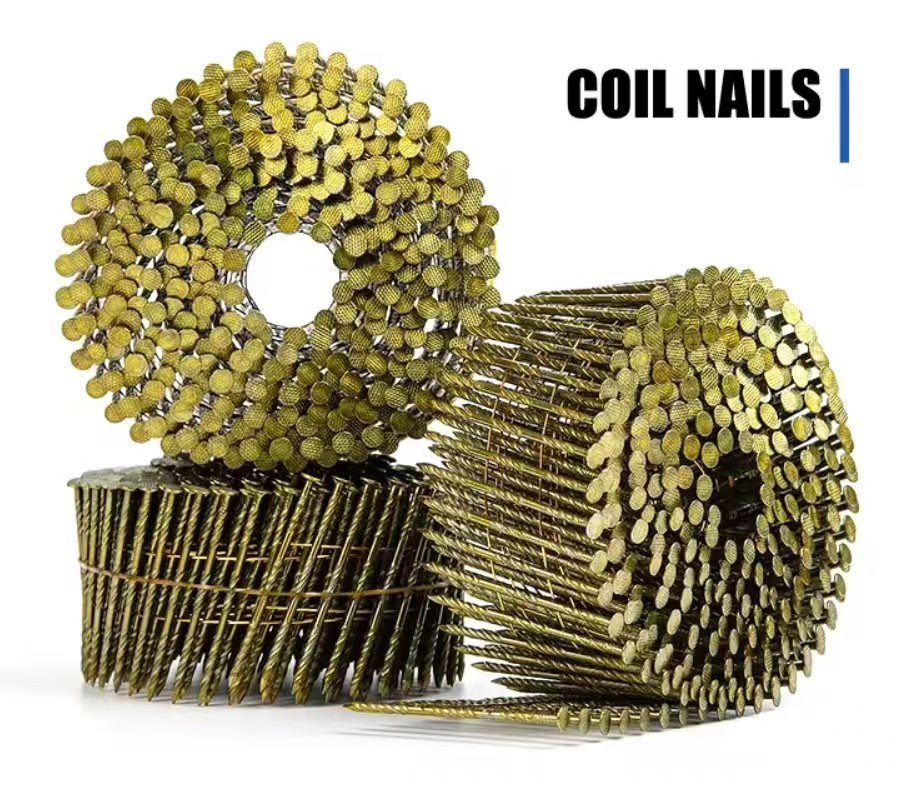
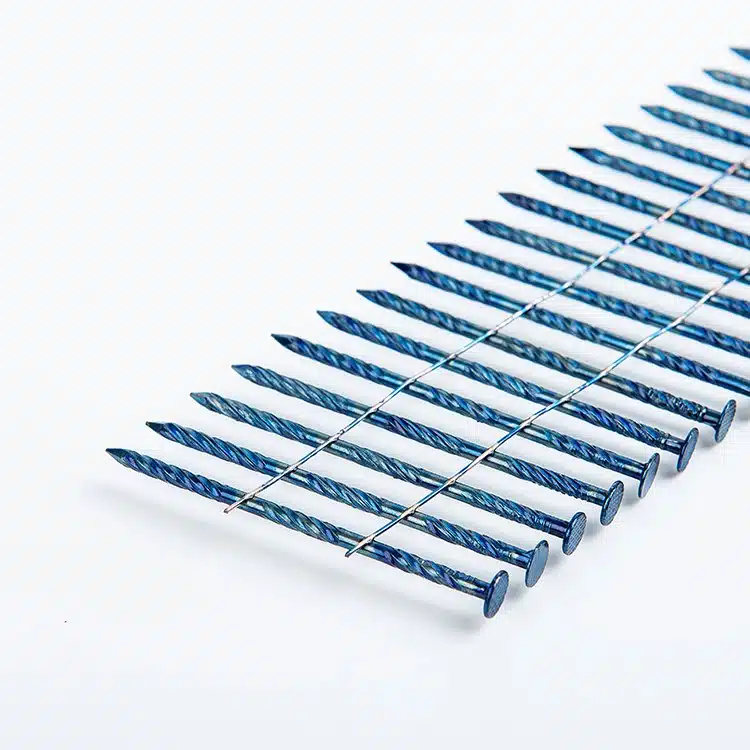
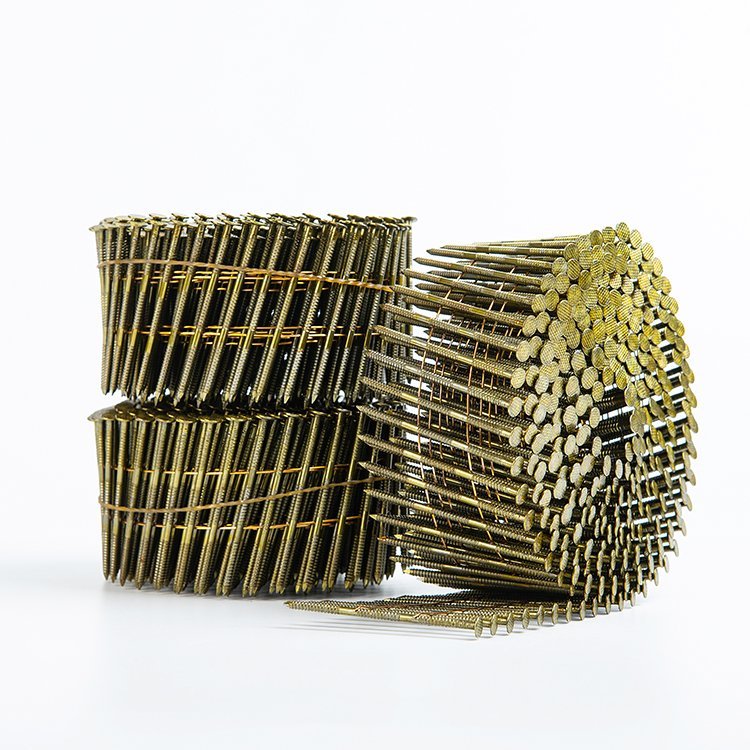
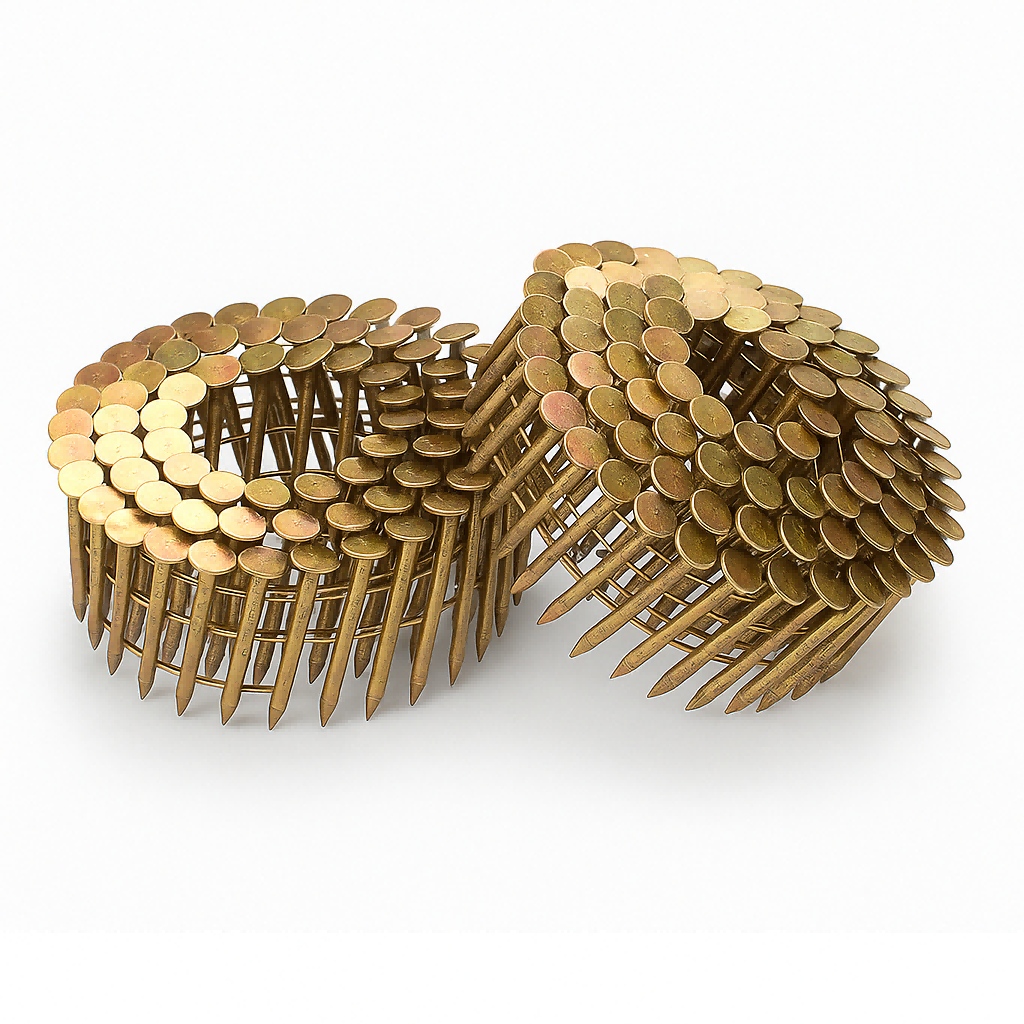
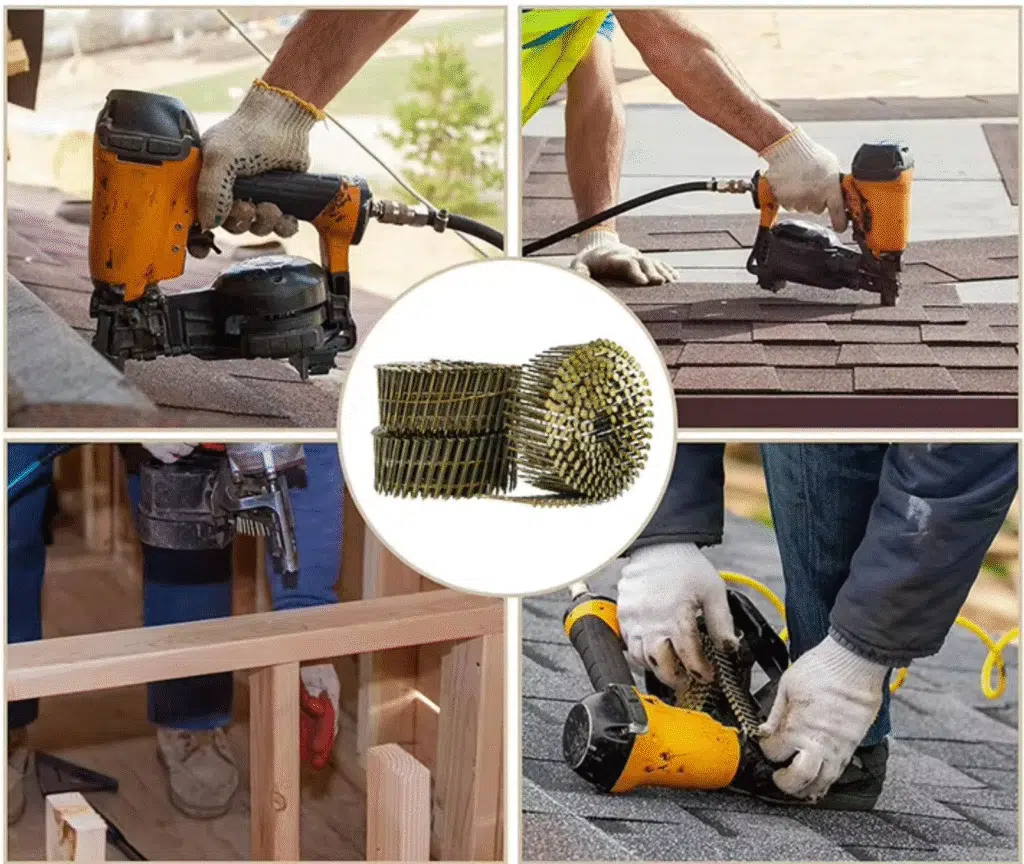
In simple terms, coil nails are individual nails welded together with thin steel wires at a fixed angle—usually 15° or 16°—and rolled into a circular coil.
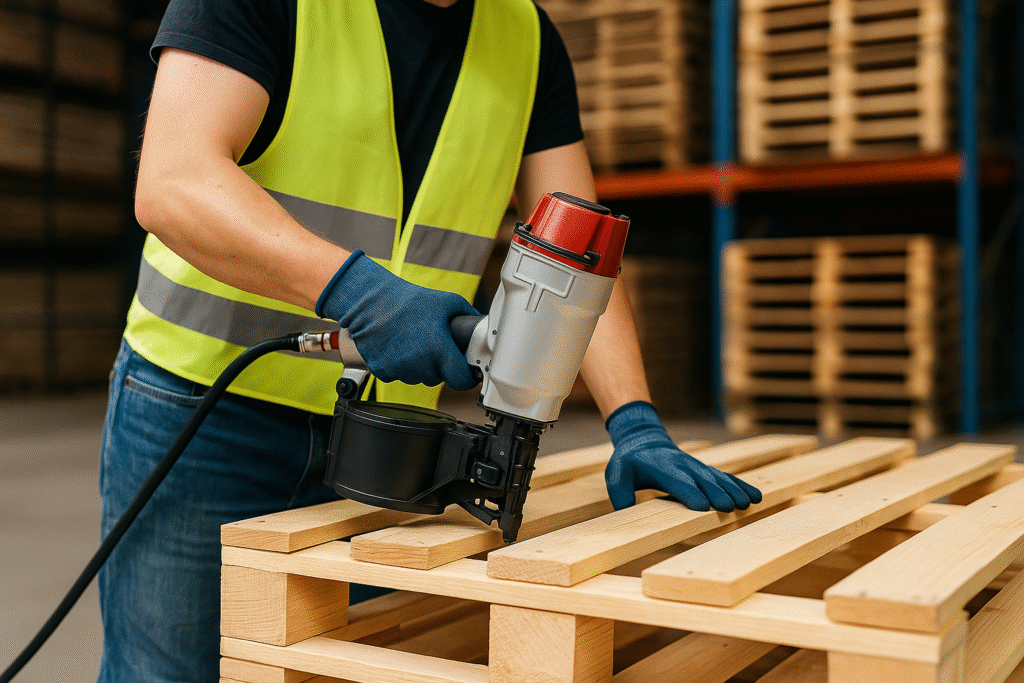
This coil fits inside a pneumatic coil nail gun, allowing hundreds of nails to be fired continuously without frequent reloading.
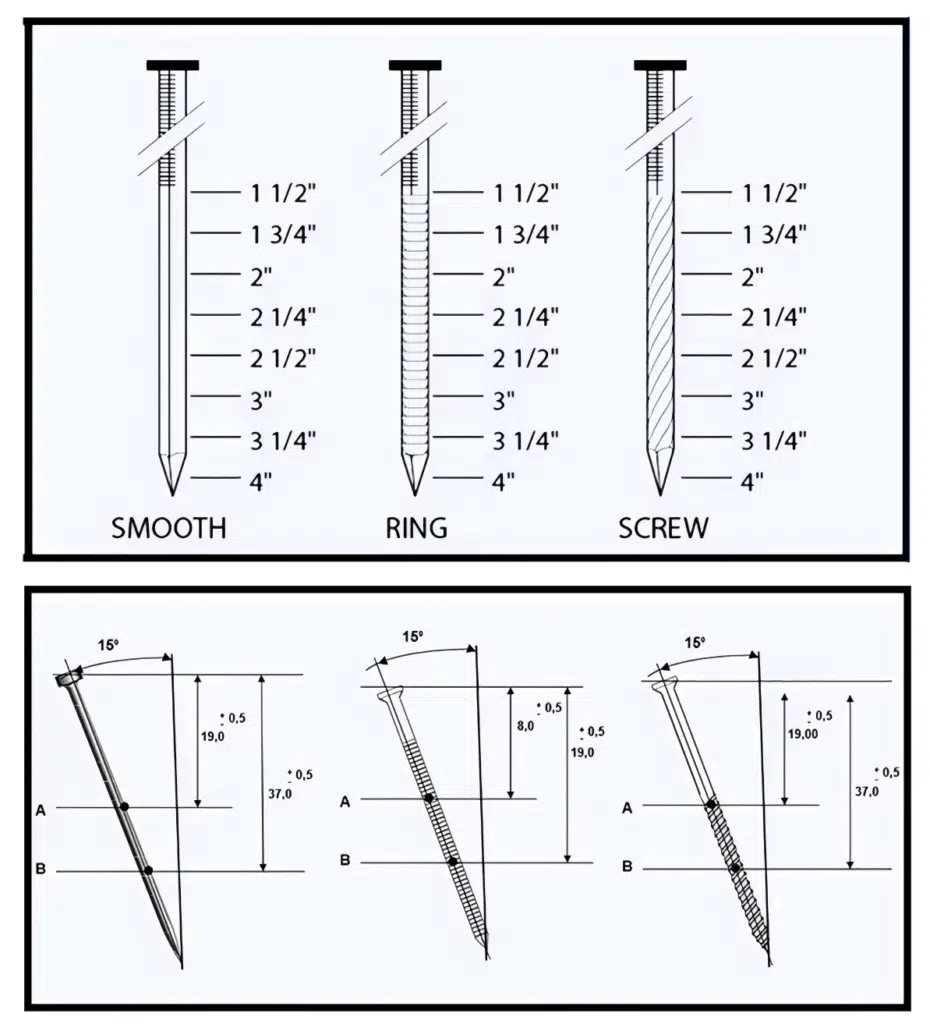
This simple but effective design greatly improves work efficiency and consistency. That’s why wire collated coil nails are commonly used in pallet factories, furniture production lines, and export packaging workshops.
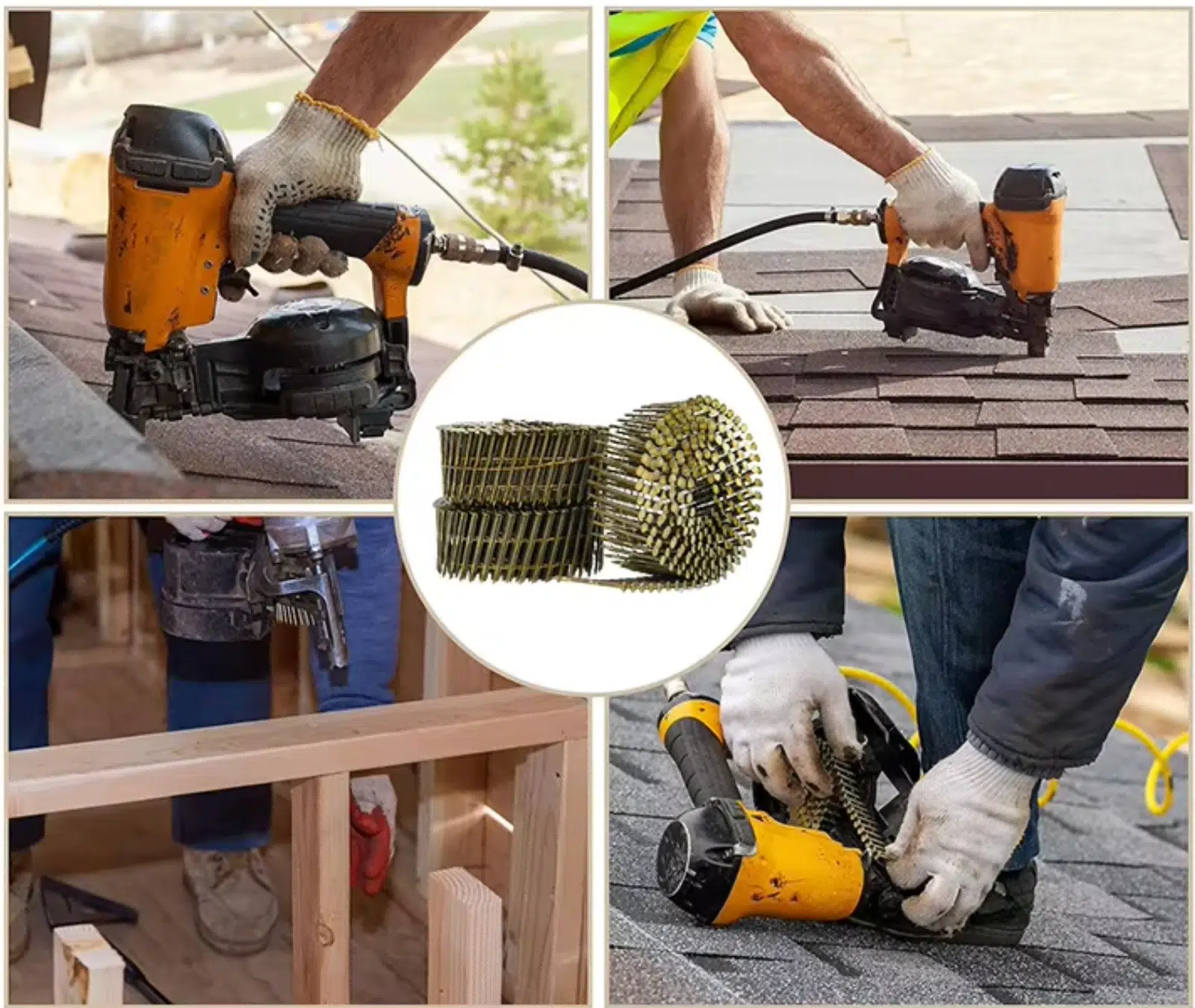
In most cases, coil nails are designed for high-volume applications such as:
- Wooden pallet and crate manufacturing
- Industrial packaging and logistics
- Construction framing and roofing
- Furniture and cabinet assembly
How Coil Nails Are Classified
Coil nails may look similar from the outside, but they are actually divided into several important categories based on their material, shank type, nail head, point style, and surface treatment. Each variation is designed to suit a specific type of wood, hardness, and application environment.
1. Material Types: Q235 vs Q195 Steel
The most common coil nail materials are Q235 and Q195 low-carbon steel wires.
Q235 steel is slightly stronger and tougher, making it suitable for harder woods and heavy-duty use.
Q195 steel offers better flexibility, which is ideal for softer woods or situations where some bending is acceptable.
The choice between these two depends on the hardness of the local wood you’re working with. For example, Southeast Asian hardwoods require stronger Q235 nails, while European softwood pallets can use Q195 nails safely.
2. Shank Type: Smooth, Ring, and Screw
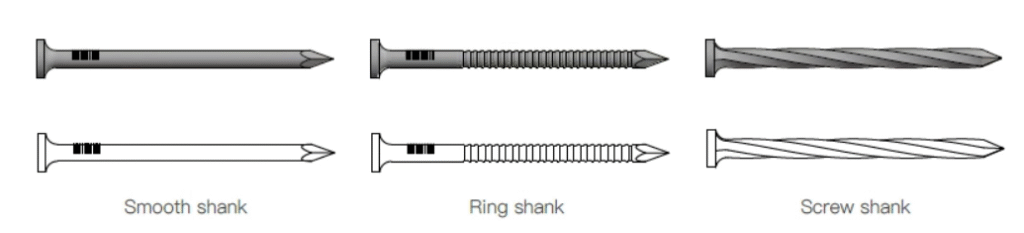
The shank determines how well the nail grips the wood.
- Smooth shank coil nails: Easy to drive, good for high-speed production on soft materials.
- Ring shank coil nails: Have circular ridges for stronger holding power, ideal for pallet coil nails, decking, or crate assembly.
- Screw shank coil nails: Feature spiral grooves that twist into the wood for maximum grip, perfect for roofing or high-vibration environments.
Choosing the right shank type ensures that your nails hold firmly without splitting or loosening over time.
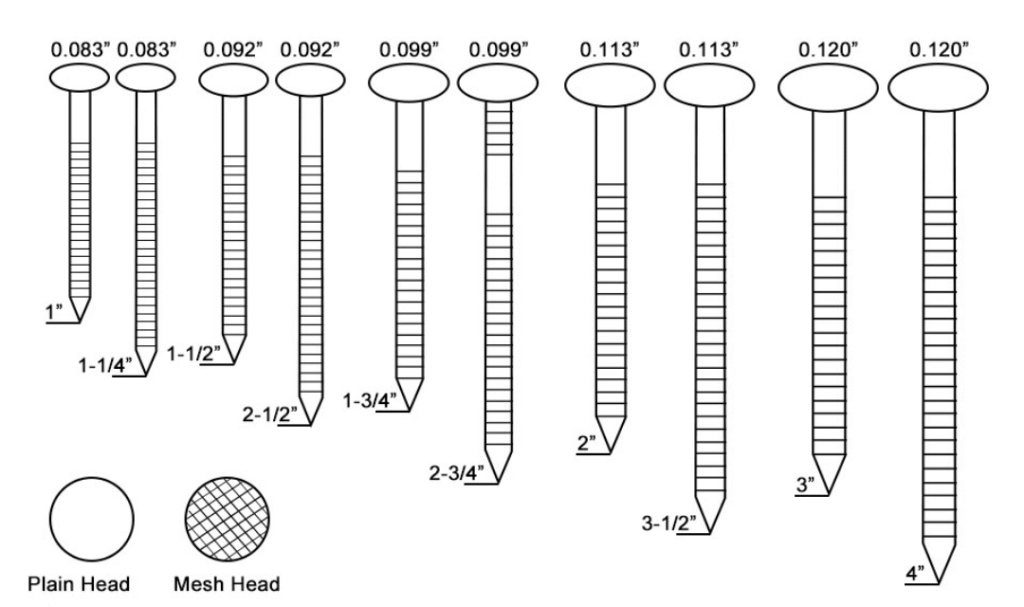
3. Nail Head Types: Flat Head vs. Checkered Head
The nail head determines how well the nail holds the top surface of the wood.
Flat head: Smooth and uniform, widely used in general packaging, pallet production, and framing.
Checkered (mesh-pattern) head: Provides better friction against the surface, preventing nails from slipping or popping out during vibration or impact.
4. Nail Point Styles: Diamond, Blunt, Chisel, or No Point
The point affects how easily a nail penetrates and how it behaves in different woods.
Diamond point: The most common and balanced type, suitable for most woods.
Blunt point: Reduces wood splitting, especially in dry or brittle materials.
Chisel point: Designed for harder woods, offering strong penetration power.
No point (flat tip): Used when smooth penetration is required without tearing fibers—common in delicate or layered wood packaging.
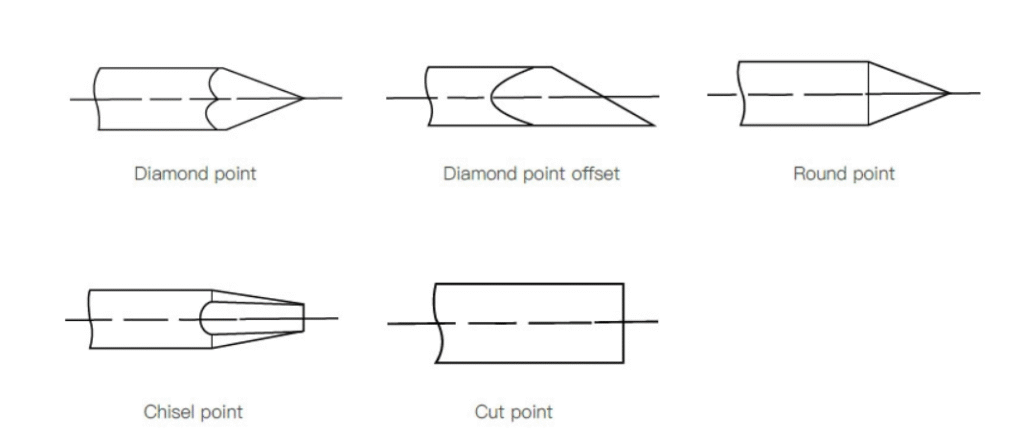
Selecting the right point can prevent nail jamming, bending, or damage to the material.
5. Surface Treatment: Painted or Galvanized
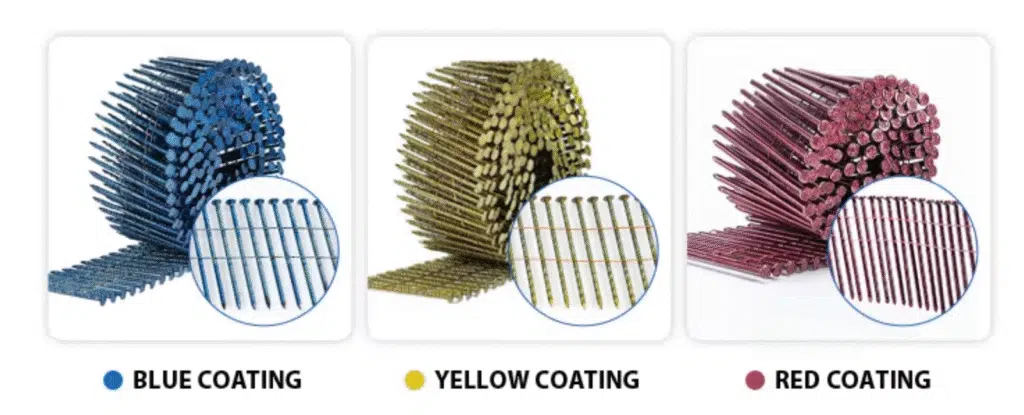
Coil nails usually undergo surface treatment to improve durability and corrosion resistance.
Paint-coated coil nails: Typically sprayed with glue or resin paint, improving feeding smoothness in the nail gun.
Galvanized coil nails: Zinc-coated to resist rust, ideal for outdoor or humid environments.
Electro-galvanized offers a smooth, thin layer at a lower cost, while hot-dip galvanized provides thicker protection for harsh conditions.
These coatings ensure that nails maintain performance even under coastal climates or cold storage facilities.
Why Coil Nails Have So Many Variations
The reason there are so many types of coil nails is simple: wood varies dramatically around the world.
A nail that performs perfectly in pinewood might split oak or bend in teak. That’s why professional coil nail suppliers like FastenerNails.com always ask buyers to confirm the local wood type and hardness before placing a large order.
For example, softer woods like pine or spruce can use smooth shank bright nails. Medium hardwoods such as birch or poplar need ring shank nails for stronger grip. Very hard tropical woods like oak, acacia, or mahogany may require screw shank or high-strength Q235 nails with diamond or chisel tips.
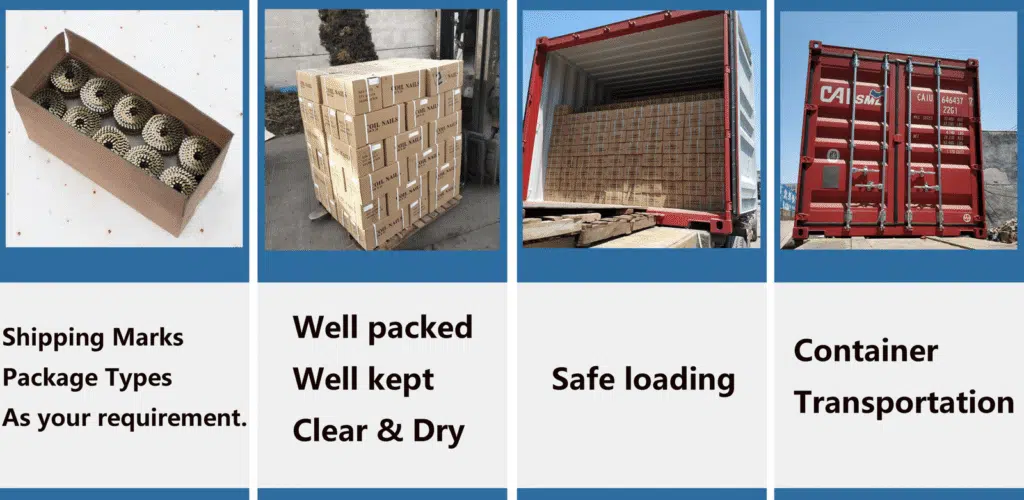
This matching process is critical because coil nails are consumable products, and customers usually buy them by the container load—often a full 20-foot container at a time. If the wrong specification is chosen, the trial-and-error cost can be high.
That’s why we always recommend that new customers test a few coils first before mass ordering. It helps fine-tune specifications and avoid unnecessary loss.
The Importance of Nail Size and Compatibility
The size of the nail—its length and diameter—directly determines whether it can properly fasten the material.
A simple rule of thumb: the nail length should be about three times the thickness of the wood piece you are fastening. The diameter must match both the wood hardness and the nail gun specification.
If the nail is long enough but too thin, it may bend or break in hard wood, or even jam the nail gun. On the other hand, if it’s too thick, it could split the material.
For example, 2.1mm (0.083”) diameter coil nails are usually packed 400 nails per coil, while 2.3mm (0.092”) and above are packed 300 nails per coil.
Each coil’s diameter and spacing are calibrated according to the corresponding coil nail gun—ensuring smooth feeding and no misfire.
Matching Coil Nails with Nail Guns
Coil nails are not used alone—they work hand in hand with pneumatic coil nail guns.
At FastenerNails.com, we often provide matching tools for bulk buyers. For example, if a client orders a full container of nails like 2″×0.099″ (2.5mm×50mm) and 2¼”×0.099″ (2.5mm×57mm), we include three Meite CN55 nail guns free of charge.

Meite is one of China’s most reputable pneumatic tool brands, known for durability and precision. Matching the correct gun model ensures both safety and efficiency during long production runs.
A Note About Coil Nail Manufacturing and Cost
It’s important to remember that coil nails belong to the lower-end segment of steel products.
The basic process—drawing wire, shaping, welding, and coiling—is standard across most factories. However, the quality of wire, welding precision, and coating thickness can vary from supplier to supplier.
While some buyers may chase the lowest price, it’s worth understanding the trade-off:
“You get what you pay for.”
A nail that costs slightly more but performs consistently will save you more money in reduced downtime, fewer jams, and longer tool life.
That’s why we always suggest evaluating usability, consistency, and delivery reliability instead of just per-ton cost. The right balance between price and practicality matters more than perfection on paper.
Conclusion: Choosing the Right Coil Nails Saves Time, Money, and Headache
In industrial packaging, every detail matters — and coil nails are no exception. The right nail ensures smooth production, fewer tool failures, and stronger end products. The wrong one can waste an entire shipment’s worth of materials and labor.
Before placing a bulk order, always:
- Identify your local wood type and hardness.
- Confirm the correct shank, head, and tip design.
- Match your coil nail dimensions to your nail gun model.
- Test small batches first before confirming the container order.
At FastenerNails.com, we specialize in producing high-quality wire collated coil nails designed for pallet manufacturing, packaging, and construction applications. Our goal is not to sell the cheapest nails — but to deliver reliable fasteners that make your daily production easier and more efficient.



 English
  Arabic
  Spanish
  Portuguese