
A cage-panel joint should not be released from a ring size alone. The buyer needs the two wire diameters at the joint, the overlap geometry, the tool model, the proposed ring spacing and a closed sample made from production wire. Those five inputs turn a general C-ring request into a repeatable fastening specification.
En C17 and C24 hog-ring product page documents two useful series boundaries. C17 is listed at 16.9 × 8.7 mm with 1.60 mm wire, for the SC760B tool and a stated 3.2–4.8 mm clamped-material range. C24 is listed at 24 × 12 mm with 1.60 mm wire, for SC7C or SC7E tools and stated clamped-material ranges of 4.8–8.0 mm or 7.8–10 mm. Galvanized and stainless-steel options are documented. These are catalogue facts, not automatic approval for every cage joint.
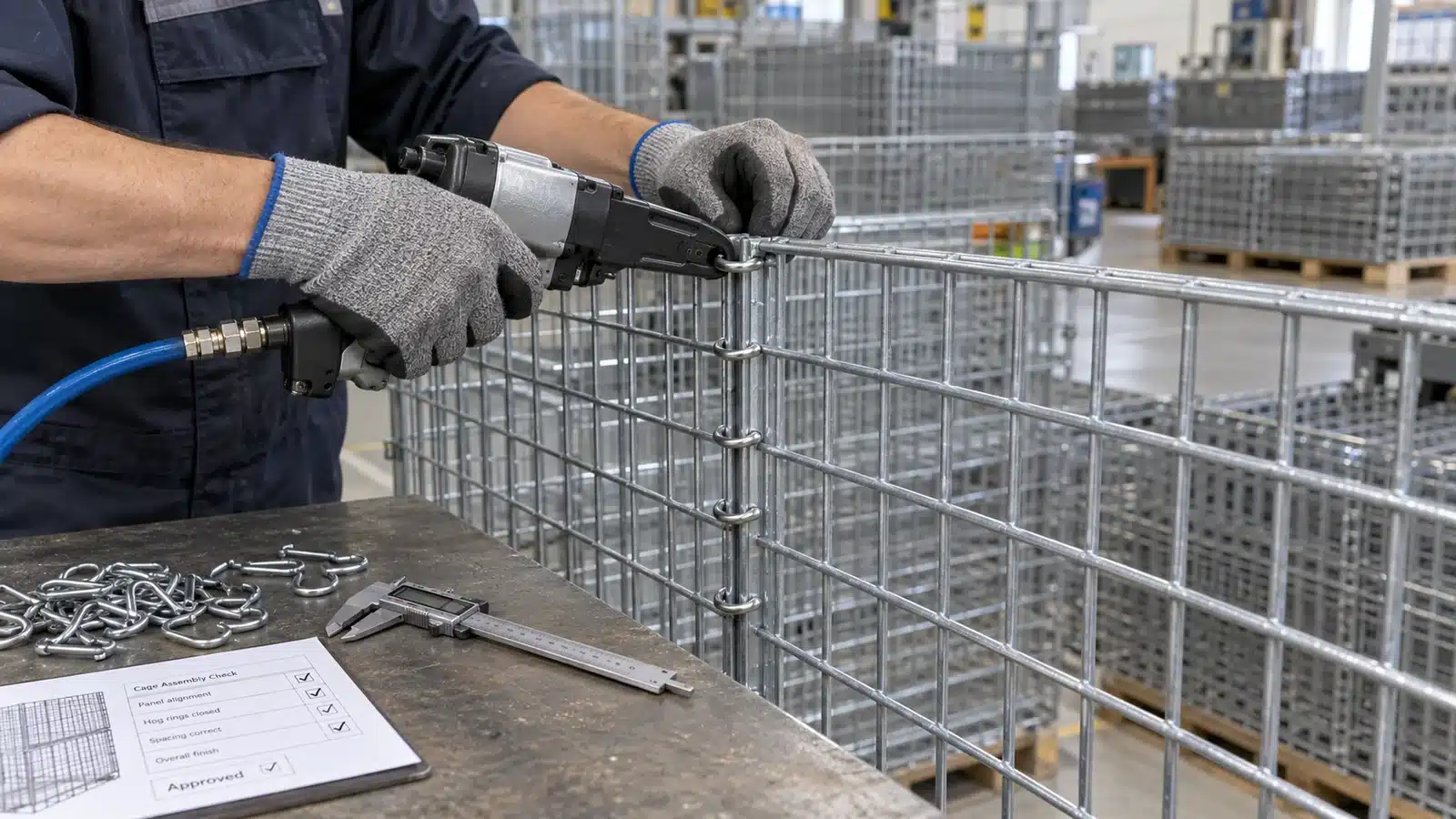
Measure the Joint as a Wire Stack
Record the main panel wire, return wire or frame wire, their coating and the way they meet. Two nominal wire diameters cannot fully describe the bundle when wires cross at an angle, coatings add thickness or a bent return creates a third contact point. Photograph the joint next to a scale and mark the measurement location on the drawing.
Use the published clamped-material range only as a shortlist boundary. The finished ring must close around the real wire stack without leaving a loose loop, cutting the coating or forcing the wires out of alignment. A buyer should not convert the catalogue range into an unsupported load rating.
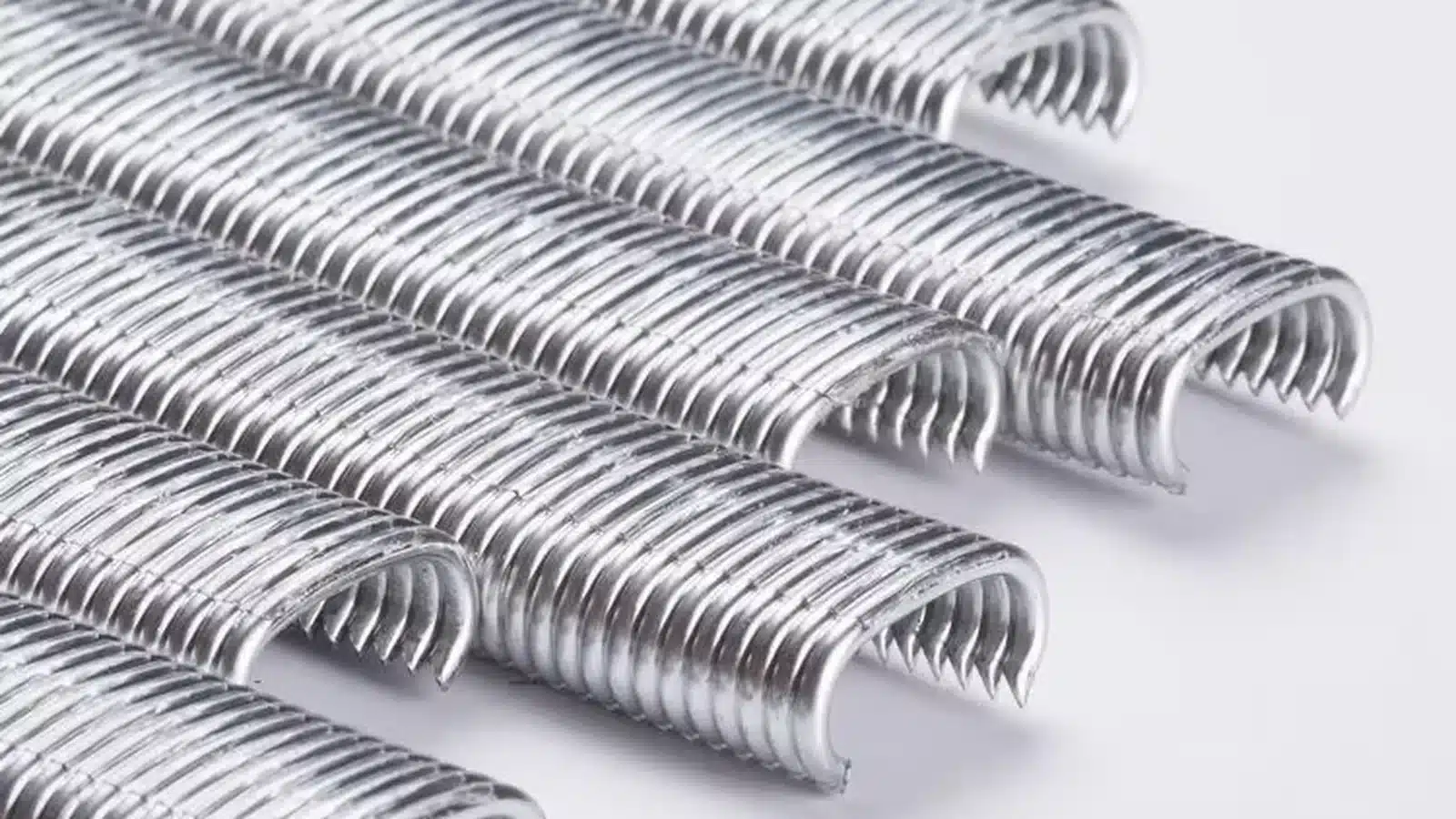
Match the Series to the Tool Before Setting Spacing
C17 and C24 are not interchangeable magazine choices. Lock the tool model and nose condition before the trial. If the production line uses SC760B, the C17 series is the documented match; SC7C and SC7E are documented for C24. Confirm the exact tool variant, air supply and service condition with the supplier because a worn nose or unstable pressure can change closure consistency.
The existing C-hog-ring tool compatibility guide helps separate SC760B, SC7C and SC7E before samples are ordered. This article addresses the next decision: how to approve the ring on a real cage-panel seam and freeze spacing in the production drawing.
Trial More Than One Ring Position
Build sample joints from the intended panel wire and finish. Test the start, middle, corner and any point near a frame or door opening. Corners often constrain tool access and change the angle between the nose and wire stack. Record whether the tool reaches each position without twisting the panel.
Begin with a proposed spacing from the cage design owner, not a guessed universal interval. Apply rings along a measured seam and inspect the joint for panel movement, inconsistent closure, exposed points, coating damage and distortion. If the spacing changes, repeat the sample rather than assuming the earlier result still applies.
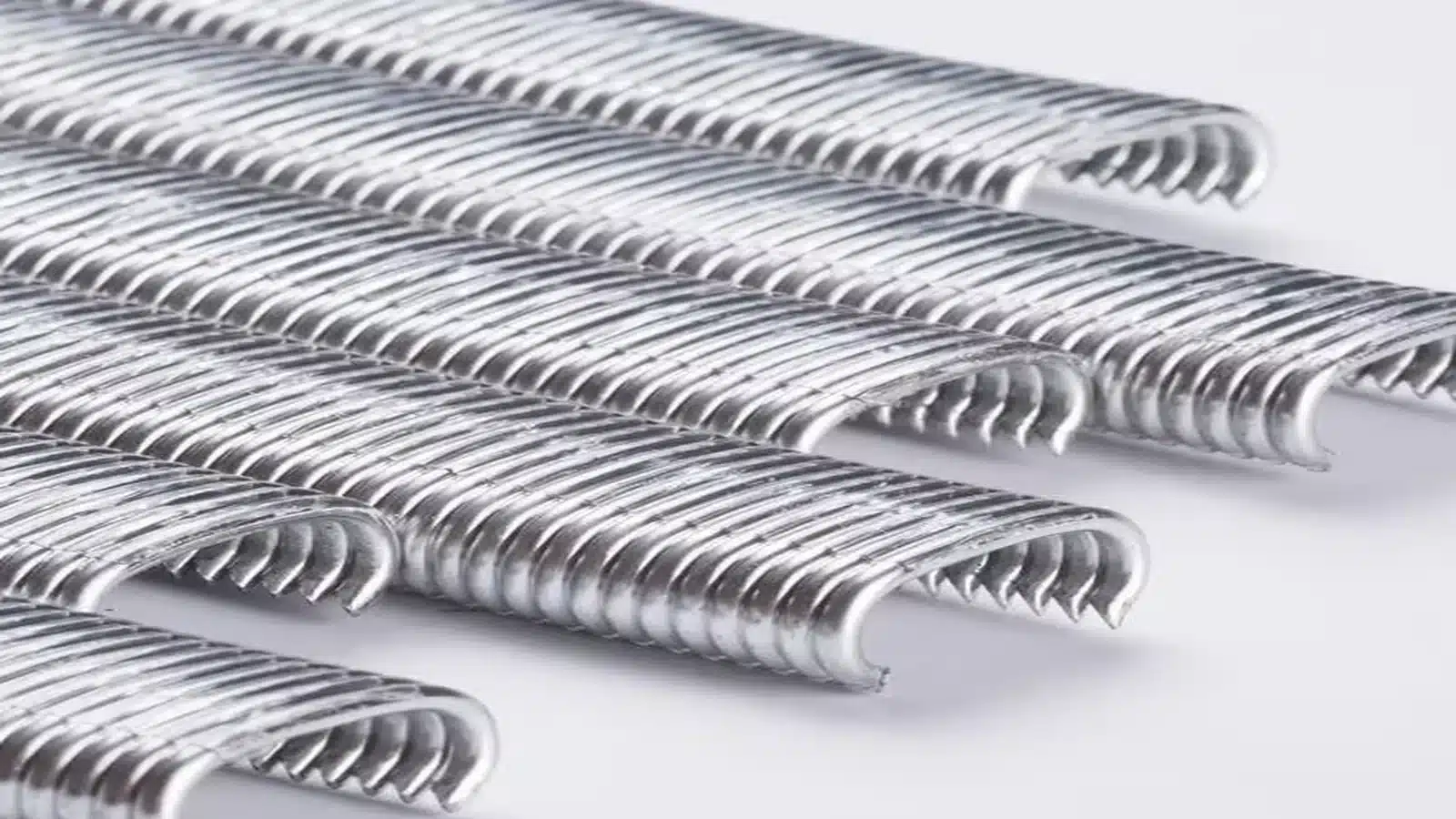
Open several trial rings only when the agreed inspection method permits it. Check that the closed profile is repeatable and that the wire remains seated. Retain accepted and rejected samples with tool, ring lot, panel-wire lot and operator settings. That evidence is more useful than a photograph of one good closure.
Put Material and Exposure on the Same Approval Sheet
Galvanized and stainless-steel rings should be ordered as different controlled items. State indoor or outdoor exposure, cleaning chemicals, moisture, coating compatibility and any customer material requirement. A change from galvanized to stainless, or the reverse, should trigger a documented review because material choice is part of the approved joint.
The purchase line should include C17 or C24, ring wire size, material and finish, tool model, packing, panel-wire description and drawing revision. Add the approved ring spacing and sample reference. Receiving teams can then compare the shipment with a known specification instead of accepting a visually similar ring.
Related C-Hog-Ring Controls
- Compare C17 and C24 by ring dimensions, tool and clamped-material range
- Inspect closed C-hog-ring samples for symmetry and exposed points
- Approve galvanized or stainless C hog rings against the exposure record
Request a Cage-Panel Closure Review
Send the panel-wire diameters, joint drawing, proposed spacing, tool model, exposure, required material and closed-sample photos through the fastener RFQ contact page. Ask for the C17 or C24 series to be confirmed before production spacing is released.
 Spanish
  English
  Arabic
  Portuguese