
Coil nail sample approval is the step that protects a bulk order from avoidable mistakes. A sample may look small compared with a container shipment, but it is where the buyer can confirm nail dimensions, shank type, surface finish, collation quality, nailer fit and packing details before the full order is produced.
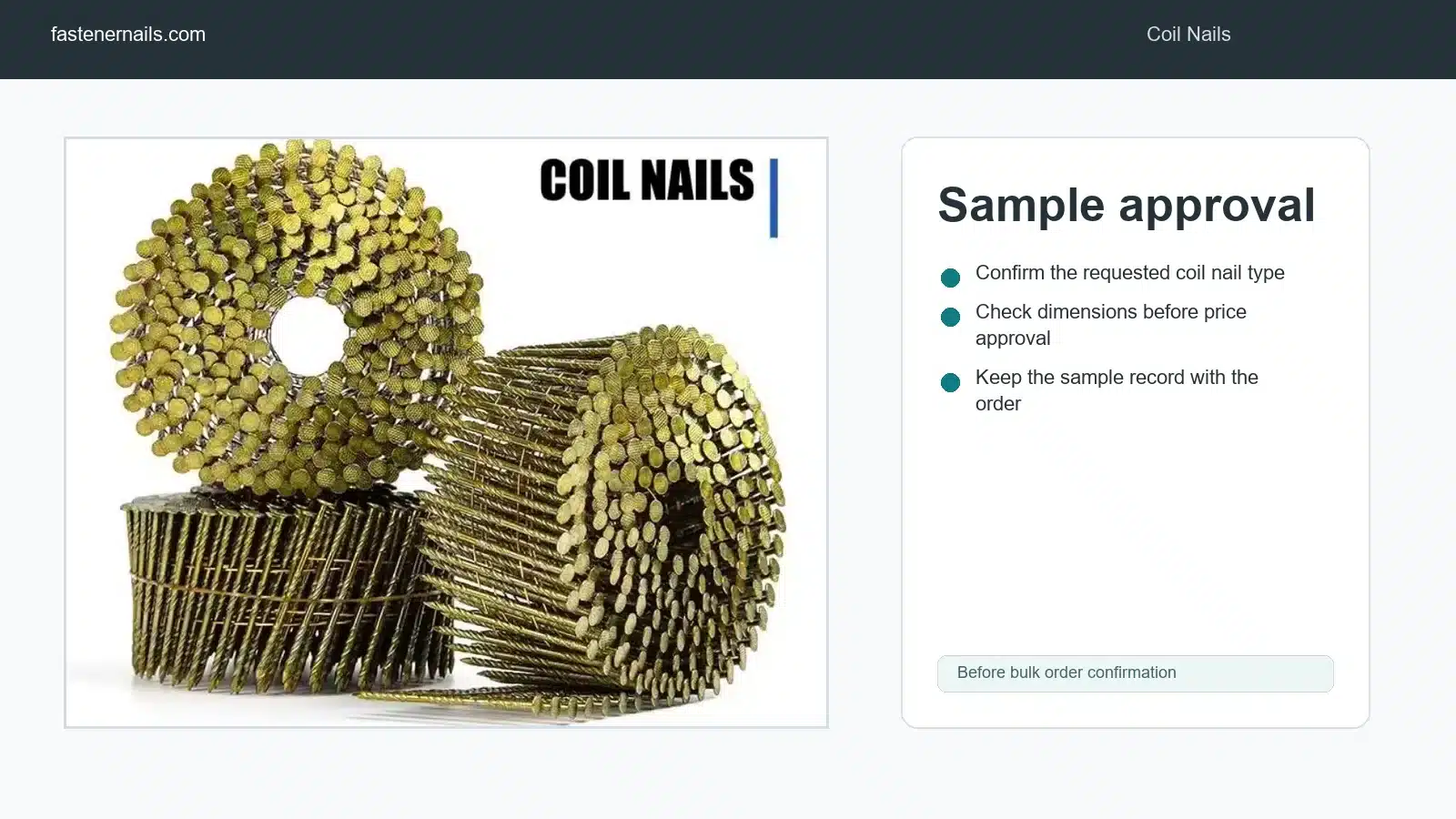
For buyers sourcing coil nails, the approval process should be more than a quick photo check. A clear sample checklist gives the purchasing team, production team and supplier the same reference point. It also reduces arguments later, because the accepted sample becomes a practical benchmark for the order.
Why Sample Approval Matters
Coil nails are bought by specification, not only by name. Two coils can both be described as wire-collated coil nails while still differing in nail length, diameter, shank type, point, head, finish, coil count, wire collation and carton packing. If the buyer approves only a price and a broad product name, the risk moves into production.
Sample approval is especially important when the nails will be used in pallet assembly, crate production, roofing, fencing, siding or other repeat fastening work. These applications depend on feeding consistency and predictable driving. A nail that is slightly different from the buyer's nailer or wood can create jams, bent nails, splitting or unstable fastening.
Start With the Written Specification
Before the sample is checked, compare it with the written order request. The sample should match the requested nail length, wire diameter, head type, shank type, point, finish, collation angle, coil quantity and packing plan. If any one of these details is missing, the sample may still be useful, but it cannot fully approve the order.
Use the product page as a starting point, then make the order more precise. FastenerNails lists coil nail options by finish, shank, length, diameter and packing on the coil nails page. If shank choice is still open, review the earlier article on smooth, ring and screw shank coil nails before approving the sample.
Check Dimensions and Visible Construction
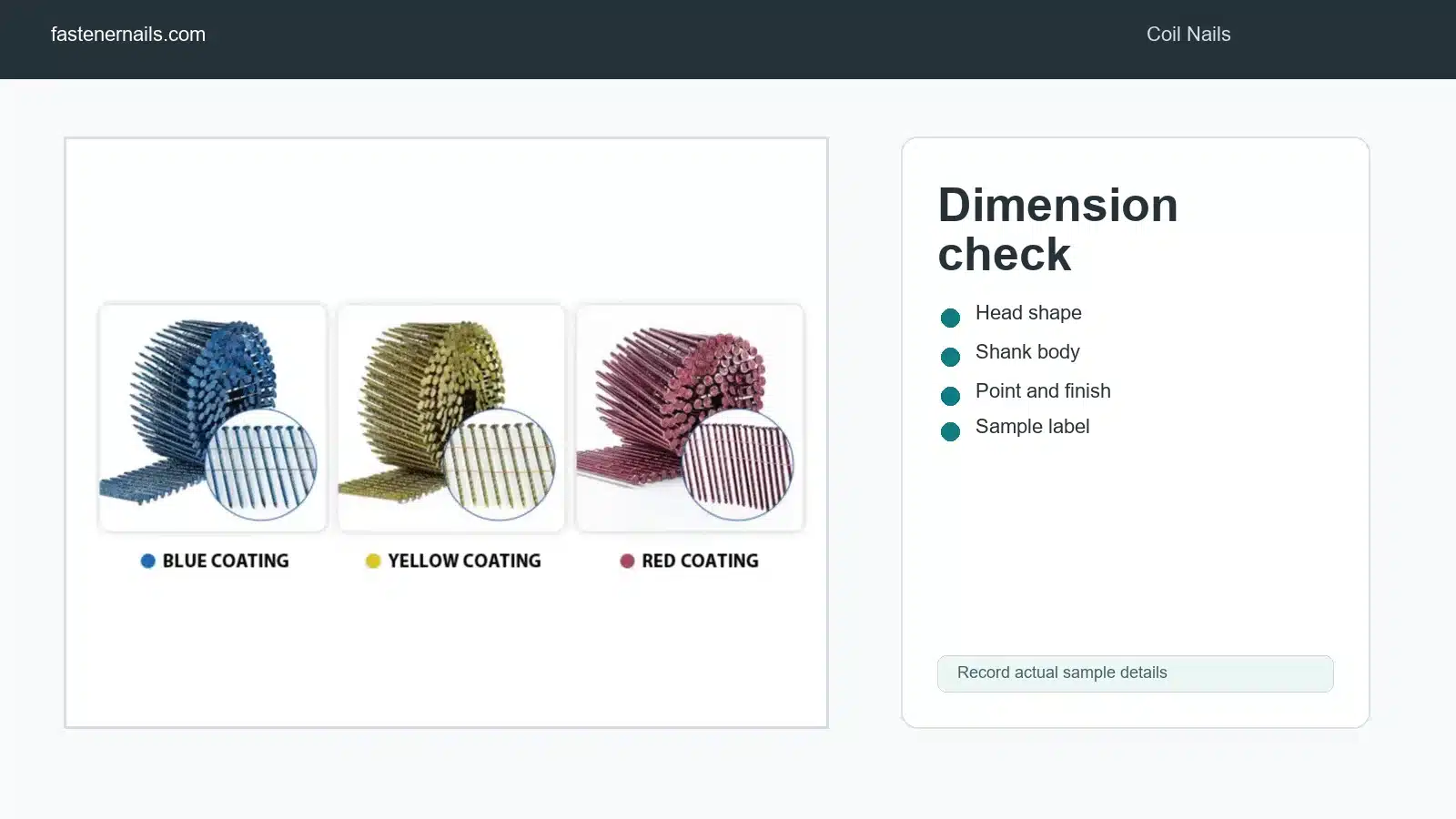
Do not approve a coil nail sample only because the coil looks clean. Check the actual nail. Buyers should confirm:
| Checkpoint | What to Review | Why It Matters |
|---|---|---|
| Nail length | The full length from head to point | A wrong length changes penetration and holding behavior |
| Wire diameter | The nail shank thickness | Diameter affects driving, strength and nailer compatibility |
| Head shape | Head size and form | The head affects pull-through resistance and surface finish |
| Point | The point style and consistency | Poor points can increase splitting or driving problems |
| Shank | Smooth, ring or screw profile | Shank choice affects grip and driving effort |
| Finish | Bright, electro-galvanized, hot-dip galvanized or coated finish | Finish should match exposure and appearance needs |
This does not mean every buyer must use advanced measuring equipment. It means the sample should be checked against the agreed specification and recorded before mass production.
Confirm Collation and Coil Form
The nail body is only part of the sample. In production, the coil form controls how the nails feed through the tool. Review the welding wire, coil direction, collation angle, coil diameter and whether the coil sits neatly without loose sections.
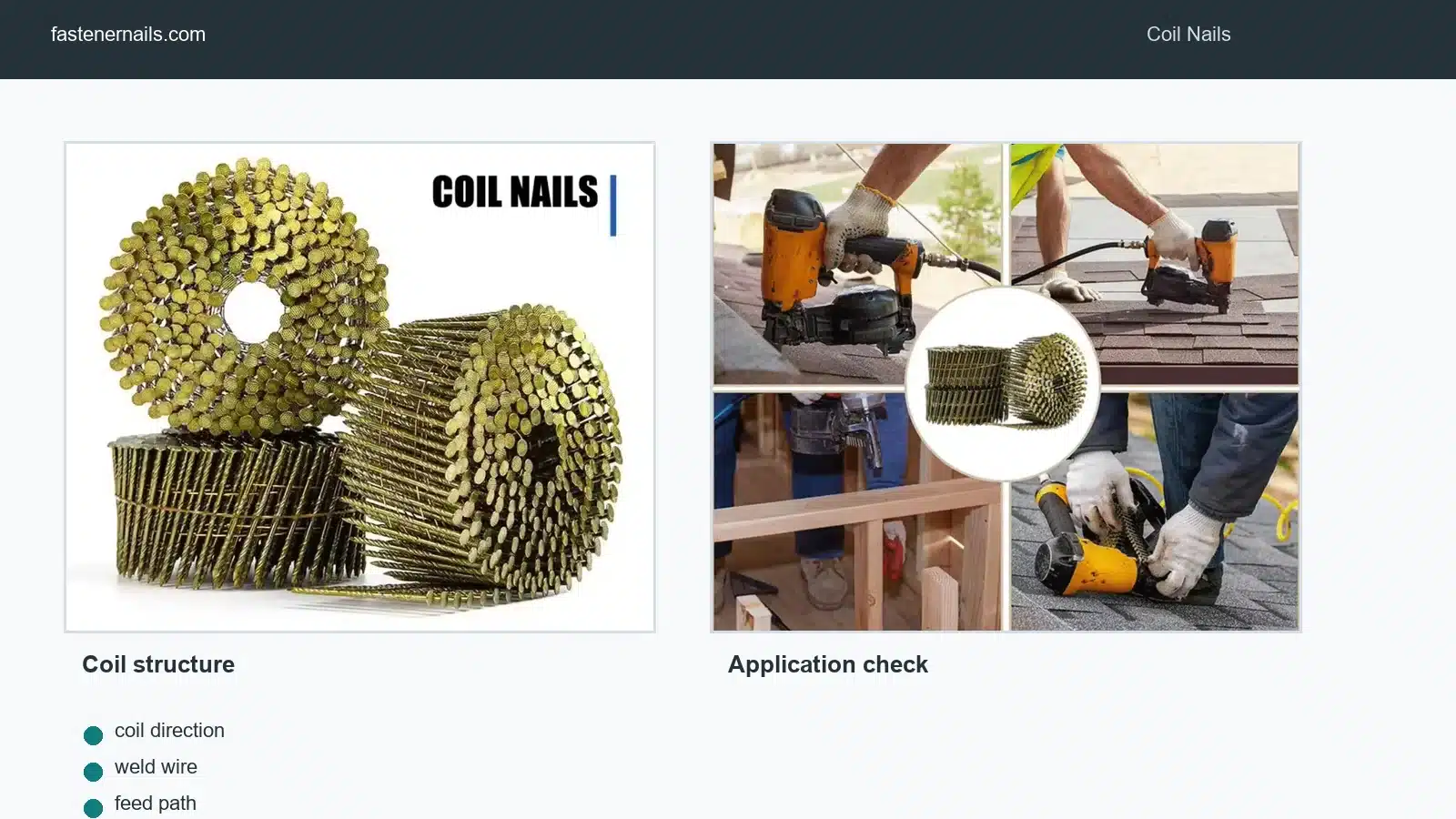
This is where buyers should connect the sample to real tool use. If the order is for pneumatic equipment, compare the sample with the buyer's nailer requirements and the supplier's related pneumatic coil nailer gun information. If the buyer already read the wire-collated coil nail compatibility article, use that checklist during sample review.
Run a Controlled Nailer Test
A sample is not fully approved until it has been tested in the intended or equivalent nailer. The test should be controlled, not casual. Use suitable wood, follow workplace safety rules, and keep the test area clear. The goal is to observe feeding, driving, nail seating and whether the coil creates repeated jams or misfeeds.
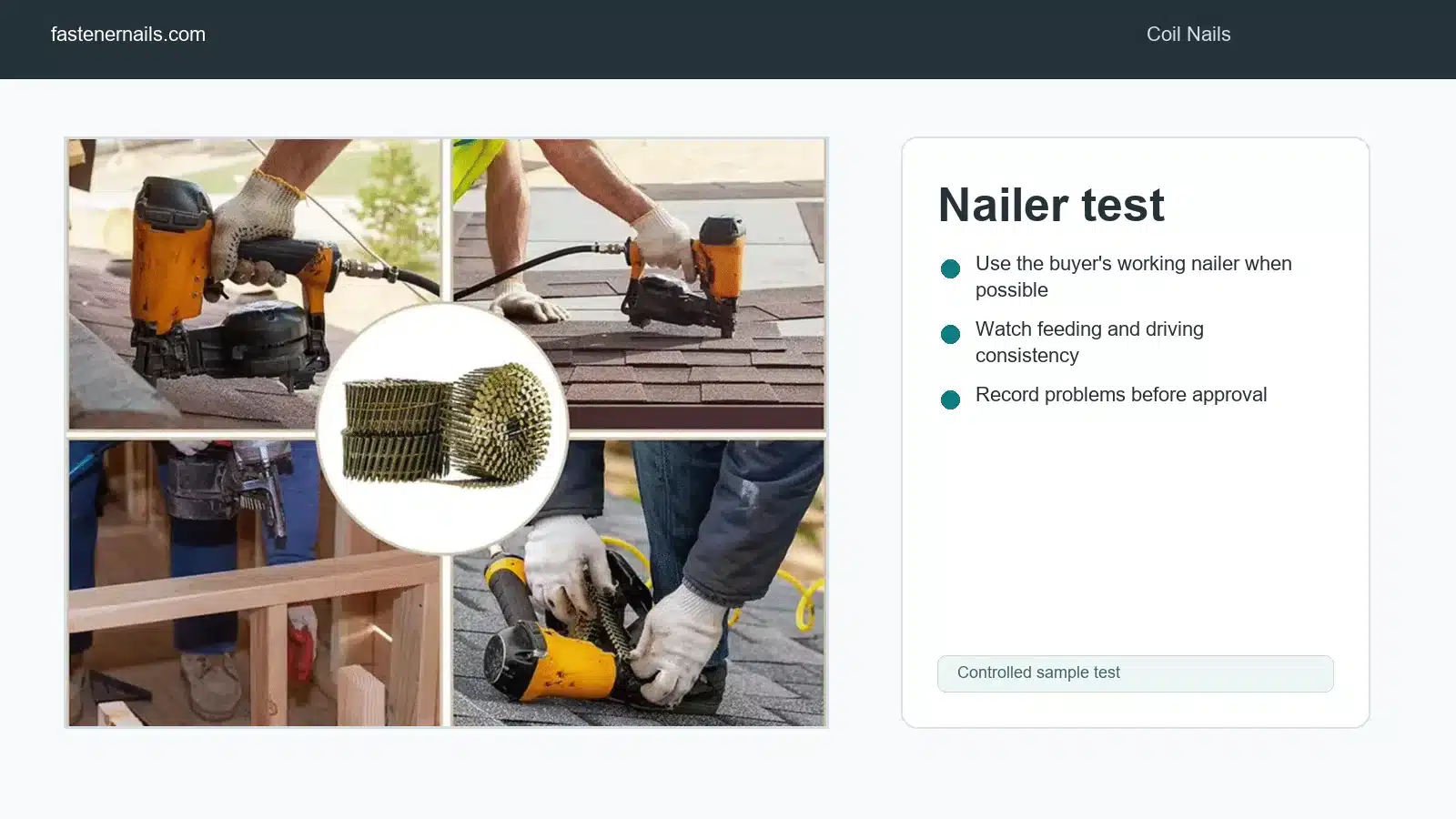
During the test, record what happens rather than relying on memory. Note whether the nails feed smoothly, whether the nail heads sit as expected, whether the point causes splitting in the test wood, and whether the shank type creates too much driving resistance. The result should be shared with the supplier before the bulk order is confirmed.
Review Packing Before Bulk Approval
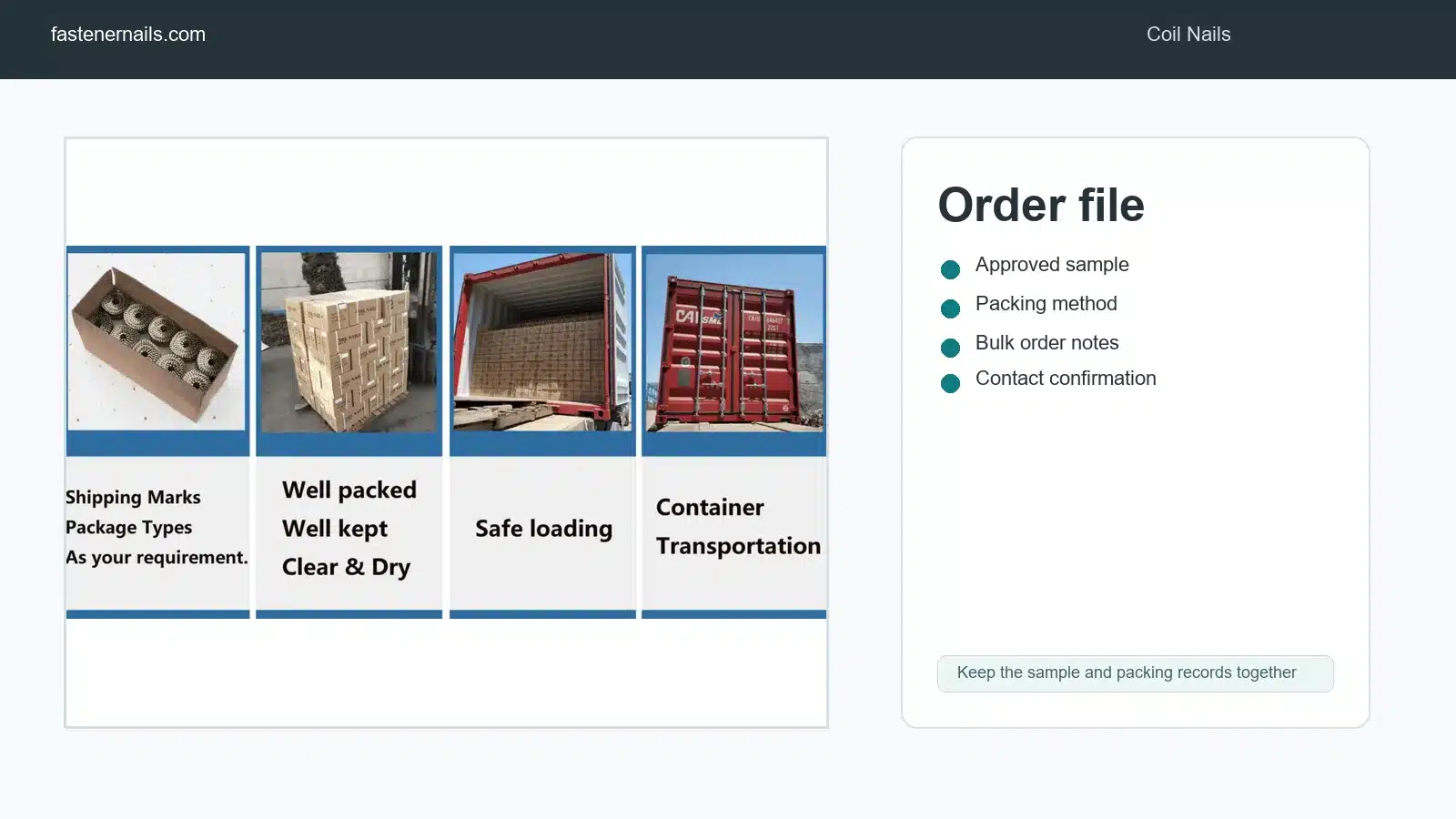
Packing is part of sample approval because damaged cartons or wet packing can turn a correct nail into a poor shipment. Confirm the inner packing, carton strength, coil arrangement, palletizing method and any label details required for warehouse handling.
FastenerNails has a dedicated article on coil nail packaging for export orders. Use it together with the sample checklist when the order will be shipped internationally or stored before use.
When a Sample Should Be Rejected
Rejecting a sample is not a failure. It is the reason samples exist. Buyers should pause approval when the sample does not match the written specification, when the coil shape is loose or uneven, when the nailer test shows repeated feeding problems, or when the packing method is different from the agreed export plan.
The decision should be specific. Instead of saying "sample not good," explain the exact issue: wrong shank type, finish mismatch, nail head inconsistent, coil diameter not suitable for the nailer, carton packing not strong enough, or missing order label details. Clear rejection notes help the supplier correct the issue quickly.
Avoid Over-Specifying the Order
Sample approval is also a chance to avoid unnecessary specification inflation. A buyer may ask for a stronger shank, thicker finish or more complex packing because it sounds safer, but every extra requirement should match the real application. Over-specification can raise cost, slow production or create driving problems without improving the actual fastening result.
The best sample is not always the heaviest or most aggressive nail. It is the nail that matches the wood, nailer, exposure, packing method and production rhythm. That is why the approval checklist should connect technical details with the real job instead of treating each feature as an isolated upgrade.
Keep Communication Simple
For repeat orders, keep a shared sample approval file. It can be a simple document with product name, specification, approved sample photos, test notes, packing notes and supplier confirmation. When the next order is placed, the buyer can say whether it follows the same approved sample or requires a revision.
This habit is especially useful for importers, distributors and pallet factories that buy coil nails regularly. It reduces back-and-forth communication and gives new purchasing staff a clear reference point.
Approval Record for the Buyer
The final sample approval record should include the approved product name, full specification, sample photos, test notes, packing notes and the date of approval. If the buyer changes any detail after approval, the supplier should treat it as a revised specification, not a small informal change.
This is a simple habit, but it protects both sides. The buyer receives a clearer order, and the supplier has a defined target for production and inspection.
FAQ
Can a photo replace physical coil nail sample approval?
A photo can help confirm appearance, packing and visible structure, but it cannot fully replace a physical sample when nailer compatibility and wood performance matter.
Should every bulk order need a new sample?
Not always. Repeat orders can often use a previously approved sample if the specification, finish, nailer and packing have not changed. A new sample is useful when any key detail changes.
What is the most common sample approval mistake?
The most common mistake is approving the coil appearance without checking the nail dimensions, collation and nailer fit together.
Send the Right Details Before Ordering
Before placing a bulk order, prepare the nail length, wire diameter, shank type, finish, collation requirement, nailer model if available, quantity per coil, packing method and application. Send those details through the FastenerNails contact page so the sample and quotation can match the real production need.
 English
  Arabic
  Spanish
  Portuguese