
CN70B and CN80B sit next to each other in the CN-series range, and several catalogue fields overlap. That makes them easy to treat as interchangeable. They are not the same tool choice: CN70B is listed for 45–70 mm nails, while CN80B extends the upper limit to 83 mm and starts at 50 mm. A useful RFQ therefore begins with the actual fastener and joint, not with a tool name copied from an older order.
The CN-series pneumatic coil nailer product page lists CN70B for 45–70 mm nails, 5.7–7.0 mm heads and 2.3–2.9 mm wire. CN80B is listed for 50–83 mm nails, 6.5–7.5 mm heads and the same 2.3–2.9 mm wire range. Both show a 225–300 nail magazine, 85–120 PSI working pressure and a 1/4-inch NPT inlet. CN70B is listed at 3.84 kg and CN80B at 4.02 kg.
Start With the Nail That the Joint Requires
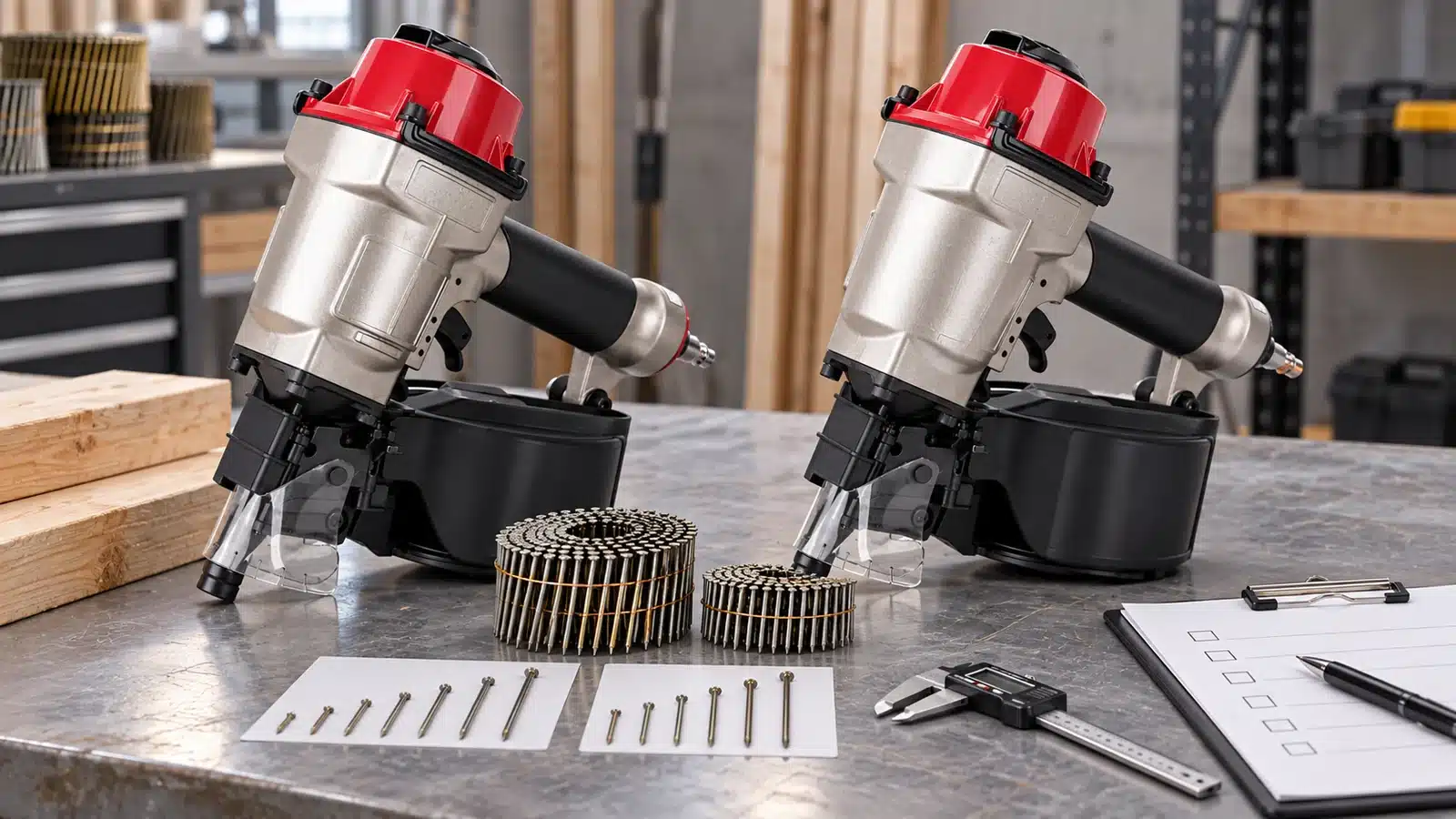
Record the intended nail length, shank diameter, head diameter, shank form, finish and collation. Then attach the joint drawing and representative wood stack. The overlap from 50 to 70 mm means nail length alone may leave both tools on the shortlist. Head diameter can separate the choice: a 5.7 mm head falls inside the listed CN70B range but outside the listed CN80B range.
The existing CN55-to-CN100B fastener-range matrix provides the full family view. This comparison narrows the decision to CN70B and CN80B and turns the overlapping fields into one auditable RFQ row.
Keep nominal nail dimensions separate from an approved production coil. Overall coil diameter, weld-wire position and collation condition still need a sample fit. A nail that sits within three catalogue ranges is not automatically approved in three magazines.
Compare the Fields That Look the Same
Both models list 2.3–2.9 mm wire, 225–300 nail capacity, 85–120 PSI and a 1/4-inch NPT inlet. Shared values help screen the models, but they cannot establish identical nose geometry, magazine fit, balance, service parts or application approval. Request current model drawings and manuals for the offered production version.
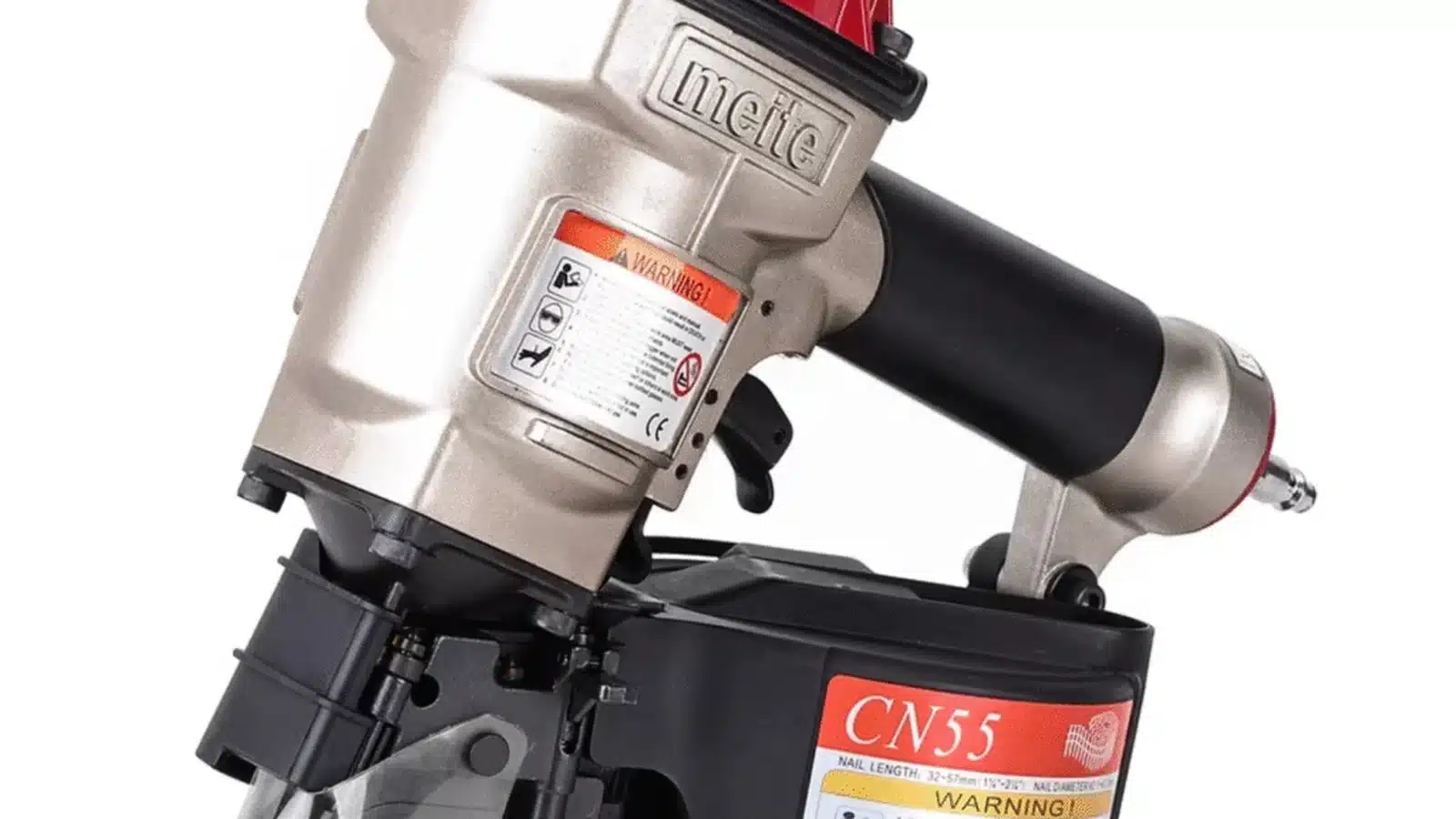
Bind the air line review to the workstation. Confirm available pressure while the tool cycles, connector standard, hose condition and treatment unit. Record the approved setting from the controlled trial rather than turning the catalogue range into a single universal setting.
The listed weight difference is 0.18 kg. That number may matter during repeated handling, but it does not predict operator acceptance by itself. The responsible production team should test the intended work height, joint orientation, suspension or support arrangement and shift pattern.
Run One Controlled Tool-and-Fastener Trial
Use representative joints and one identified nail coil per model. Record tool serial or asset ID, nail lot, air conditions, wood condition and operator. Inspect feed consistency, head seating, point protrusion, wood splitting, recoil response and access at constrained joints. Acceptance limits belong to the buyer's joint design and quality plan.
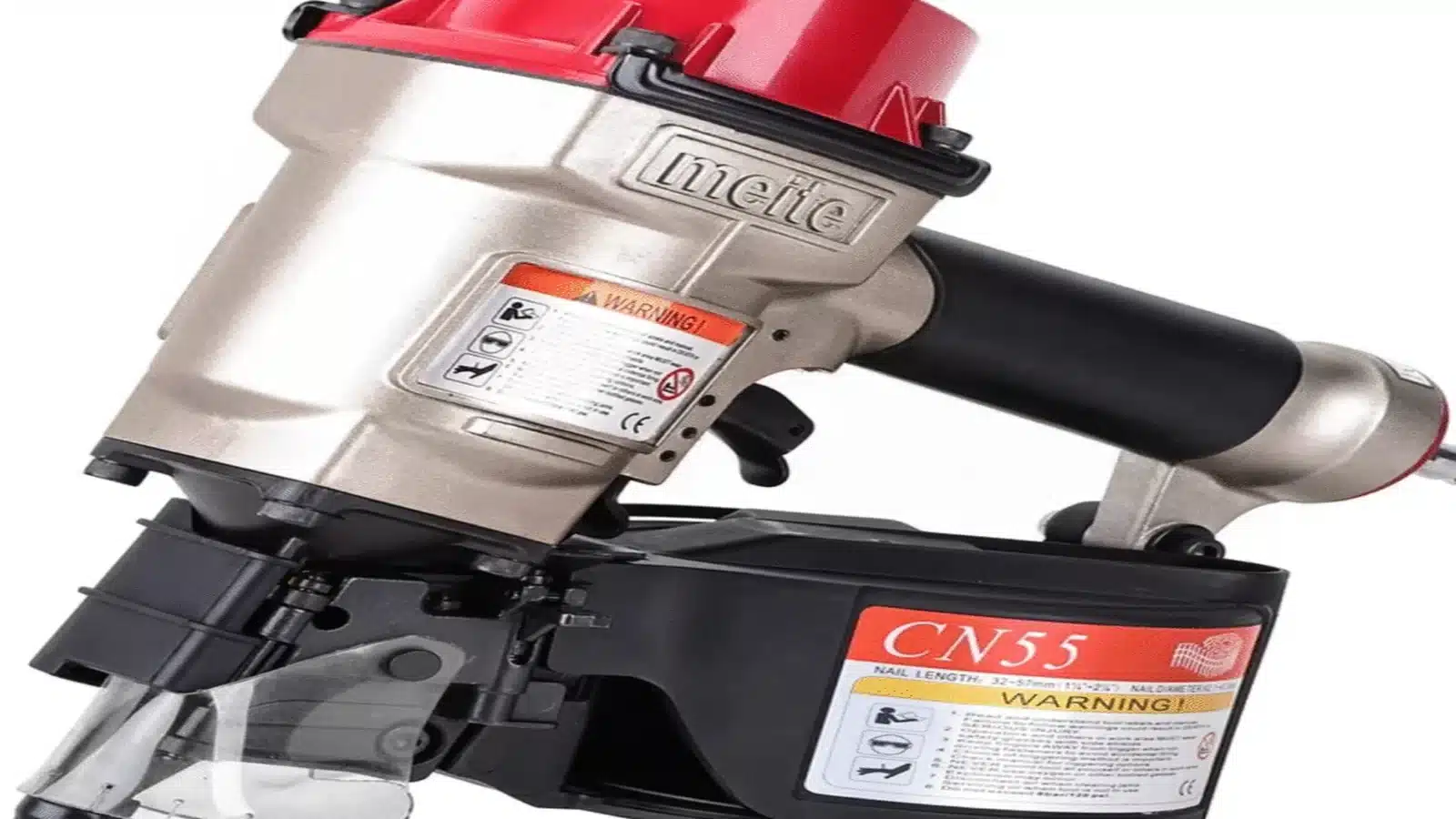
Separate a tool problem from a fastener or joint problem. A feed interruption calls for magazine, collation and tool-condition evidence. An unacceptable driven joint calls for review of nail geometry, wood stack, support and drive setting. Changing several variables together removes the evidence needed to choose between CN70B and CN80B.
Retain accepted joints, rejected examples and the exact coil labels. If the nail head, shank, finish, collation, tool revision or air system changes, reopen the affected portion of the approval.
Write the RFQ as a Matched Set
The RFQ should name CN70B or CN80B, required nail range, head and wire limits, coil format, magazine count, inlet, working-pressure range, quantity, spare and service expectations, destination and electrical or pneumatic site information where relevant. Attach the joint drawing and sample plan. Ask the supplier to return any exception on the same line.
Avoid writing only “CN80 nailer” or “70 mm coil gun.” Those descriptions omit the fields that distinguish a controlled tool-and-fastener set from a visually similar substitute.
Related CN-Series Checks
- Verify 85–120 and 115–145 PSI groups at the tool
- Separate 1/4-inch and 3/8-inch NPT air-inlet groups
- Plan a CN-series tool-weight workstation trial
Request a CN70B or CN80B Match Review
Send the joint drawing, nail length, shank diameter, head diameter, coil format, production rate, air-system data and destination through the FastenerNails inquiry page. Ask for the proposed tool and nail to be returned as one model-bound specification.
 English
 Arabic
 Spanish
 Portuguese