
A crate workshop should not choose between CN55 and CN65B from the model name alone. Start with the joint drawing and the approved nail: shank diameter, head diameter, length, collation, coating and coil count. Only the models that accept that complete fastener envelope belong in the production trial.
The CN-series pneumatic coil nailer product page lists the inputs needed for that first screen. CN55 accepts 25–57 mm nails with 2.1–2.3 mm wire and 5.0–6.0 mm heads. CN65B accepts 38–65 mm nails with 2.3–3.3 mm wire and 5.7–7.3 mm heads. That overlap does not make the tools interchangeable; the selected nail still has to sit inside every listed range.
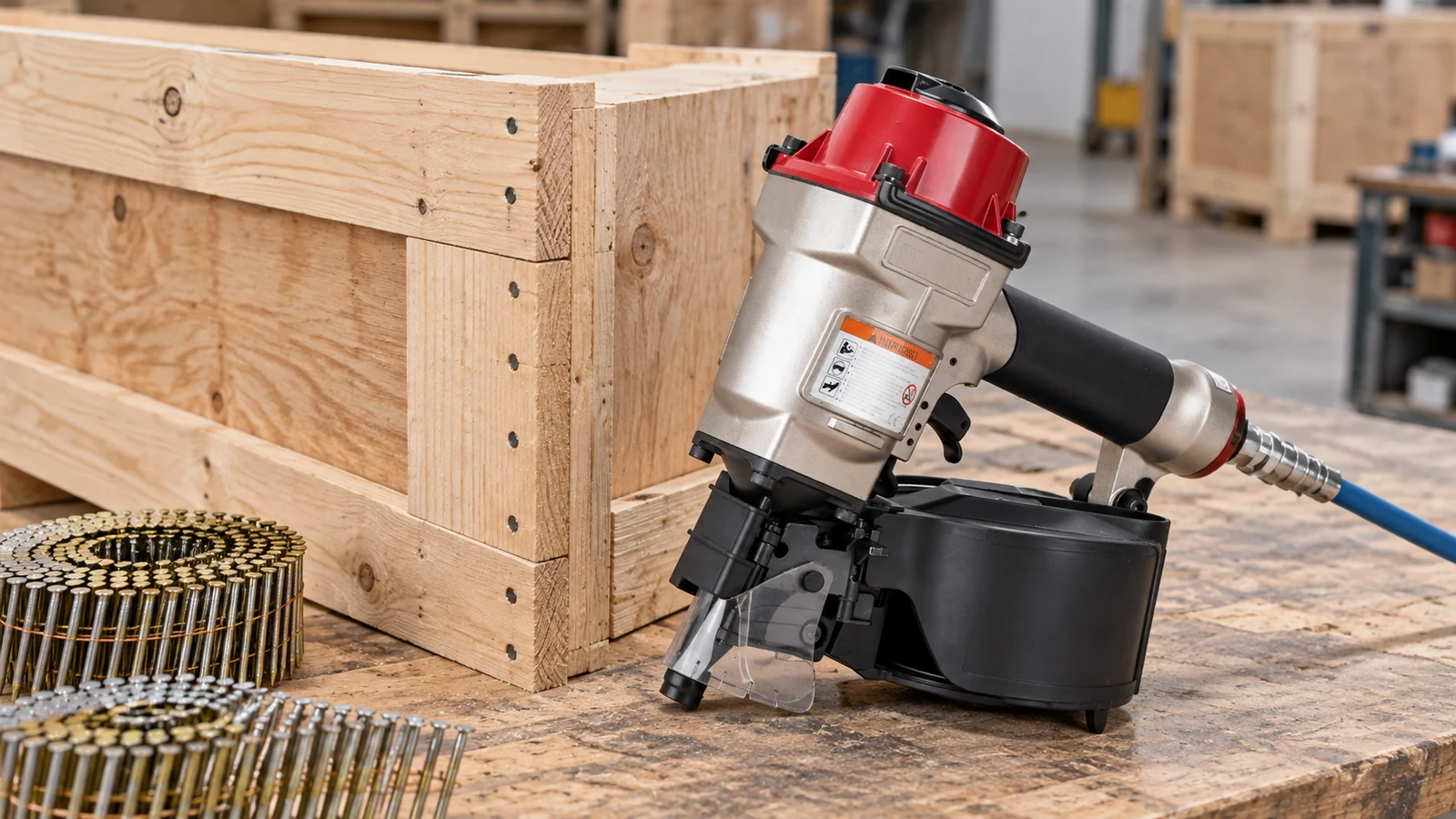
Start With the Crate Joint, Not the Tool Name
Separate the crate into real fastening conditions: thin slat to cleat, thicker bearer connection, side panel, base frame and any angled access point. Record the actual material stack and the minimum edge distance used in the drawing. A nail suitable for one joint may be wrong for another even when both tools can physically load it.
The earlier crate-assembly coil-nail ordering method explains how to carry nail length, shank, head, collation and finish into the order. Use that approved fastener record here. It keeps the tool comparison tied to a known joint instead of allowing a new nail to enter the trial unnoticed.
Compare the Published CN55 and CN65B Limits
CN55 is listed with a 300–400 nail magazine, 85–120 PSI working pressure, a 1/4-inch NPT inlet and 2.75 kg weight. CN65B is listed with a 300-nail magazine, the same 85–120 PSI range and 1/4-inch NPT inlet, and 2.92 kg weight.
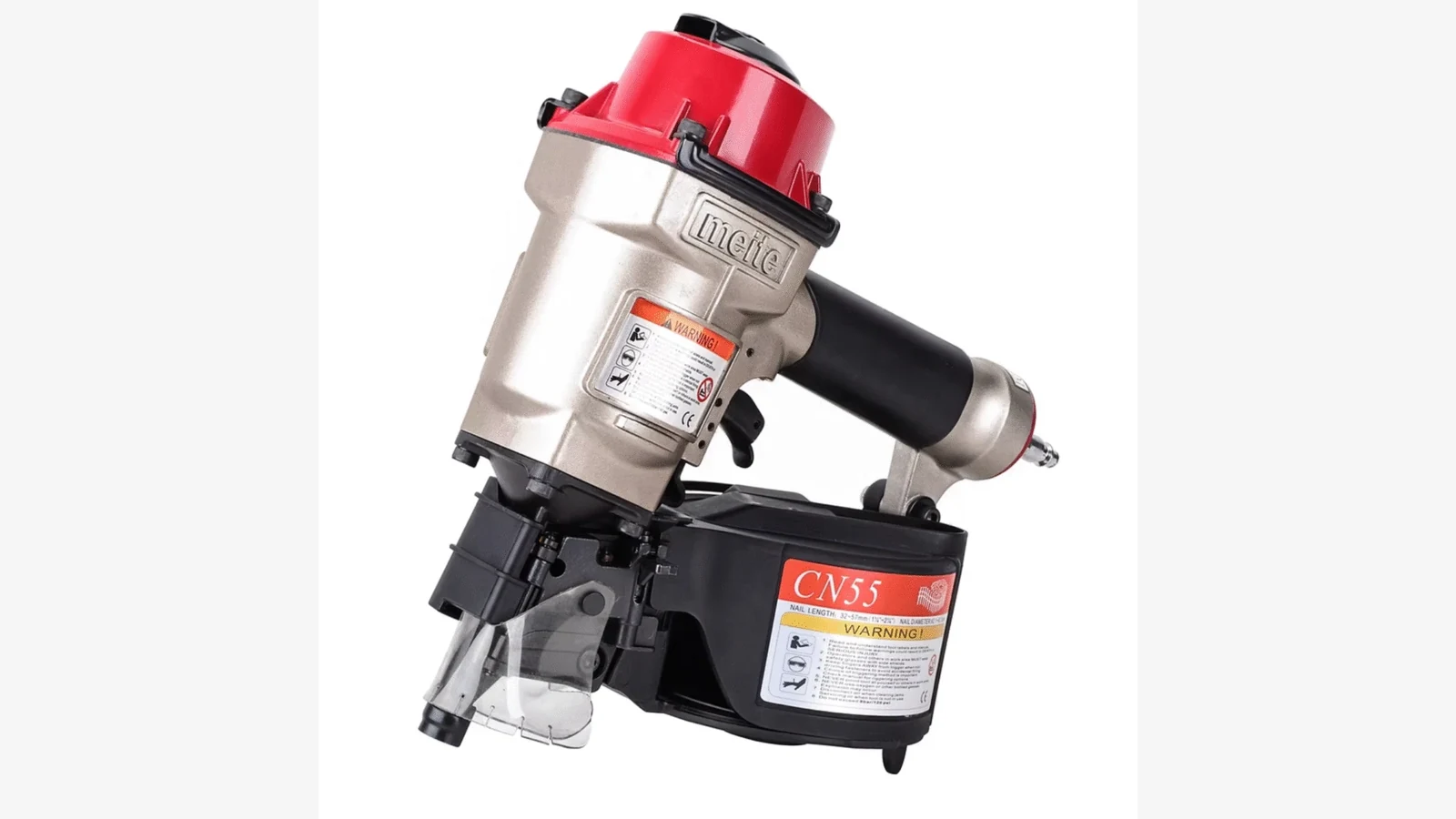
Those figures answer specific questions. They show the published fastener envelope, nominal magazine capacity, air-pressure range, inlet size and listed tool weight. They cannot prove drive quality in the buyer's wood, confirm an unlisted fastener geometry or predict cycle output. Treat them as a shortlist, not an acceptance certificate.
If the approved crate nail is longer than 57 mm, CN55 falls outside the listed length range and CN65B may remain a candidate up to 65 mm. If the nail wire or head exceeds the CN55 range, the same boundary applies even when its length fits. Conversely, a small-diameter fastener may fit CN55 but fall below the published CN65B wire or head range. Put all three dimensions on one comparison line.
Run the Same Joint Trial on Each Valid Candidate
Prepare representative timber at the production moisture condition and cut the same joint geometry for both candidates. Use one approved nail lot. Keep compressor, regulator, hose length, fitting, workstation height and operator method consistent. Test at the site's controlled pressure setting within the listed range, following the tool manual and local pneumatic-tool safety procedure.
Record observable results by joint: proud heads, overdrive, splitting, bent fasteners, feed interruption, contact access and magazine interference. Add sample count and rejection reason. Avoid turning a short trial into a broad lifetime or productivity claim; it is evidence for this wood stack, fastener lot and setup.
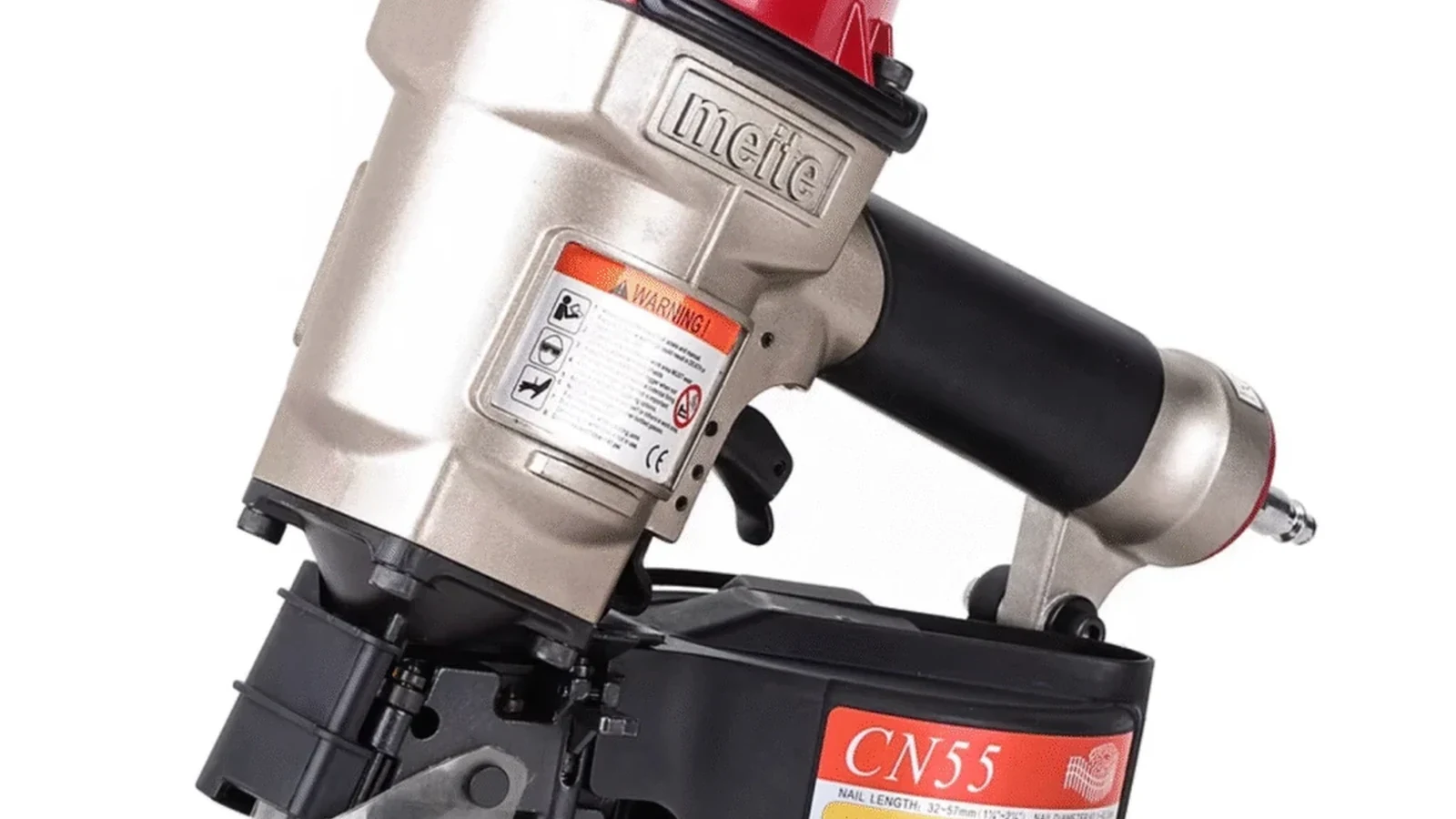
Magazine capacity also belongs in the observation sheet. CN55's listed 300–400 range and CN65B's listed 300 capacity may affect reload timing, but actual loaded quantity depends on the approved coil configuration. Count the sample coil instead of assuming the top catalogue value applies to every order.
Freeze the Result in the RFQ and Approval Record
The released line should name the CN model, nail length, wire diameter, head diameter, collation, finish, pieces per coil, working-pressure boundary and inlet. Attach photos of accepted and rejected joints, identify the timber stack and retain the approved fastener sample. If any of those inputs changes, reopen the relevant part of the trial.
This approach also makes supplier questions easier to answer. A request for “a crate coil nailer” is ambiguous. A request for CN55 or CN65B against a stated nail and joint gives engineering, purchasing and production one shared decision.
Related CN-Series Checks
- Match CN55 through CN100B to the complete fastener envelope
- Verify working pressure at the tool during a controlled trial
- Confirm 1/4-inch and 3/8-inch NPT inlet requirements before ordering
Request a Crate-Joint Trial Review
Send the joint drawing, timber stack, nail specification, coil count, planned air setup and acceptance defects through the fastener RFQ contact page. Ask for the exact CN55 or CN65B model and a sample plan tied to that crate joint.
 English
  Arabic
  Spanish
  Portuguese