
.083" vs. .090" vs. .099": A Technical Comparison of 2-Inch Coil Nail Diameters for Global Markets
In the world of pallet manufacturing and wood construction, a fraction of an inch can be the difference between a high-quality product and a structural failure. When selecting 2-inch coil nails, the three most common diameters—.083″, .090″, and .099″—each serve a distinct purpose.
Choosing the right diameter isn’t just about the nail; it’s about balancing packaging efficiency, wood density, and tool longevity. In this guide, we break down the technical differences you need to know to optimize your production.

1. Packaging Logistics and Operational Efficiency
One of the most immediate differences between these diameters is how they are packed. This significantly impacts your shipping costs and the frequency of “downtime” for your workers to reload their nail guns.
.083" Diameter: Maximum Volume
Because the .083″ shank is thinner, more nails can fit into a single coil without making the coil too bulky for a standard CN55 nail gun.
Standard Count: 400 nails per coil / 30 coils per box.
Total per Box: 12,000 nails.
Best for: High-speed, high-volume production where minimizing reload time is a priority.
.090" and .099" Diameters: Increased Strength
As the wire gauge thickens, the physical space each nail occupies increases. To maintain a coil diameter that fits into the tool’s magazine, the count must be reduced.
Standard Count: 300 nails per coil / 30 coils per box.
Total per Box: 9,000 nails.
Best for: Structural applications where the increased shear strength justifies the lower count per box.
2. Global Wood Hardness: Matching Nails to Regions
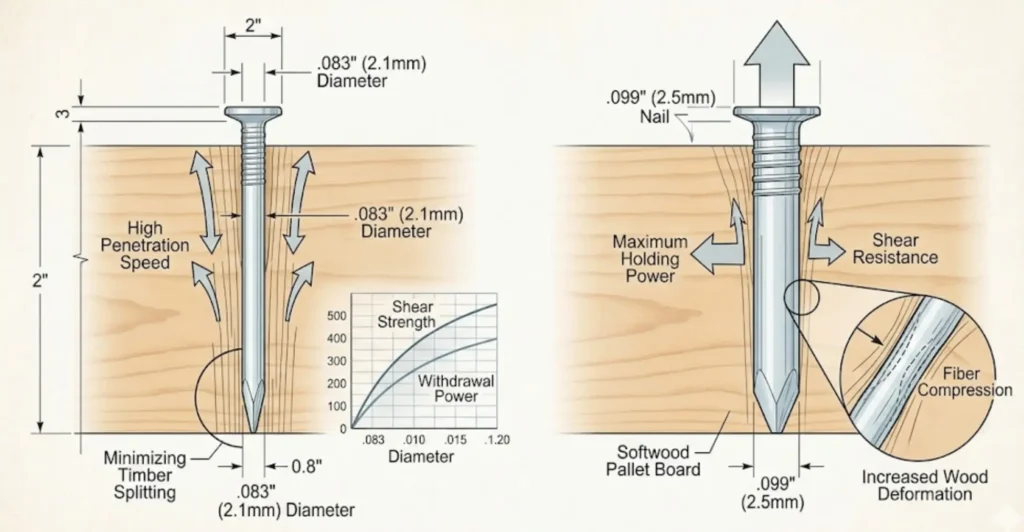
The choice of nail diameter is heavily dictated by the type of timber available in your specific market. Driving a thick nail into dry hardwood can split the wood, while a thin nail in soft timber may not provide enough holding power.
North America and Europe: Softwood Dominance
In these regions, Pine and Spruce are the standard. These timbers are relatively soft and fibrous.
Recommended: .083″ or .090″.
Reasoning: The fibers in softwoods compress easily. An .083″ nail provides ample friction without the risk of splitting the stringer or deck board.
South America and Southeast Asia: The Hardwood Challenge
Markets like Brazil and Vietnam frequently use high-density hardwoods like Eucalyptus or mixed tropical hardwoods.
Recommended: .090″ or .099″.
Reasoning: Thinner nails (.083″) often buckle or bend when hitting the dense grain of hardwood. The .099″ diameter provides the necessary rigidity to penetrate the surface and maintain structural integrity.
Australia and Oceania
With a heavy reliance on Radiata Pine, the Australian market sits in the middle.
Recommended: .090″ is the “gold standard” here, offering a versatile balance for both framing and pallet assembly.
3. Pallet Load-Bearing and Application Analysis
The final use of the pallet determines the required shear strength of the fastener.
Light-Duty/Expendable Pallets: Use .083″. These are typically one-way pallets carrying loads under 500kg. The focus is on cost-reduction and weight.
Standard Reusable Pallets: Use .090″. Ideal for 1000kg–1500kg loads. This diameter offers the best “holding power to cost” ratio.
Heavy-Duty/Mining/Chemical Pallets: Use .099″. For loads exceeding 2000kg or pallets subject to rough forklift handling, the .099″ shank ensures the joints do not “shear” under lateral pressure.
While the CN55 is the industry-standard workhorse capable of firing all three diameters, you cannot use the same air pressure (PSI) for all of them.
Air Pressure (PSI/Bar) Adjustment Guide
To ensure the nail head is driven flush without damaging the tool or the wood, follow these settings:
| Nail Diameter | Wood Type | Suggested PSI | Suggested Bar |
|---|---|---|---|
| .083" | Softwood (Pine) | 70 - 85 | 4.8 - 5.8 |
| .090" | Medium Wood | 90 - 105 | 6.2 - 7.2 |
| .099" | Hardwood (Eucalyptus) | 105 - 120 | 7.2 - 8.3 |
Pro Tip: Running your CN55 at the maximum 120 PSI for extended periods increases wear on the driver blade and bumper. If you are consistently hitting hard timber, ensure your air lines are high-flow and your compressor can maintain a steady volume (CFM) rather than just high pressure.

Conclusion: Which Should You Choose?
Choose .083″ for high-efficiency, light-duty softwood applications where you want 12,000 nails per box.
Choose .090″ for a versatile, all-purpose fastener that works across most global markets.
Choose .099″ for high-density hardwoods and heavy-duty structural pallets where strength is non-negotiable.
Frequently Asked Questions of .083" vs. .090" vs. .099"
1. Why is there a difference in the count per box between .083" and .099" coil nails?
The count is determined by the physical volume of the nail shank. Since .083″ nails are thinner, more can fit into a standard-sized coil (400 nails/coil), totaling 12,000 per box. For the thicker .090″ and .099″ diameters, the count is reduced to 300 nails per coil (9,000 per box) to ensure the coil still fits into the magazine of a standard CN55 nail gun.
2. Which nail diameter is best for hardwood pallets in South America?
For high-density hardwoods like Eucalyptus commonly found in South America, we recommend .090″ or .099″ diameters. Thinner .083″ nails are prone to buckling or bending when striking the dense grain of hardwood, whereas the thicker shanks provide the necessary rigidity for full penetration and structural stability.
3. Can I use the same air pressure (PSI) for all three nail diameters?
No. To ensure the nails are driven flush without damaging the wood or the tool, the air pressure must be adjusted. While .083″ nails in softwood typically require 70–85 PSI, the thicker .099″ nails in dense hardwood may require up to 105–120 PSI to achieve the same result.
4. Which coil nail diameter should I choose for heavy-duty pallets?
If your pallets are designed to carry loads exceeding 2000kg or are subject to rough handling, .099″ is the optimal choice. Its larger diameter offers significantly higher shear strength, preventing the pallet joints from shifting or failing under heavy lateral pressure during transport.
5. Are .083", .090", and .099" nails all compatible with the CN55 nail gun?
Yes, the CN55 is a versatile industry-standard tool designed to fire all three diameters. However, you must ensure your air compressor can maintain the consistent volume (CFM) required for the higher pressures needed by the .099″ nails, and always verify that the coil count (300 vs 400) fits the magazine width properly.
Related Products
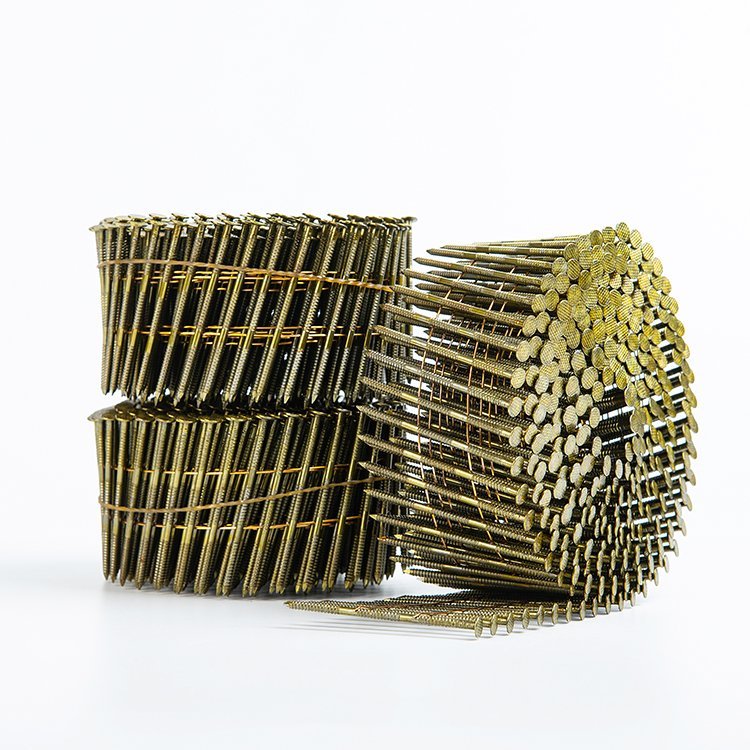
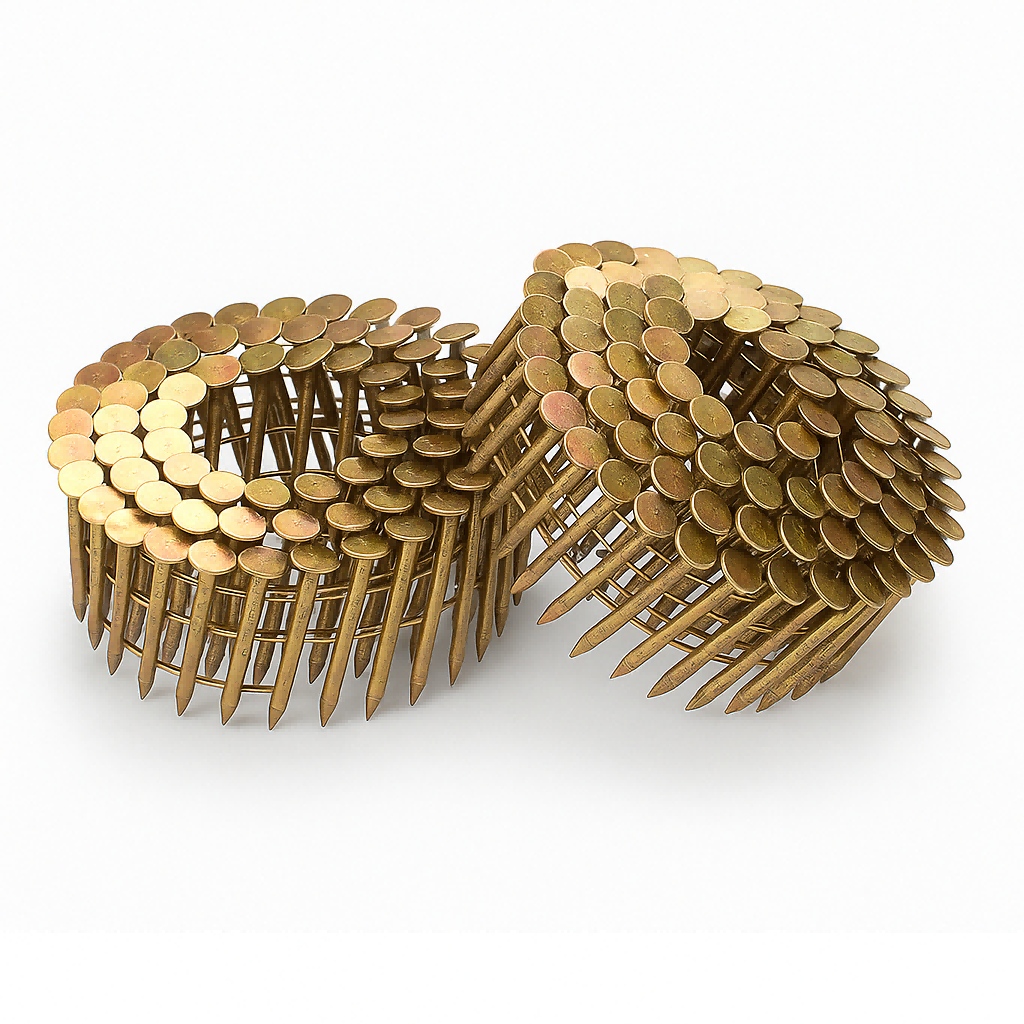

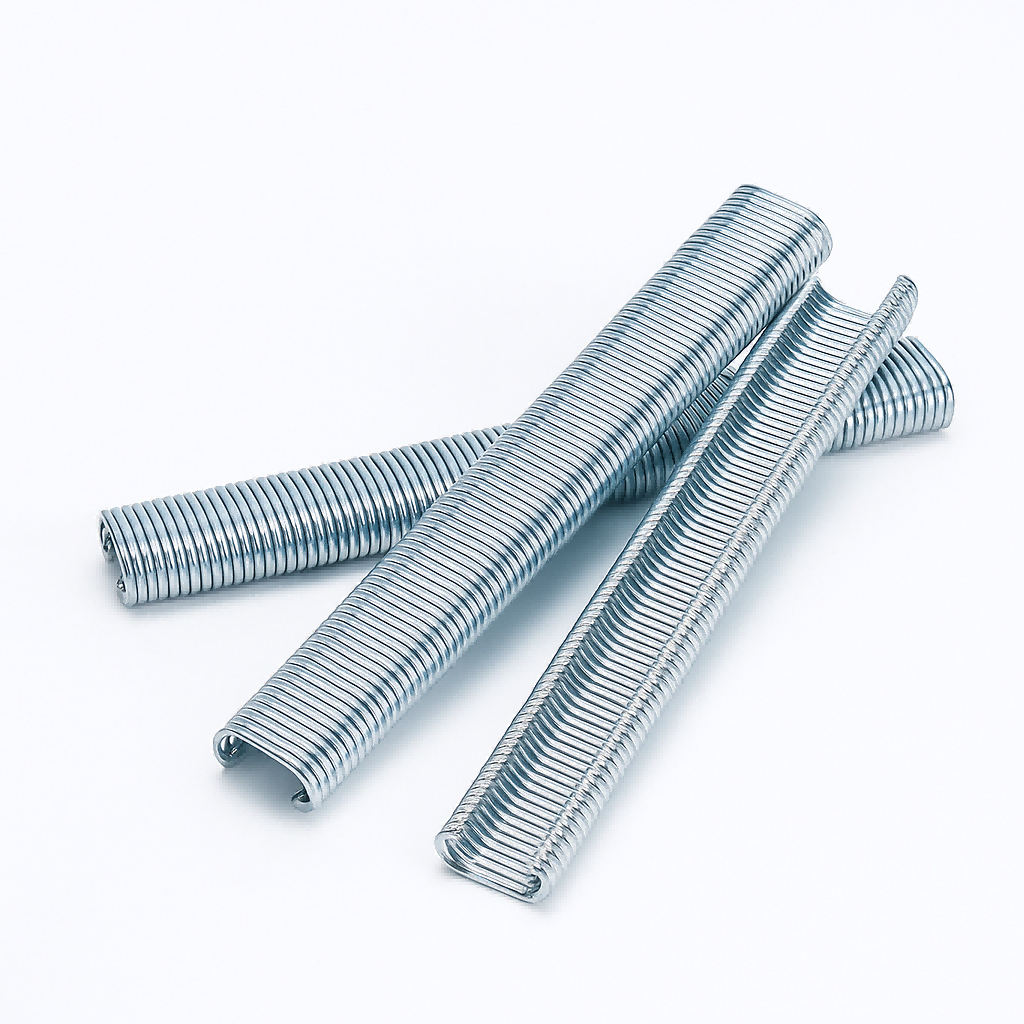


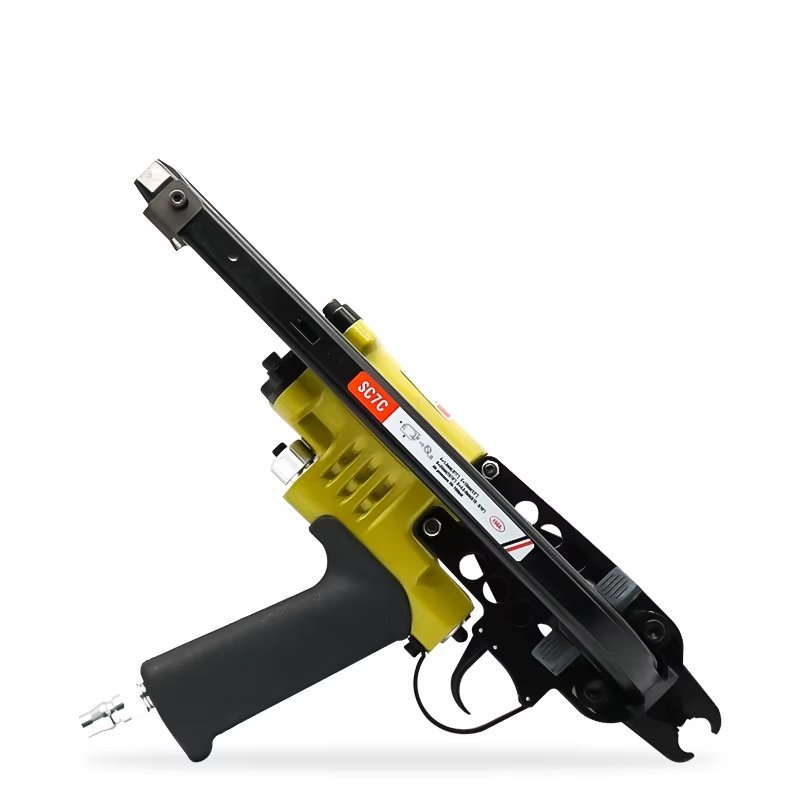
At Jinan Elite Technology, we specialize in high-performance coil nails tailored to your specific regional needs. Contact us today for a custom quote or technical specifications for your next shipment.

 English
  Arabic
  Spanish
  Portuguese