
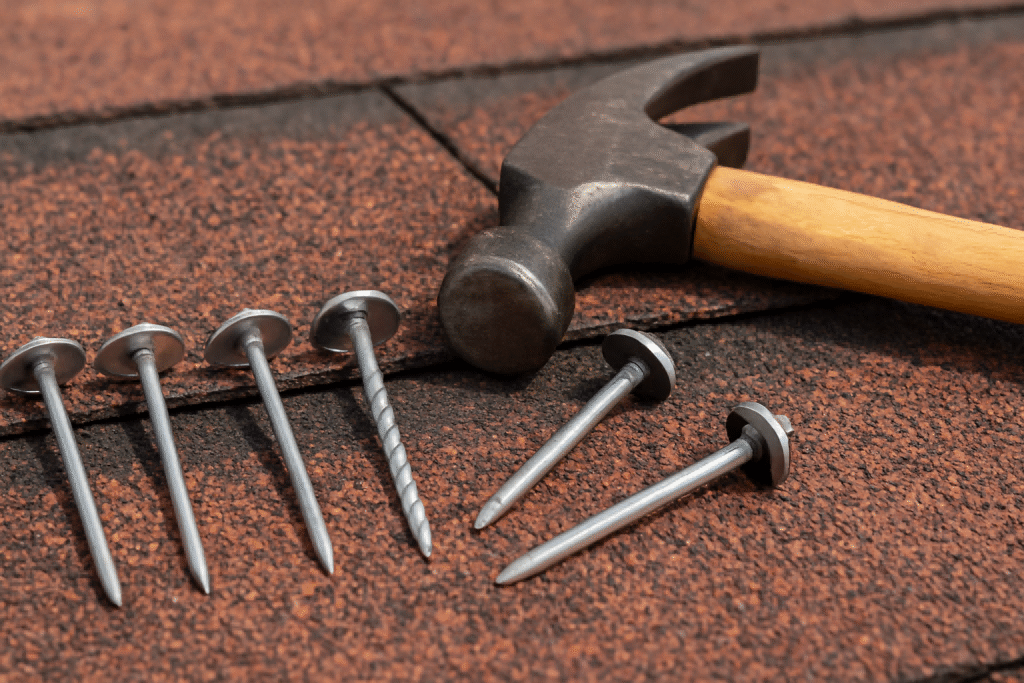
In the fastener game, it is easy to treat everything as a basic commodity. However, after a decade in international trade, I have seen the real cost of this mistake. The most expensive part of a building isn’t always the steel beams. Often, it is the $0.05 nail that fails three years after the project is signed off.
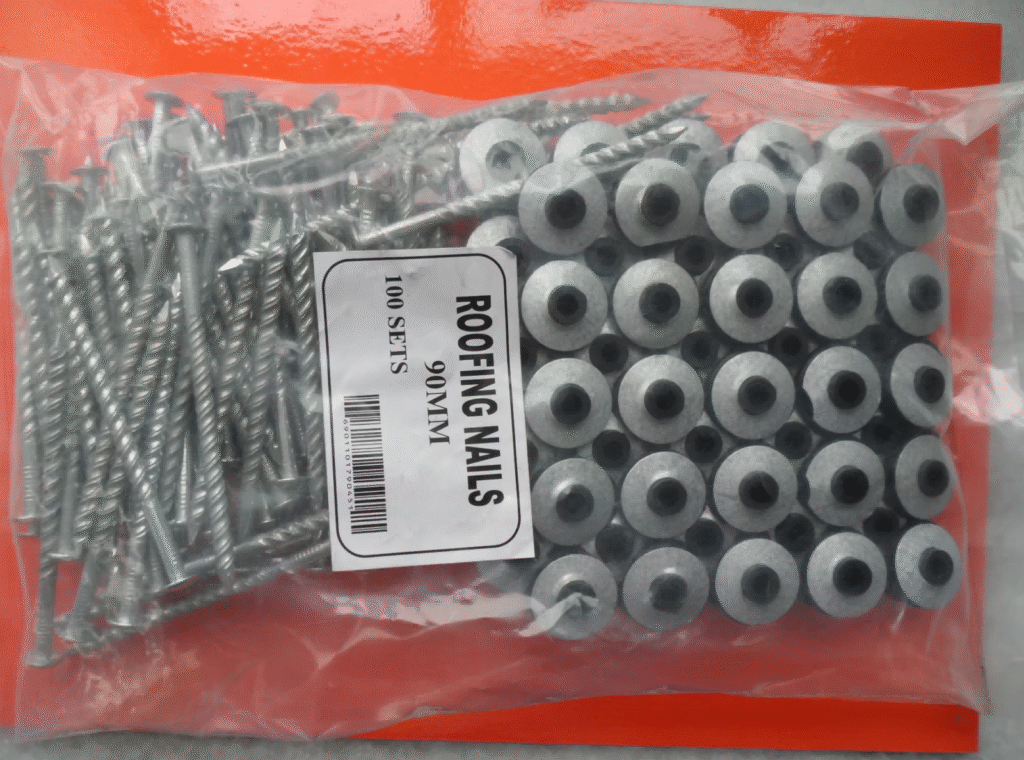
For professionals, an umbrella nail is more than just a piece of wire. It is a sophisticated mechanical seal designed to fight the elements. Choosing the wrong one can destroy your reputation.
The Engineering Behind the Seal
A roof is not a static object. It is a living, breathing structure. It expands under the scorching sun and contracts in the chill of the night. This constant thermal cycling puts immense stress on every fixation point.
Standard flat-head nails can act like a saw during these cycles. They gradually tear through the roofing sheet. In contrast, the curved umbrella head distributes this load across a larger surface area. It acts as a permanent, spring-loaded gasket. This maintains a waterproof barrier even as the building moves over several decades.
Choosing the Right Shank: Smooth vs. Twisted
I frequently discuss shank types with my clients. Many buyers try to save money by sticking with smooth shanks. However, I always warn them about “nail creep.”
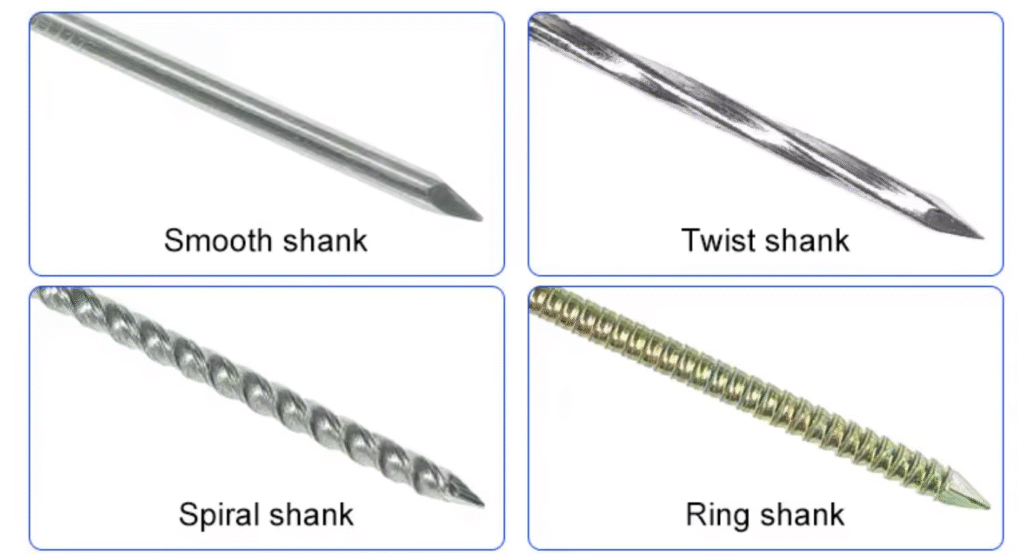
Wood is a natural material. Its grip changes as moisture levels fluctuate. In high-wind regions, a smooth nail can slowly be pushed out by the wood’s natural movement. A twisted, or screw-shank, creates a mechanical lock with the wood fibers. It threads itself into the grain. This ensures the roof stays anchored through heavy storms. If you are building for the long haul, this extra grip is an essential insurance policy.
The Zinc Coating: Avoiding the “Shiny Trap”
There is a common trap in the galvanization process. Electro-Galvanized (EG) nails look beautiful and bright in the showroom. But in the roofing world, shiny often means temporary.
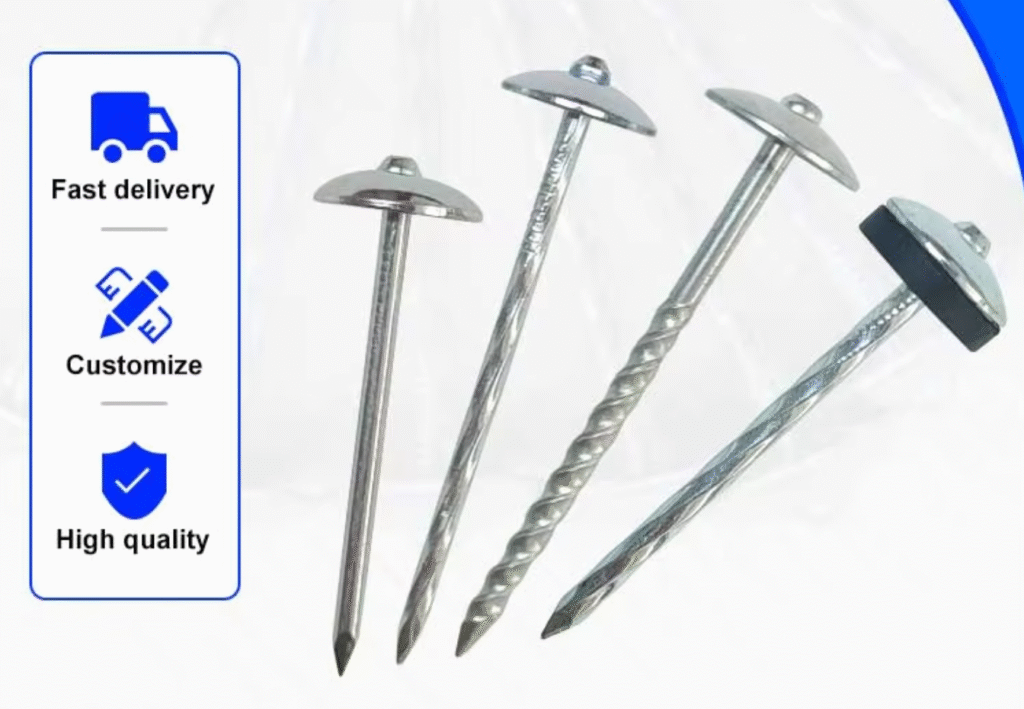
EG nails have a zinc layer under five microns. This is “thin-skinned” protection. These nails will show red rust after just a few seasons of rain. For professional projects, I always insist on Hot-Dipped Galvanized (HDG) nails.
HDG nails have a matte grey, gritty finish. They are submerged in a 450°C molten zinc bath. This creates a thick, metallurgical bond. It is often ten times thicker than electro-plating. This is the only real defense against corrosion in coastal or high-humidity environments.
Professional Quality Control Standards
When I inspect a batch at the factory, I look for invisible markers of quality. I check the Diamond Point for centering. An off-center point causes the nail to veer at an angle. This splits the timber and compromises the structure.
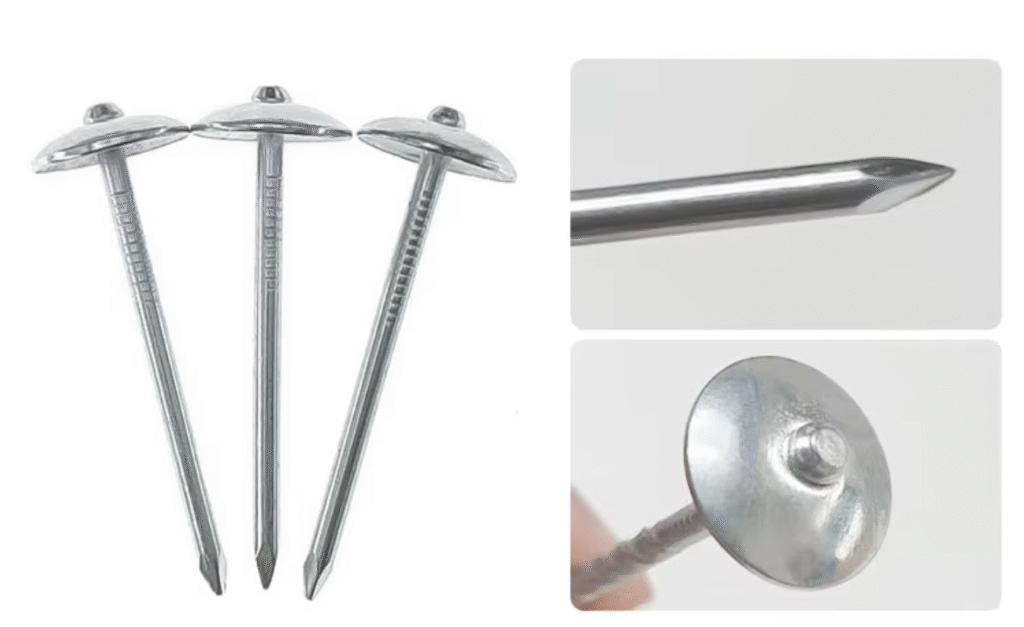
I also test the head-to-shank integrity with lateral strikes. A head that pops off under a hammer will surely leak during a storm. In the B2B world, consistency is the ultimate currency. Whether you order BWG 9 or BWG 12, every nail must perform with the same reliability.
Sourcing fasteners is about more than comparing prices. A single leak can lead to rotted timber and expensive mold. It is about understanding the durability your specific climate demands.




 English
  Arabic
  Spanish
  Portuguese