
Si trabajas en el sector de la construcción, la fabricación de palés, los tejados, las vallas, los embalajes de madera o la fabricación de muebles, es posible que hayas oído hablar del término clavo en espiral many times. But for many buyers, especially first-time importers or new contractors, several questions still come up:
What is a coil nail?
What is the purpose of a spiral nail?
Are coil nailers better than other nailers?
What does a coil nail look like?
These are simple questions, but they are also very important. Choosing the wrong nail type may cause weak holding power, nail gun jamming, rust problems, unstable fastening, or higher labor costs.
In this article, we will explain coil nails in a clear and practical way, helping buyers, contractors, wholesalers, and manufacturers understand how coil nails work and how to choose the right type for different applications.

What Is a Coil Nail?
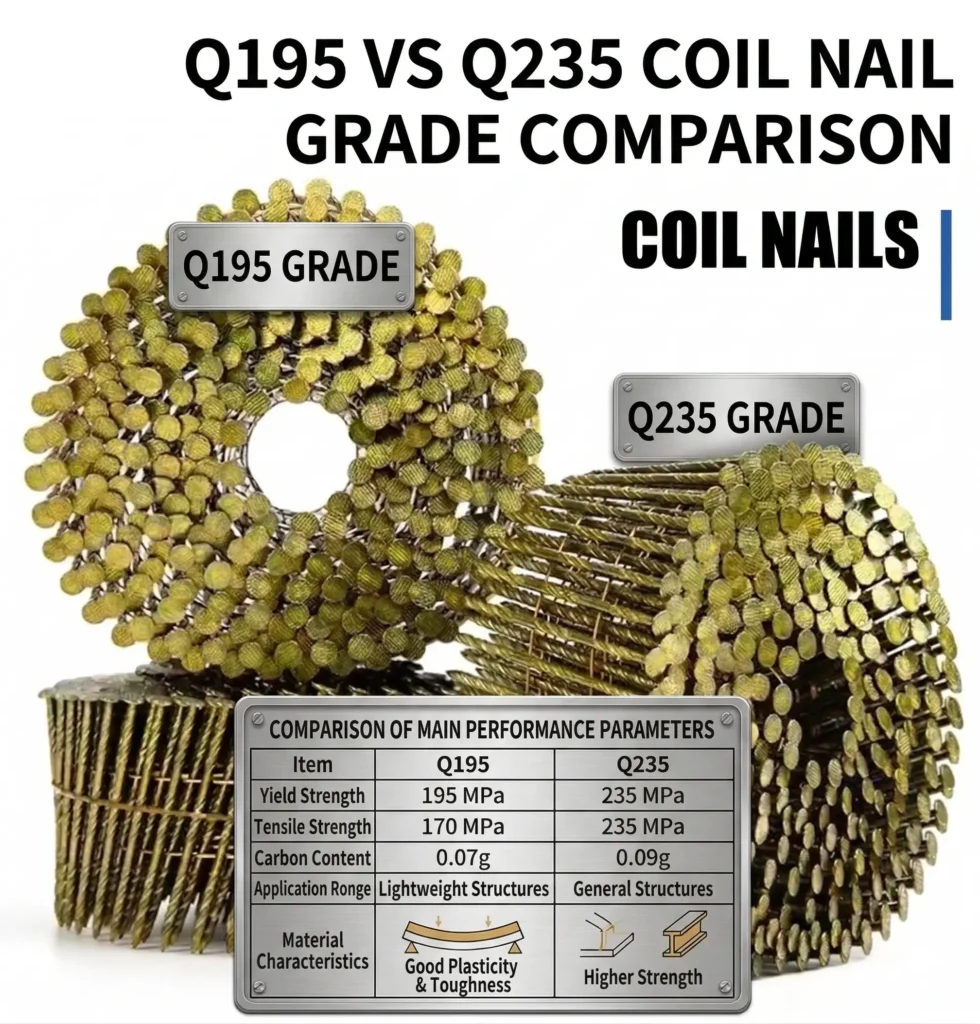
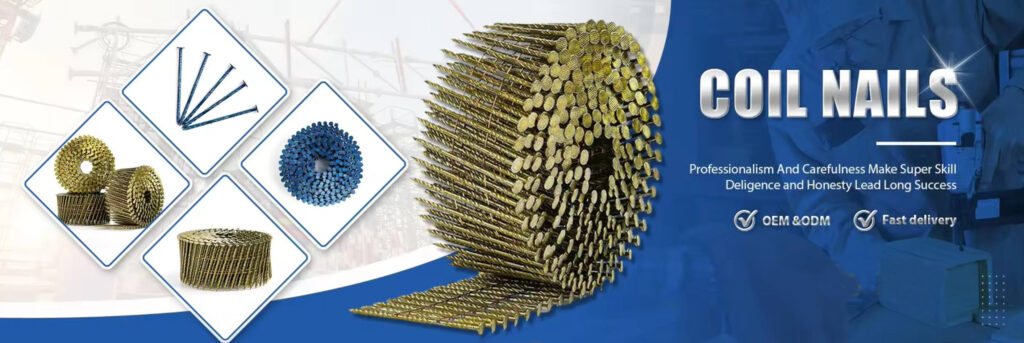
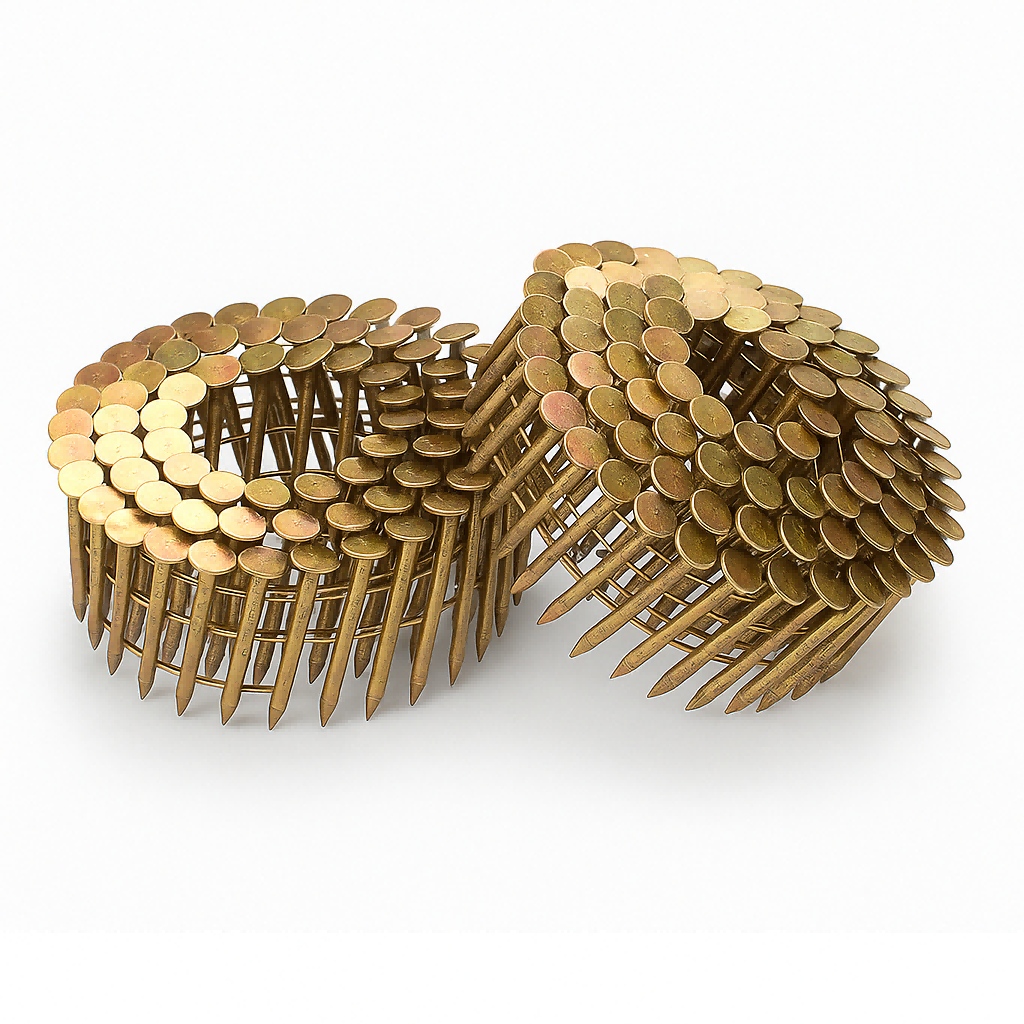
A clavo en espiral is a type of nail that is connected together in a round coil by wire or plastic collation. Instead of loading nails one by one, workers can load a full coil into a pneumatic coil nailer. This allows the nail gun to fire nails continuously and quickly.
The biggest difference between coil nails and loose nails is the way they are packaged and used. Loose nails are separate pieces, while coil nails are arranged in a circular roll. This design allows one nail gun to hold a large number of nails at one time.
A standard coil nail usually includes several parts:
| Part | Description |
|---|---|
| Nail Head | The top part of the nail that receives the driving force |
| Nail Shank | The body of the nail, available in smooth, ring, or screw shank |
| Nail Point | The sharp end that penetrates wood or other materials |
| Collation Wire | The wire that connects nails together in a coil |
| Surface Finish | Bright, electro galvanized, hot-dip galvanized, or other coating |
Clavos en espiral are mainly used with pneumatic coil nailers. They are widely used in high-volume fastening work because they improve speed, consistency, and production efficiency.
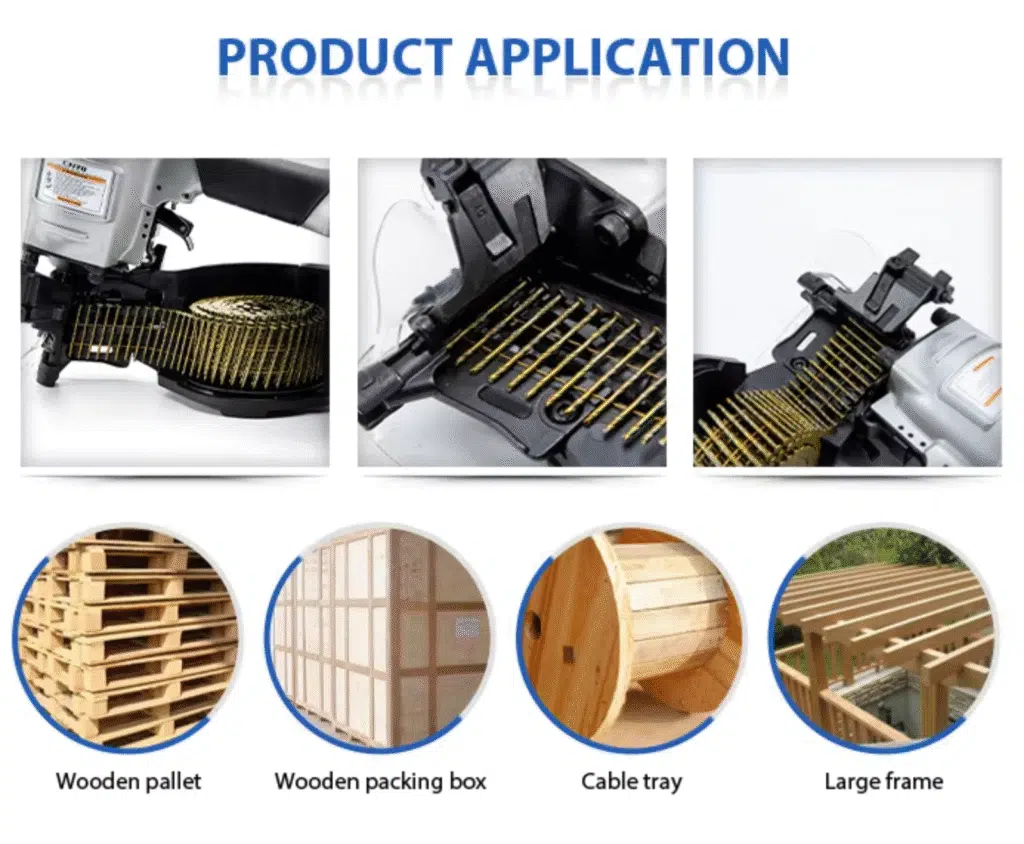
For example, in a pallet factory, workers may need to drive thousands of nails every day. Using loose nails would be too slow. With coil nails and a coil nail gun, the fastening process becomes much faster and more stable.
What Are Coil Nails Used For?
Coil nails are used in many industries because they are efficient, strong, and suitable for repetitive work.
The most common applications include:
| Aplicación | Recommended Nail Type |
|---|---|
| Wooden pallets | Ring shank coil nails or screw shank coil nails |
| Wooden crates | Smooth shank or ring shank coil nails |
| Roofing | Galvanized roofing coil nails |
| Fencing | Galvanized ring shank coil nails |
| Construction | Framing or sheathing coil nails |
| Packaging | Bright or galvanized coil nails |
| Furniture production | Smooth shank or small diameter coil nails |
In simple words, coil nails are designed for jobs where many nails need to be driven quickly and repeatedly.
What Is the Purpose of a Spiral Nail?
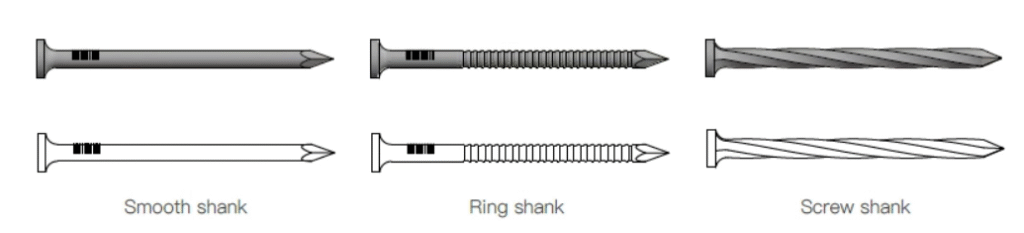
A spiral nail, also called a screw shank nail or spiral shank nail, is a nail with a twisted shank. The shank looks like it has a spiral pattern around it.
The purpose of a spiral nail is to provide stronger holding power than a smooth shank nail.
When a spiral nail is driven into wood, the twisted shank creates extra friction inside the material. In some applications, the nail may also rotate slightly as it enters the wood. This makes it harder for the nail to pull out.
Spiral nails are commonly used in applications where stronger fastening is required, such as:
-
- Heavy-duty pallets
-
- Wooden crates
-
- Hardwood fastening
-
- Industrial packaging
-
- Outdoor wooden structures
-
- Construction timber
-
- Export wooden boxes
Compared with smooth shank nails, spiral nails usually offer better resistance against loosening. This is especially useful when the finished product may face vibration, movement, transportation, or heavy loads.
For example, if a wooden pallet is used repeatedly in warehouses, trucks, or shipping containers, the nails must hold the wood firmly. In this case, spiral shank or ring shank coil nails are usually better than smooth shank nails.
Spiral Nail vs Ring Shank Nail
Many buyers confuse spiral nails with ring shank nails. Both are designed to improve holding power, but their structures are different.
| Type | Shank Design | Main Advantage |
|---|---|---|
| Smooth Shank Nail | Plain straight shank | Easy to drive and cost-effective |
| Ring Shank Nail | Ring-shaped grooves around the shank | Strong pull-out resistance |
| Spiral Nail | Twisted screw-like shank | Strong grip, especially for tougher materials |
If the project needs stronger grip, both ring shank nails and spiral nails can be good choices. For pallet manufacturing, ring shank coil nails are very popular. For heavier wood or tougher fastening conditions, spiral shank nails may also be suitable.
Are Coil Nailers Better?
Coil nailers are better for many high-volume and professional applications, especially when speed and continuous work are important.
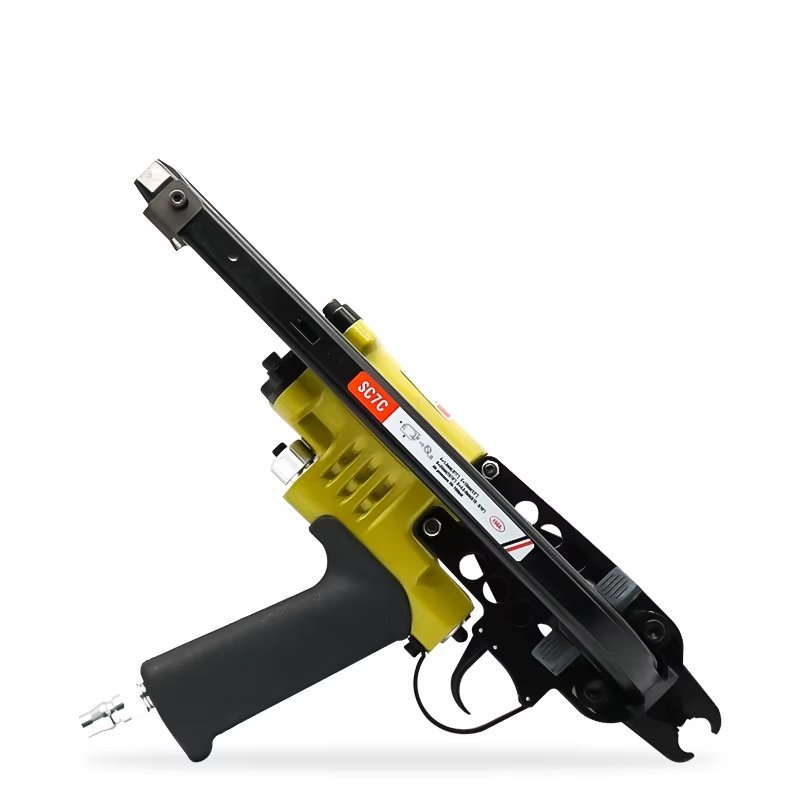
A coil nailer is a nail gun designed to use coil nails. Because coil nails are packed in a round roll, the tool can hold more nails than many strip nailers. This means workers do not need to reload as often.
For factories, contractors, and professional users, this can save a lot of time.
Advantages of Coil Nailers
1, Higher Working Efficiency
Coil nailers can hold a large number of nails, so workers can fasten materials continuously. This is very useful for pallet production, roofing projects, fencing, and wooden packaging.
2, Less Reloading Time
Compared with strip nailers, coil nailers usually require fewer reloads. This helps workers finish large jobs faster.
3, Good for Repetitive Work
If the job requires driving hundreds or thousands of nails every day, coil nailers are usually more practical.
4, Suitable for Industrial Use
Factories that produce pallets, crates, cable drums, or wooden packaging often prefer coil nailers because they are efficient and stable.
5, Better Productivity
When used with good-quality coil nails, coil nailers can improve overall productivity and reduce labor waste.
Are Coil Nailers Always the Best Choice?
Not always.
Coil nailers are excellent for high-volume work, but they may not be necessary for small DIY jobs or occasional home repair work.
For example, if a worker only needs to drive a few nails, a hammer or a small nail gun may be enough. But if a factory needs to produce hundreds of wooden pallets per day, a coil nailer is much more suitable.
So the answer depends on the job.
| Situation | Is a Coil Nailer Suitable? |
|---|---|
| Pallet factory | Yes |
| Roofing contractor | Yes |
| Wooden crate production | Yes |
| Fencing project | Yes |
| Small home repair | Not always necessary |
| Occasional DIY work | Not always necessary |
For professional and industrial applications, coil nailers are usually a better choice because they save time and improve work efficiency.
What Does a Coil Nail Look Like?
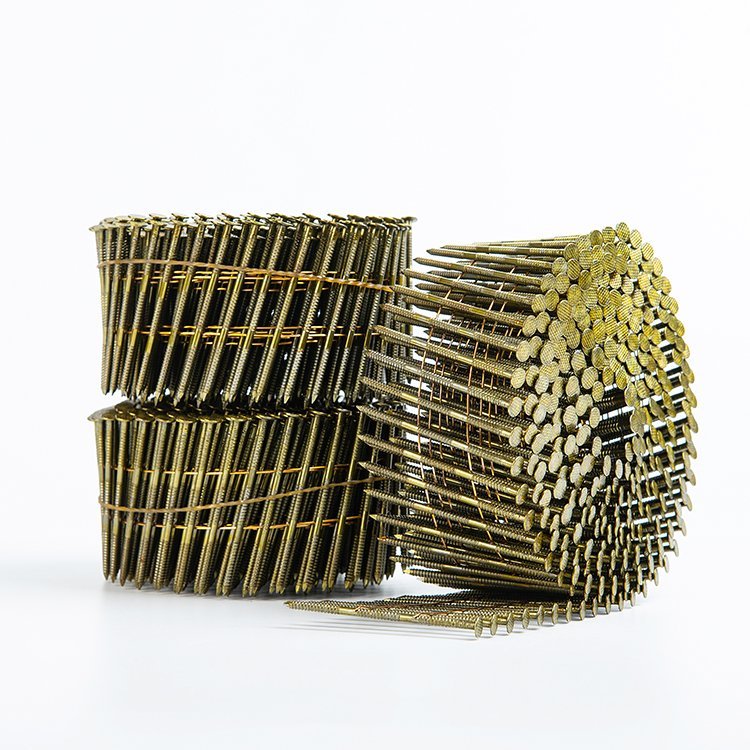
A coil nail looks like many nails connected together and rolled into a circular coil.
From the outside, it may look like a round roll of nails. Each nail is placed at a certain angle and connected by thin wires or plastic strips. The nails are arranged evenly so they can feed smoothly into a coil nailer.
A typical coil nail has these visual features:
-
- Round coil shape
-
- Nails connected by wire or plastic
-
- Nail heads arranged in order
-
- Shanks pointing in the same direction
-
- Sharp nail points facing outward or aligned for feeding
-
- Smooth, ring, or spiral shank design
Most industrial coil nails are wire collated. Wire collated coil nails are common in pallet manufacturing, fencing, wooden packaging, and construction.
Roofing coil nails may look slightly different because they usually have a larger flat head. This larger head helps hold roofing materials such as shingles or underlayment.
Common Types of Clavos en espiral
Different projects require different coil nail specifications. Below are the most common types.
Smooth Shank Coil Nails
Smooth shank coil nails have a plain shank. They are easy to drive into wood and are usually more economical.
They are suitable for:
-
- General wooden packaging
-
- Light-duty pallets
-
- Wooden boxes
-
- Furniture backing
-
- Temporary wood structures
Smooth shank nails are cost-effective, but their holding power is lower than ring shank or spiral shank nails.
Ring Shank Coil Nails
Ring shank coil nails have circular rings around the shank. These rings increase friction inside the wood and improve pull-out resistance.
They are suitable for:
-
- Wooden pallets
-
- Heavy-duty crates
-
- Fencing
-
- Decking
-
- Outdoor wooden structures
-
- Export packaging
For pallet factories, ring shank coil nails are one of the most popular choices.
Spiral Shank Coil Nails
Spiral shank coil nails have a twisted shank. They are designed for stronger holding power and better grip.
They are suitable for:
-
- Heavy-duty pallets
-
- Hardwood applications
-
- Industrial packaging
-
- Construction timber
-
- Wooden containers
If the wood is hard or the application requires stronger fastening, spiral shank coil nails can be a good option.
Roofing Coil Nails
Roofing coil nails are specially designed for roofing projects. They usually have a large head and galvanized finish.
They are suitable for:
-
- Asphalt shingles
-
- Roofing felt
-
- Waterproof membranes
-
- Insulation board
-
- Roofing underlayment
For outdoor roofing work, galvanized roofing coil nails are recommended because they provide better corrosion resistance.
How to Choose the Right Coil Nail
When buying coil nails, buyers should not only ask for the price. The specification must match the application and nail gun.
Here are the most important points to confirm.
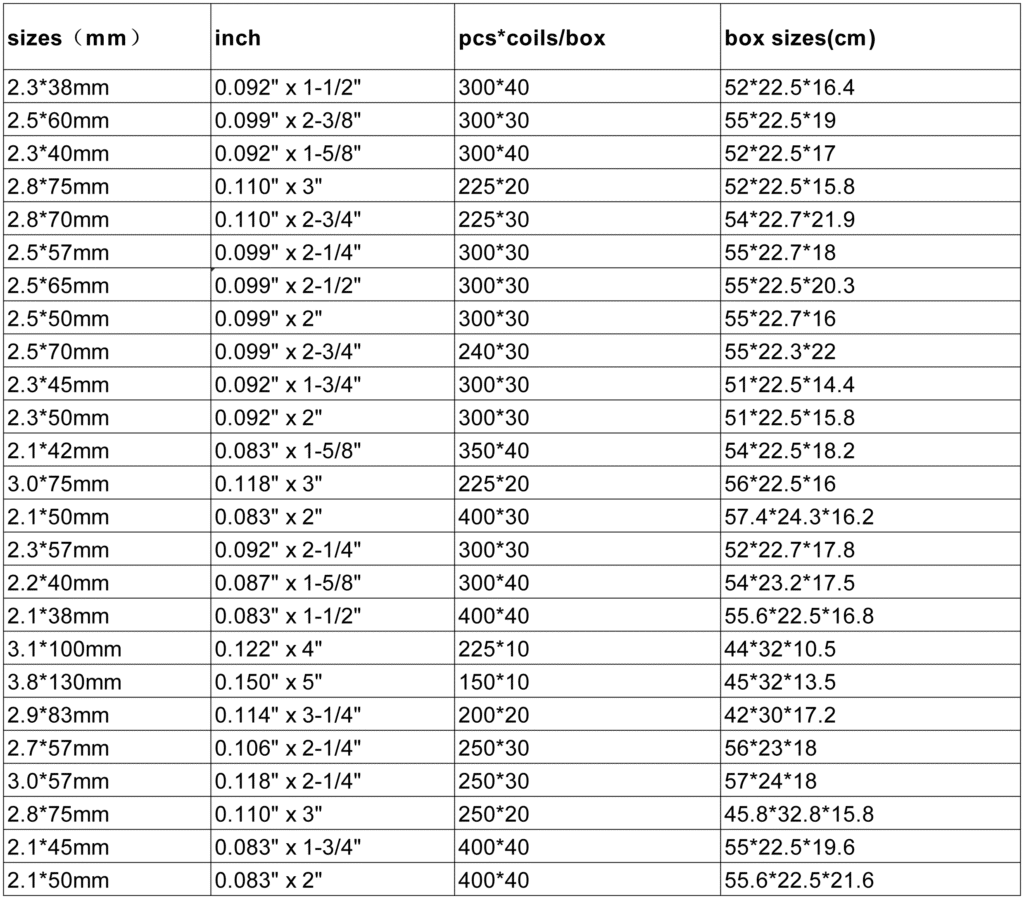
1, Nail Length
Nail length should match the thickness of the material. If the nail is too short, it may not hold firmly. If it is too long, it may penetrate too deeply.
Common lengths include:
-
- 25 mm
-
- 32 mm
-
- 38 mm
-
- 45 mm
-
- 50 mm
-
- 57 mm
-
- 65 mm
-
- 70 mm
-
- 75 mm
-
- 90 mm

2, Nail Diameter
Nail diameter affects strength and driving performance. Thicker nails offer stronger fastening, but they may split thin wood.
Common diameters include:
-
- 2.1 mm
-
- 2.3 mm
-
- 2.5 mm
-
- 2.8 mm
-
- 3.1 mm
-
- 3.3 mm
3, Shank Type
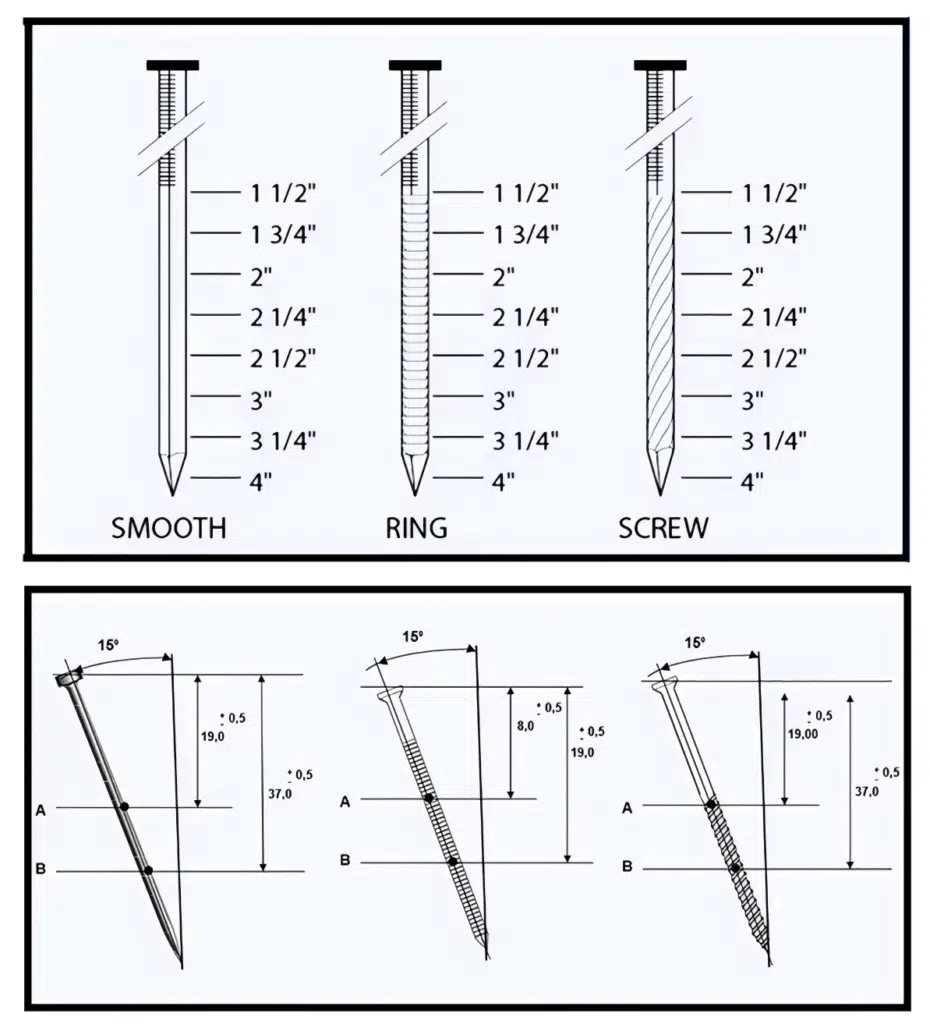
Choose the shank type according to the required holding power.
| Tipo de mango | Best For |
|---|---|
| Caña lisa | General use and lower-cost applications |
| Vástago del anillo | Pallets, fencing, outdoor woodwork |
| Spiral shank | Heavy-duty wood and stronger grip |
4, Surface Finish
urface treatment affects corrosion resistance.
Common finishes include:
-
- Bright finish
-
- Electro galvanized
-
- Galvanizado en caliente
-
- Cement coated
-
- Vinyl coated
-
- Stainless steel
For indoor dry environments, bright finish may be enough. For outdoor or humid environments, galvanized coil nails are usually better.
5, Nail Gun Compatibility
Before ordering, buyers should confirm whether the coil nails fit their nail gun.
Important details include:
-
- Nail length
-
- Nail diameter
-
- Head diameter
-
- Coil angle
-
- Collation type
-
- Shank type
-
- Nail gun model
If you are not sure, it is best to send the nail gun model or nail sample photos to the supplier.
Common Problems When Using Low-Quality Coil Nails
Low-quality coil nails may look cheap at first, but they can create many problems during production.
Nail Gun Jamming
oor wire welding, wrong collation angle, or unstable nail size may cause nail gun jamming.
Weak Holding Power
If the wrong shank type is used, the nails may loosen easily.
Rust Problems
Bright nails may rust quickly in outdoor or humid environments.
Wood Splitting
If the nail diameter is too large for the wood, it may split the material.
Inconsistent Feeding
If the coil is not well made, the nailer may not feed smoothly.
For professional buyers, stable quality is often more important than the lowest price.
FAQ About Coil Nails
A coil nail is a nail connected with other nails in a round coil by wire or plastic collation. It is used with a coil nailer for fast and continuous fastening work.
The purpose of a spiral nail is to provide stronger holding power. Its twisted shank increases grip inside the wood and helps reduce loosening.
Coil nailers are better for high-volume work such as pallet manufacturing, roofing, fencing, packaging, and construction. They hold more nails and reduce reloading time.
A coil nail looks like a round roll of connected nails. The nails are arranged in a circular coil and connected by wire or plastic so they can feed smoothly into a coil nail gun.
Yes. Coil nails are widely used for pallet manufacturing. Ring shank coil nails and spiral shank coil nails are commonly used because they provide stronger holding power.
Bright coil nails may rust in humid or outdoor environments. Galvanized coil nails provide better corrosion resistance and are more suitable for roofing, fencing, and outdoor woodwork.
Coil nails are arranged in a round roll, while strip nails are arranged in a straight strip. Coil nailers usually hold more nails, making them better for continuous high-volume work.
Conclusión
Coil nails are an efficient fastening solution for construction, pallet manufacturing, roofing, fencing, wooden packaging, and many other industries. They are designed to work with coil nailers, helping workers complete repetitive fastening jobs faster and more consistently.
A spiral nail, also known as a screw shank nail, is designed to provide stronger holding power. Coil nailers are often better for professional and industrial use because they reduce reloading time and improve productivity. A coil nail usually looks like a round roll of connected nails, ready to be loaded into a pneumatic nail gun.
When choosing coil nails, buyers should carefully confirm the nail length, diameter, shank type, surface finish, collation type, and nail gun compatibility. The right coil nails can improve fastening strength, reduce production problems, and help your project or factory run more efficiently.



 Spanish
  English
  Arabic
  Portuguese