
Coil nail storage and handling can affect production even when the original specification is correct. Coils that are crushed, damp, mixed with the wrong cartons or loaded into the wrong nailer can create avoidable feeding problems. Buyers should treat storage as part of the purchasing workflow, not only as a warehouse task.
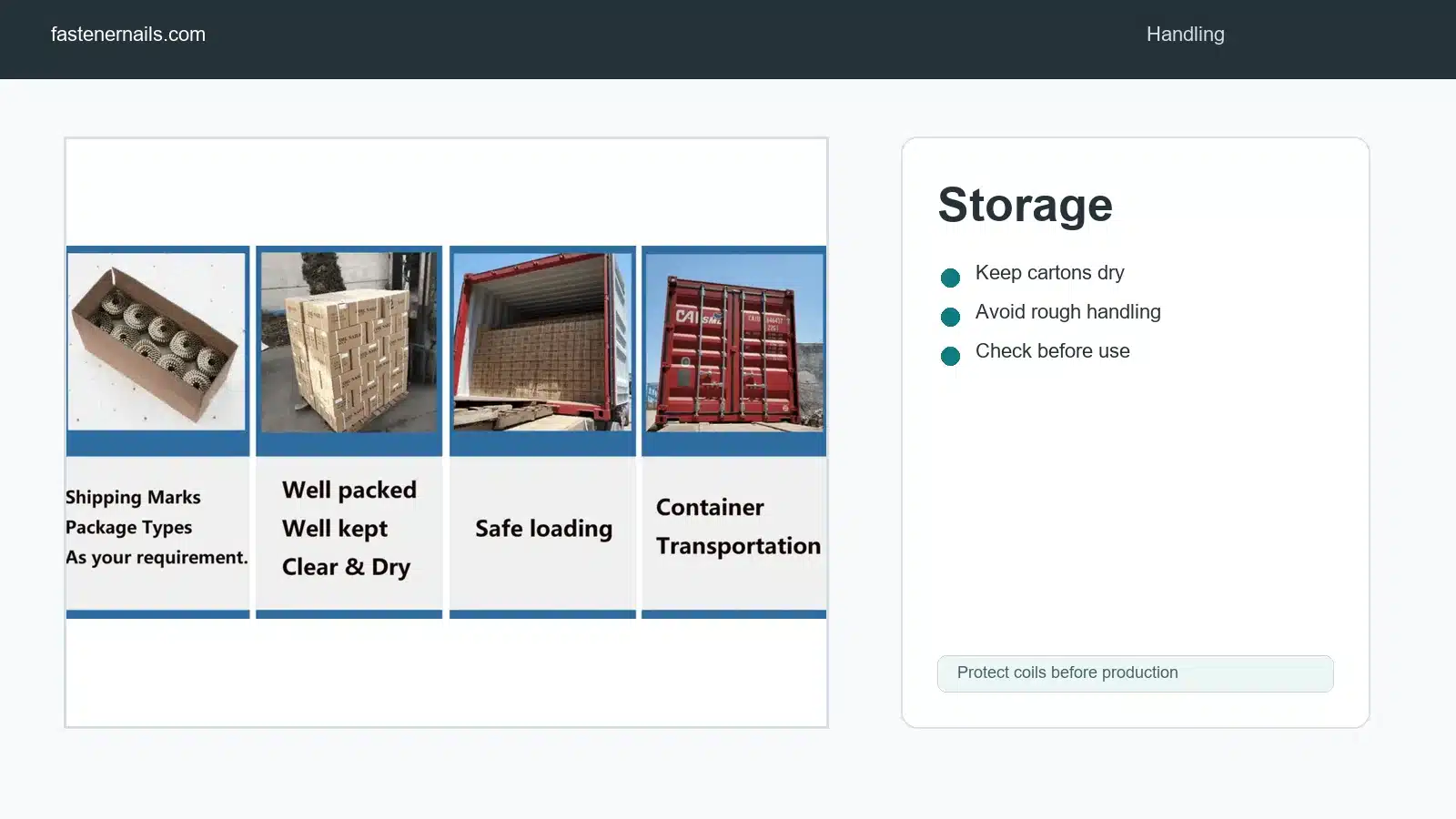
FastenerNails supplies coil nails for industrial buyers, and many orders are shipped in cartons and pallets before reaching the final production line. The buyer's warehouse, distributor or factory should keep the order protected until it is ready for use.
Why Storage Matters
Wire-collated coil nails depend on coil shape and collation consistency. If cartons are dropped, compressed or exposed to moisture, the nails may still look usable from outside the carton, but feeding performance can be affected. This is especially important for pallet factories and other high-volume users.
Buyers should connect storage with the approved specification. If a shipment arrives in good condition but is stored poorly before use, later problems may not come from production quality. Clear warehouse practice helps separate supplier issues from handling issues.
Keep Cartons Dry and Organized
Moisture is a practical risk for metal fasteners and carton packing. Store cartons in a dry area, keep them away from direct floor contact when possible and inspect any cartons that arrive wet or damaged. Do not mix different specifications on the same pallet without clear labels.
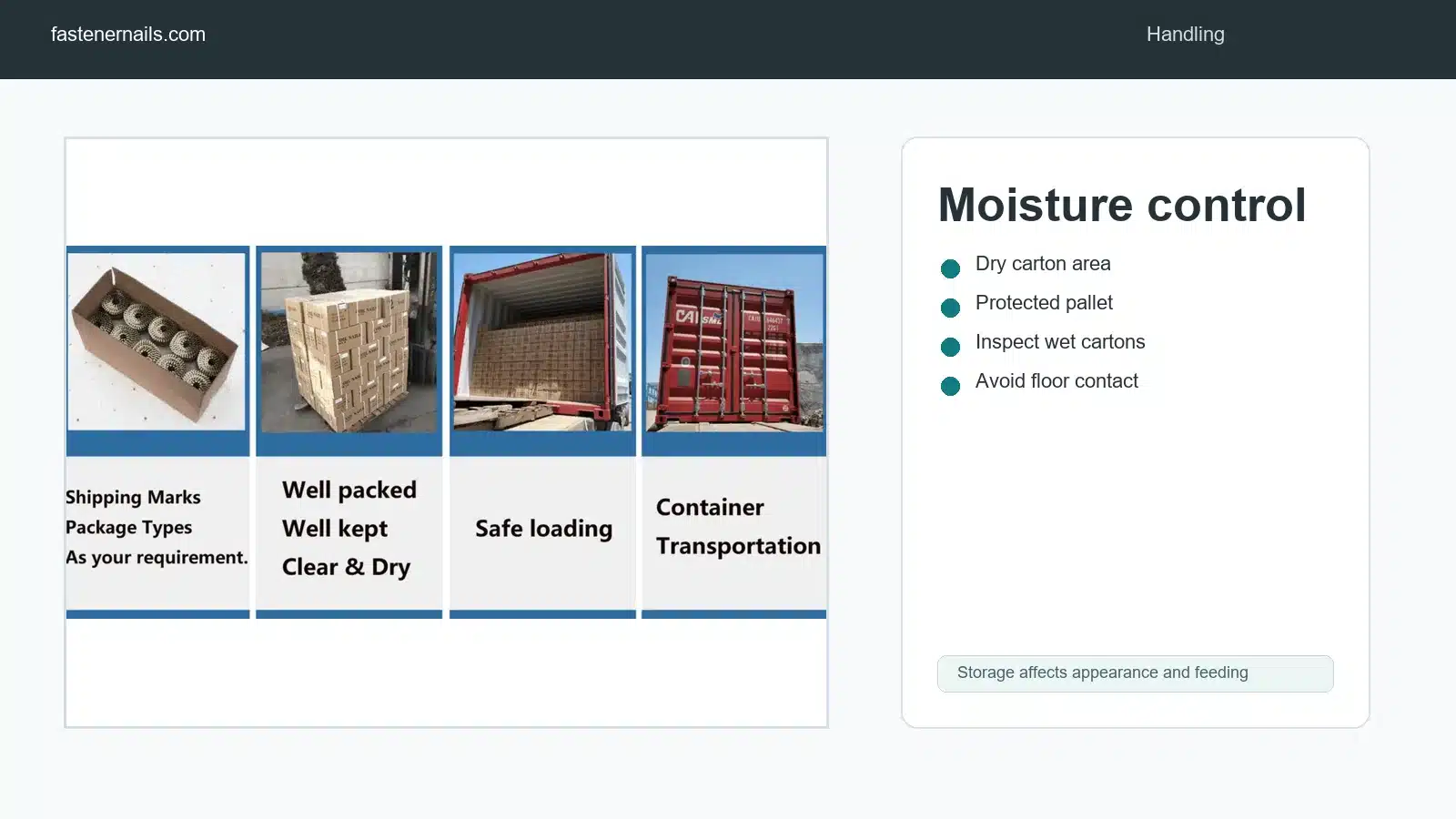
If export packing is important, review coil nail packaging for export orders. Packing and storage should work together.
Protect Coil Shape
The coil itself should remain neat. Crushed coils, loose weld wire or distorted coil shape can affect how the nails feed into the tool. Warehouse staff should avoid throwing cartons, stacking excessive weight on weak cartons or opening cartons in a way that damages the coils.
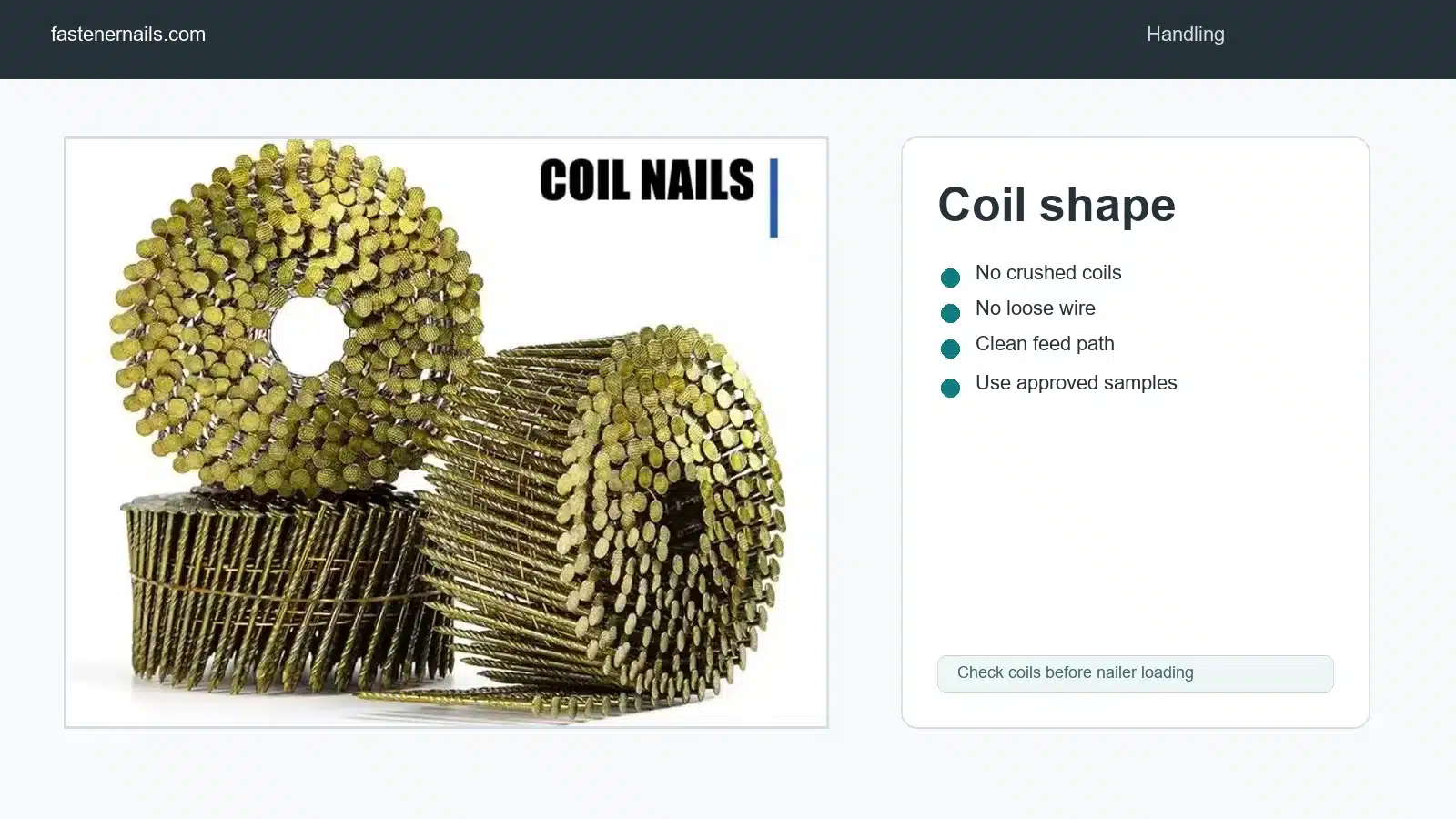
Before production, take a sample coil from the carton and check whether the shape, collation and finish still match expectations. If the order uses a specific shank or finish, compare with the approved sample or order record.
Check Before Production
Do not discover a problem only after hundreds of joints have been fastened. Run a short pre-use check with the intended nailer and suitable wood. Watch feeding, driving and nail seating. If the nails do not match the tool, stop and check whether the wrong carton, wrong specification or handling damage is involved.
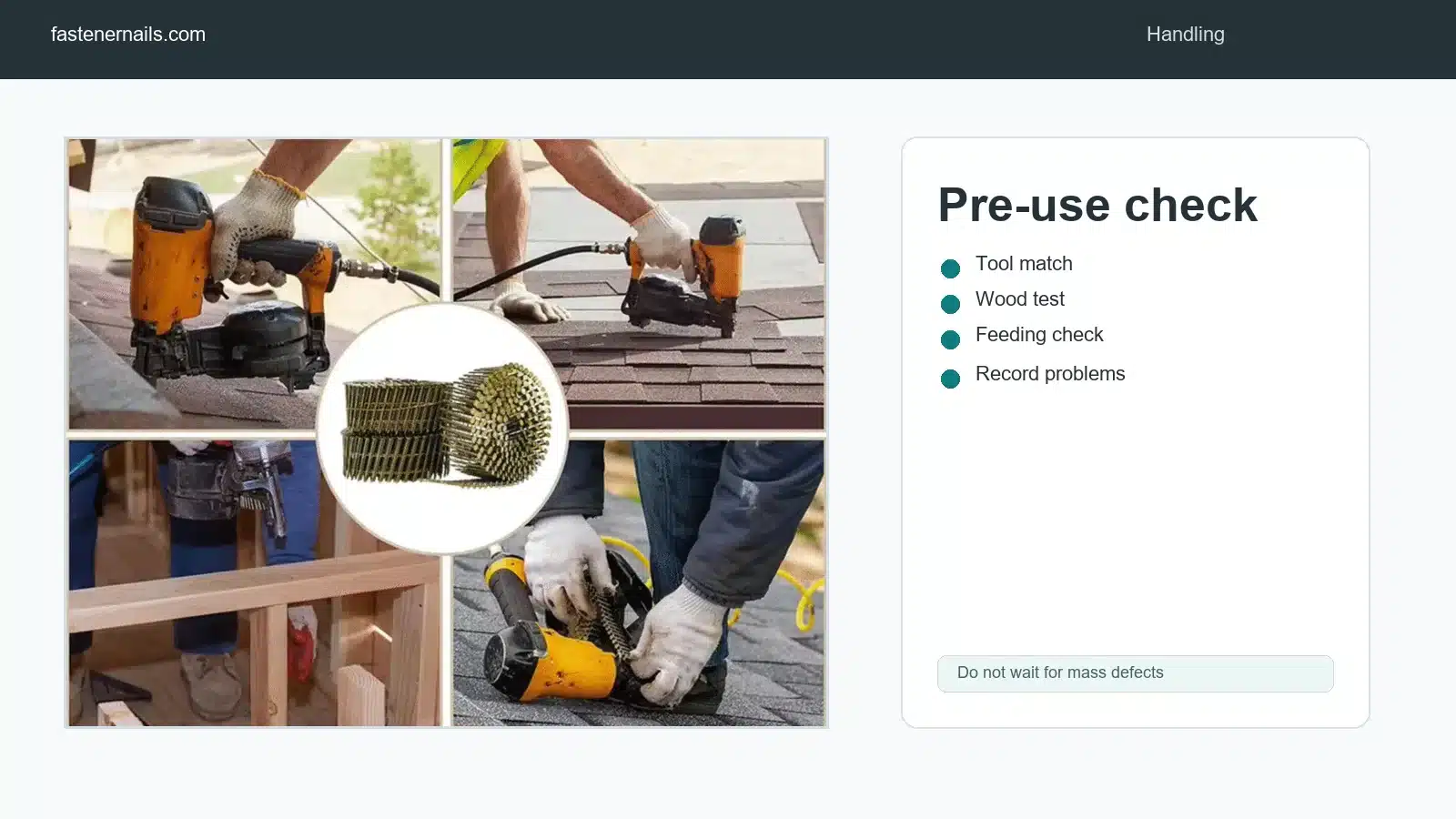
The article on wire-collated coil nail compatibility can help buyers structure this check.
Keep Warehouse Records
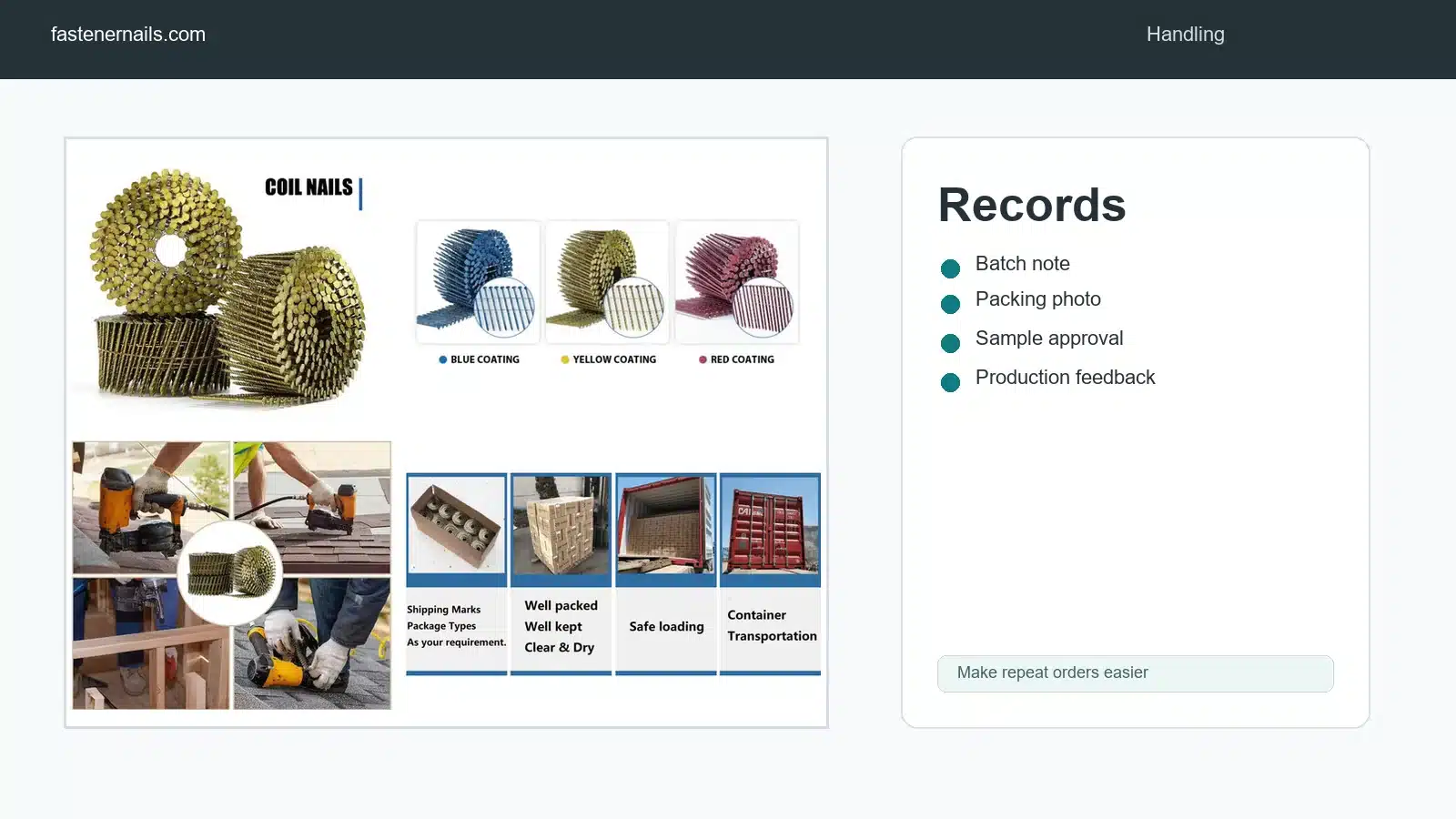
Warehouse records do not need to be complicated. Keep the shipment date, product specification, carton photos, pallet condition, approved sample reference and production feedback. This is useful when placing repeat orders or investigating problems.
Receiving Checks Before Storage
Storage quality begins when the cartons arrive. Buyers should check whether cartons are dry, labels match the purchase order and pallets show obvious damage. If cartons are crushed or damp, separate them for inspection instead of sending them directly to production. A short receiving record helps the buyer discuss the issue with the supplier while the shipment is still traceable.
| Receiving Item | Why It Matters |
|---|---|
| Carton condition | Damage can affect coil shape and handling |
| Label match | Confirms size, finish, shank and order line |
| Moisture signs | Helps identify storage or transit risk early |
| Pallet stability | Supports safer warehouse movement |
These checks do not require laboratory testing. They are practical warehouse steps that protect the product before operators load coils into nailers.
Keep Coils in Their Intended Shape
Coil nails are not loose nails in a box. The coil shape, wire collation and packing arrangement all support feeding. Rough handling can bend coils, loosen wire or make cartons harder to use on the production line. Warehouse staff should avoid dropping cartons, stacking unstable pallets or opening inner packing long before use.
For factories with frequent production changeovers, keep coil nails grouped by size and application. Mixing similar cartons can create downtime when operators discover the wrong nail at the machine.
Storage Records for Repeat Orders
When a buyer repeats an order, storage notes can become useful purchasing information. If cartons were too heavy for operators, if labels were hard to read or if pallets did not fit the warehouse route, record those details before the next RFQ. Packing can often be adjusted more easily when the supplier receives clear feedback early.
The best storage process is simple: receive carefully, keep cartons dry and identifiable, protect coil shape, and move only the quantity needed for production. This supports smoother nailer feeding without turning the warehouse into a complex inspection lab.
Production-Line Communication
Storage and production teams should use the same item names that appear on the purchase order. If the purchasing file says ring shank electro-galvanized coil nails but the warehouse label uses a short internal code, operators may not notice a mix-up until the nailer is loaded. A simple cross-check between purchase order, carton label and production plan can prevent this kind of avoidable stoppage.
When a carton is opened, keep the remaining coils protected and identifiable. Loose coils left on benches can collect dust, lose their original label or be confused with another size. Treat partially used cartons as active production inventory, not as scrap or general stock.
PREGUNTAS FRECUENTES
Can poor storage cause nailer feeding issues?
Yes. Crushed coils, loose collation or moisture-affected packing can contribute to feeding problems even if the original product specification was correct.
Should damaged cartons be used first?
Damaged cartons should be inspected before use. If coils are crushed or wet, separate them and record the issue before production.
What should be checked before loading coils into a nailer?
Check coil shape, collation wire, specification label, finish condition and whether the coil matches the intended nailer.
Prepare for Repeat Production
For repeat coil nail orders, keep storage notes together with sample approval and packing records. Send feedback through the FastenerNails contact page when you need to adjust packing or order details for the next shipment.
 Spanish
  English
  Arabic
  Portuguese